
Some recipes simply endure. Across centuries, through generations, from the monastery to the country inn and back again to the Sunday kitchen. Calf's foot broth is one of them. In the Hildegard tradition, it has held its place since the 12th century. In grandmothers' kitchens it was what you made the day after a long week – as a foundation for everything that followed, as warmth in winter, as something that was simply there. Those who prepare it for the first time today are usually surprised by two things: how simple it actually is, and how different the result is from a stock cube.
Why calf's feet specifically?
A brief explanation first, since many people are no longer familiar with calf's foot in everyday life. The foot of a young bovine contains a great deal of bone, tendon and connective tissue – precisely the parts that produce a particularly rich, gelatinous broth after long cooking. When the finished calf's foot broth cools in the refrigerator, it sets to a wobbly firmness, almost like a soft aspic. That is not a mistake – it is its hallmark.
In classic European cuisine, calf's foot broth was long considered the queen of broths: robust, clear, with a texture you could never achieve from a chicken broth. In the Hildegard tradition it is described as a "strengthening broth" – a term from the monastery tradition, not a therapeutic claim. What it does, everyone must discover for themselves. What is certain: a bowl of it on a grey day has changed something in monastery kitchens for centuries.
Where can you get calf's feet today?
This is the hardest part of the whole recipe – not the cooking. You will rarely find them at the discount store or a regular supermarket. Your best options are:
- The artisan butcher in town – usually by pre-order, often call one or two days ahead
- Weekly markets, especially those with direct-marketing farmers
- Regional direct sellers, often online
- Halal or Turkish butchers, where calf's feet are more common than at German shop counters
Allow roughly 200 to 300 grams of calf's feet per person. It is best to ask the butcher to cut them into smaller pieces straight away – at home this is rather difficult with a regular kitchen knife.
The Recipe: Calf's Foot Broth à la Hildegard
Ingredients for approximately 3 litres of broth (6 to 8 portions)
| Ingredient | Quantity |
|---|---|
| Calf's feet, cut into pieces | 1.5 kg |
| Carrots | 2 medium-sized |
| Celery (root or stalks) | a piece of root or 3 stalks |
| Leek | 1 stalk |
| Parsley root | 1 piece |
| Onion | 1 large |
| Garlic | 2 cloves |
| Bay leaves | 2 |
| Juniper berries | 4 to 5 |
| Peppercorns | 1 teaspoon |
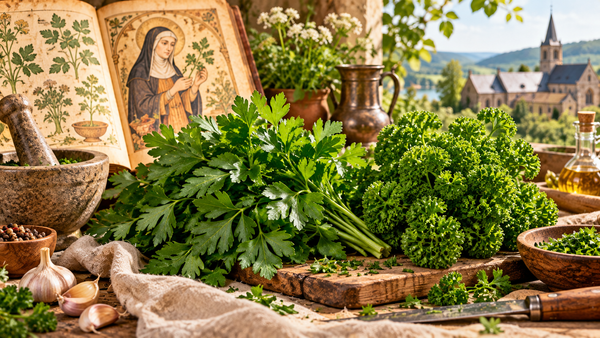
| Flat-leaf parsley (with stalks) | 1 small bunch |
| Salt | to taste, at the end |
| Cold water | approximately 4 litres |
| A dash of good vinegar or dry white wine | optional, approximately 2 tbsp |
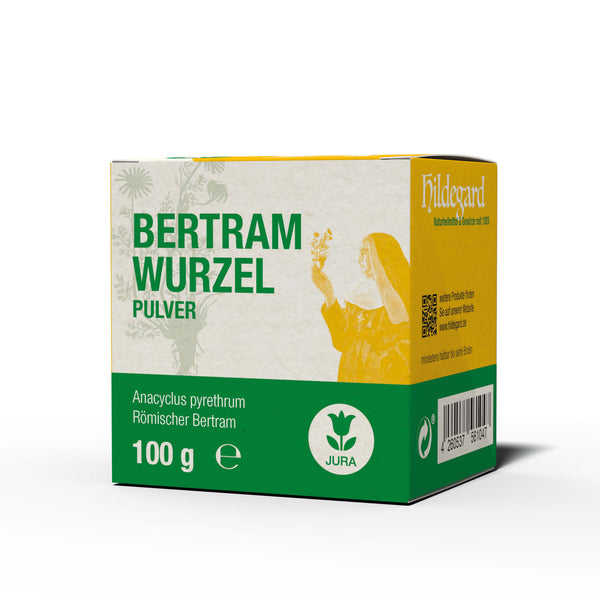
Those cooking in the spirit of Hildegard's kitchen add a pinch of galangal and a touch of pellitory root powder at the end – both classics of the Hildegard tradition. You can find out more about the classic galangal in our article on the role of galangal in Hildegard's work. Pellitory à la Hildegard also fits the picture well here.
Preparation
1. Blanch. Rinse the calf's feet thoroughly under cold water, place them in a large pot, cover with cold water and bring to the boil once. Boil for about five minutes, then discard the water and rinse the pieces of foot under running water. This sounds laborious, but this step is the trick for a truly clear broth. It removes cloudiness and blood proteins.
2. Start fresh. Return the rinsed pieces of foot to the (cleaned) pot. Cover with the four litres of cold water. Optionally add the dash of vinegar or white wine – this helps to draw more minerals and collagen out of the bones. Bring slowly to a simmer. Do not boil vigorously. Simmering means: small bubbles that rise to the surface occasionally.
3. Skim. During the first half hour, foam will form on the surface. Skim this off with a spoon or skimmer ladle and discard. This is also the secret to clarity.
4. Add the vegetables. After about an hour of gentle simmering, add the roughly cleaned vegetables: carrots quartered, celery roughly diced, leek in thick rings, parsley root halved, onion halved with its skin on (this gives the broth a lovely colour), garlic crushed. Add the bay leaves, juniper berries and peppercorns.
5. Continue simmering. Now comes the time. The broth should simmer in total for three to four hours – very gently. Top up with water occasionally if too much evaporates. The lid rests on loosely.
6. Parsley at the end. About 20 minutes before the end of the cooking time, add the parsley with its stalks. Allow to infuse at the very end.
7. Strain. Pour the broth through a fine sieve or a clean cloth. The pieces of foot and the vegetables have done their job and go into the compost or general waste. Only season with salt now, slowly and to taste.
8. Cool. The cooled broth goes into the refrigerator for a few hours. During this time the fat rises to the surface and can easily be lifted off with a spoon. What remains is a golden-clear, lightly gelatinous broth.
A few honest kitchen tips
A good butcher will cut the calf's feet really small – this makes the extraction more efficient. Anyone who places them whole in the pot will cook twice as long for half the yield.
The vinegar or white wine at the beginning is not essential, but it does make a difference. The acidity helps to dissolve minerals from the bone. You cannot taste it at the end.
Really only salt at the very end. Salting too early can result in a far too salty broth once the water continues to evaporate.
And, because this is the most frequent question: yes, the broth is supposed to gel. If it sets firm when cold, everything has worked. That is the collagen from the bones and tendons. When warmed, it becomes liquid again.
What you can do with it
Calf's foot broth is a foundation, not a final destination. It is the base for:
- Clear beef broth with semolina dumplings or pancake strips
- Classic Sunday soup with fine vegetables and parsley
- The base for sauces (every good sauce begins with a real broth)
- Base for risotto or fine grain dishes
- A warm cup of broth on its own – a classic especially on cold days
Those who would like to try more recipes in the spirit of Hildegard's kitchen will find a range of classics in our Hildegard recipe collection. The fasting soup à la Hildegard or the everyday recipes set also fit the theme.
Storage and provisions
The broth keeps in the refrigerator for four to five days. Those who wish to store it longer can portion it into jars or ice cube trays and freeze it – where it keeps easily for three to four months. Frozen in small portions, it is the most useful thing you can have in a kitchen.
Calf's foot broth in the Hildegard tradition
Hildegard von Bingen mentions broths repeatedly in her Physica and in her work Causae et Curae as part of a moderate diet. Specifically, calf's foot broth is a classic in the handed-down Hildegard tradition that continues to be passed on to this day – even if it is not recorded in this level of detail in Hildegard's own writings.
Characteristic of Hildegard's kitchen: foods are not viewed in isolation, but always in the context of the whole person. The approach is calm and measured – no dramatic claims, no promises of miracles. What counts is the daily, moderate meal. More on this concept in our article on nutrition according to Hildegard von Bingen.
When to exercise caution
Hearty meat broths contain more purines than light vegetable soups. Those who suffer from gout should not consume large quantities of robust calf's foot broth and should consult their doctor if in doubt. Restraint is also advisable for those with kidney conditions. For healthy adults, the broth is a perfectly ordinary culinary pleasure.
Further reading
- Hildegard recipe collection
- Nutrition according to Hildegard von Bingen
- Fasting soup à la Hildegard
- Everyday recipes à la Hildegard
- Galangal à la Hildegard
- Pellitory à la Hildegard
- Pear porridge à la Hildegard
Frequently asked questions about calf's foot broth
Where can I get calf's feet?
From an artisan butcher by pre-order, at weekly markets with direct sellers, from Turkish or Halal butchers and through regional online shops. They are rather rare in regular supermarkets.
How long does calf's foot broth need to cook?
A total of three to four hours at a gentle simmer. No vigorous boiling – that makes the broth cloudy.
Why does my broth set firm when it gets cold?
That is not a mistake, but intentional. The collagen from the bones and tendons causes the broth to gel when cold. When warmed, it becomes liquid again.
Can I use other bones instead of calf's feet?
Beef bones or marrow bones are a possible alternative, but with less gelling power. Anyone who wants genuine calf's foot broth cannot avoid using calf's feet.
Do I really need to blanch the calf's feet?
Yes, if you want a clear broth. The blanching step removes cloudiness and blood proteins. Without it, the broth turns grey and cloudy – that is no drama in terms of taste, but it is visually.
Is calf's foot broth healthy?
Health-related claims about individual foods are not permitted under EU law. Traditionally, hearty broth is regarded as a "strengthening food" – what that means in any individual case is determined by one's own daily experience. For people with gout or kidney issues, restrained consumption is advisable.
Can I freeze the broth?
Yes. Most conveniently in small portions – little jars, ice cube trays or freezer bags. It keeps for three to four months in the freezer.
What goes well with calf's foot broth?
Classically: semolina dumplings, pancake strips, fine vegetables and plenty of fresh parsley. For those who like it simple: a cup on its own, with a pinch of salt and a spoonful of chopped parsley on top.
What does Hildegard von Bingen say about calf's foot broth?
The broth is not recorded in exactly this form in Hildegard's writings. In the Hildegard tradition, however, it has been passed down for centuries and fits well with her concept of a moderate, nourishing meal – without promises of miracles, but prepared with care.
Note: This article is intended solely for general information about traditional recipes and Hildegard's kitchen. It does not constitute a medical or therapeutic recommendation. If you have particular dietary needs or chronic conditions, please consult your doctor.