Original Hildegard recipe for 45 years

Recommended by naturopaths & doctors

Feverfew – a fascinating herb with a long history


No products found

What is feverfew?

Feverfew is one of those plants you might easily overlook—until you really get to know it. At first glance, it looks a bit like chamomile, often grows quietly in the garden, but it has a long history in herbal tradition.

Back in the Middle Ages, it was mentioned in monastic traditions—mainly in connection with women, which is where the name comes from. Hildegard von Bingen wrote about it, and many old herb books list feverfew as a valued botanical.

What makes it special is the compound parthenolide—found in the leaves and currently being researched. Feverfew—a fascinating botanical with a long history, accompanying us for centuries and now getting more attention again in herbalism.

Motherwort from the meadow

Buy feverfew – capsules, drops & tea

If you want to try feverfew for yourself, you’ve got loads of options these days – as a tea, in drops, or super conveniently as capsules. Capsules are especially popular since they’re easy to dose and you don’t have to brew anything.

When you’re buying, make sure there are as few additives as possible and that the ingredients are high quality. In our selection you’ll find carefully chosen herbal products inspired by Hildegard’s teachings.

Whether you go for loose herbal tea, an extract, or another form: feverfew comes in lots of varieties – just as individual as the reasons you might want to try it.

Motherwort in herbal tradition

Feverfew has a long history in herbal traditions. It's been mentioned for centuries in old herbals and monastery traditions. Many people value it as a regular part of their mindful lifestyle.

Especially interesting: The ingredient parthenolide is currently being researched. Feverfew is also mentioned in herbal teachings according to Hildegard.

As with all traditional herbs: Feverfew is no substitute for medical advice – but it's a fascinating botanical with a rich history.

Experiences with feverfew

A lot of people have come across feverfew at some point—and for some, it’s become a regular part of their botanical routine. There are personal stories out there about positive experiences with taking it regularly.

Patience is key—feverfew isn’t something for acute situations, but more for long-term use in your daily life.

If you want to try feverfew, it’s best to chat with an experienced herbalist. As with any botanical, what works for one person might work differently for someone else.

Close-up of feverfew

Usage & Dosage

Feverfew comes as tea, capsules, drops, or just dried on its own – and how you use it depends on the form. Capsules or tablets are the easiest way to take it, since you can control the dose pretty well.

If you’re using tea or dried leaves, make sure not to use too much – the taste is pretty bitter, and if you have a sensitive stomach, it might bother you. If you prefer liquid options, you can go for drops, often mixed with other herbs.

Super important: Don’t take too much. And if you’re pregnant, feverfew isn’t suitable at all – definitely check with a professional first.

Motherwort Tea – an herbal tea with character

A tea made from feverfew might sound harmless at first—but it actually packs quite a punch. Lots of people drink it as a mindful ritual in their daily routine. The taste is strong and a bit bitter, but adding honey balances it out nicely.

You can get feverfew tea at the pharmacy, in herbal shops, or online. You'll also find blends where feverfew is mixed with other botanicals—like lemon balm or lady's mantle.

If you drink the tea regularly, make sure to take your time with it—ideally as a little ritual. That makes the experience extra special.

Growing feverfew yourself – location, sowing & care

If you enjoy working in the garden or on your balcony, you can easily grow feverfew yourself. It loves sunny spots, but also grows in partial shade and is fairly easy to care for.

Sowing works best in spring. The plant is hardy and usually returns every year—if you give it some space. The flowers look pretty, attract bees, and can even be dried.

A little tip: If you harvest your own leaves, make sure you only use healthy ones – and be sparing with the dosage if you want to make tea or tincture from them.

Motherwort risk of confusion

Identifying feverfew – risk of confusion with chamomile

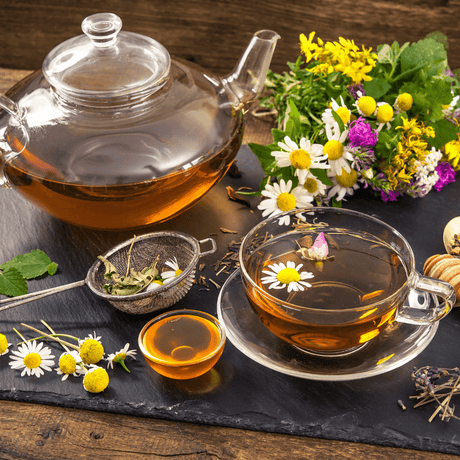
Feverfew is sometimes mistaken for chamomile—and it's easy to see why, since the flowers look pretty similar at first glance. But feverfew has a much stronger scent, almost lemony-bitter, and the leaves are much more feathery.

If you're not sure you've got the right plant, it's better to leave it be or use an identification app. There are other members of the daisy family that aren't as easy on the stomach.

Especially when foraging wild plants, it's better to be safe than sorry—especially if you're planning to consume them.
Notes & what you should know

Feverfew is a potent botanical, and like with all herbs, there are limits. Especially with high doses or long-term use, it can cause stomach irritation, nausea, or allergic reactions.

Also important: Feverfew isn't suitable for pregnant or breastfeeding people. And if you're taking blood thinners, you should be careful too.

Best approach: always use in moderation, listen to your body, and get expert advice if you're unsure.

Compare /4

Loading...