The ash tree is one of the most impressive deciduous trees in Europe – but what many people don't know: the ash leaf is special not just botanically, but also in herbal tradition. In this article, you'll learn how to identify and tell apart the ash leaf, and what role it plays in traditional plant knowledge – especially with Hildegard of Bingen.
What does an ash leaf look like?
The leaf of the common ash (Fraxinus excelsior) is strikingly feathered. It usually has 9–15 elongated oval leaflets with serrated edges. The leaves grow in pairs and can be up to 40 cm long – a real identifying feature.
What's especially interesting: in the teachings of Hildegard of Bingen, many trees played a special role – including the ash.
How to identify & tell apart ash leaves
A lot of people mix up the ash with the rowan (mountain ash). The leaves do look similar – but there are differences:
- Ash: elongated, matte green leaves with clearly serrated edges
- Rowan: smaller, more finely feathered leaves with reddish fruit
You’ll find more helpful tips for identifying plants in our article on herb walks inspired by Hildegard.
Ash leaf in herbal tradition
In traditional herbal lore, the ash leaf has been mentioned for centuries. It's one of those plants that has always gotten special attention in old writings.
Hildegard of Bingen also valued plants and trees in her teachings. A lovely addition from our shop is, for example, the wormwood tonic or the plum ash lye – both classics from Hildegard’s tradition.
Using ash leaves
Dried ash leaves can be used to make tea. For a cup of tea, try this:
- 2 tsp dried leaves
- pour 250 ml of hot water over them
- let steep for 10 minutes
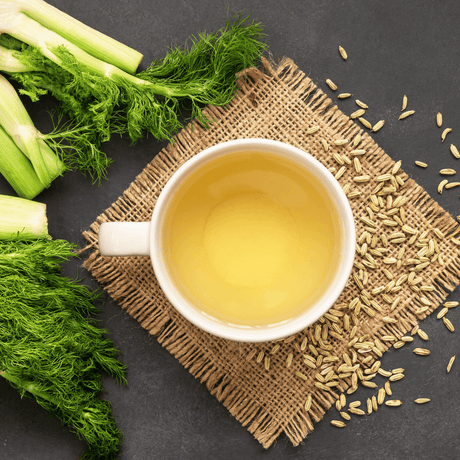
Great to combine with fennel herb or galangal root for a tasty botanical blend.
The ash tree – a symbol of strength
Besides its importance in herbal tradition, the ash tree was worshipped in mythology as the "world tree." It stands for resilience, clarity, and growth – qualities that also show up in Hildegard’s spiritual philosophy.
Conclusion: The ash leaf – More than just nature
Whether you’re identifying plants or exploring herbal tradition, the ash leaf invites you to see nature with fresh eyes. In Hildegard’s teachings, it holds a quiet but fascinating place. If you’re into the diversity of the plant world, check out our herb and tea collection for loads of inspiration – all in the spirit of Hildegard’s “Viriditas,” the life force of nature.
More matching products
Also check out our full range inspired by Hildegard’s teachings.