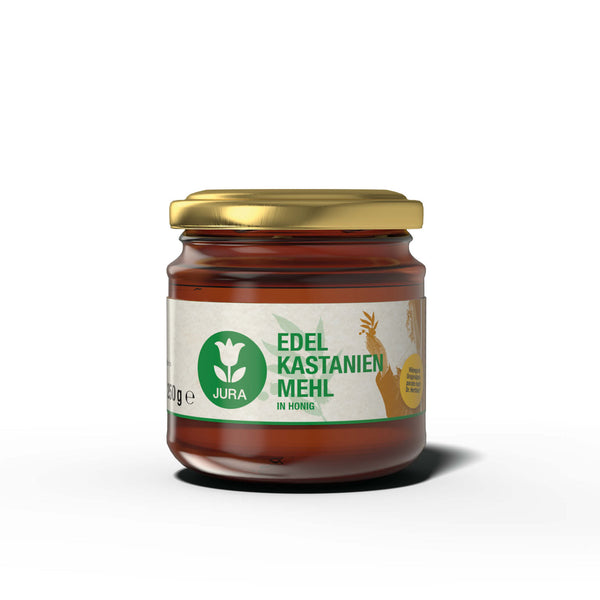
This page answers that – not through promises, but through the characteristics by which the drinks actually differ: the plant they are made from, their taste, their base, and the question of whether you want to try a single bottle or plan for a longer period.
The four distinguishing features
Before getting to the individual products, it is worth looking at the criteria. They make the selection considerably easier than clicking through twelve product pages.
- The plant base. Each drink is named after the plant that defines it – wormwood, parsley, blackberry, hart's tongue, duckweed, mulberry, ground ivy, clary sage. This is the primary distinguishing feature.
- The taste. Broadly speaking, the drinks fall into two camps: the distinctly bitter, herb-forward ones – and the milder, fruitier ones. In our experience, those trying for the first time do better starting in the milder camp.
- Organic or conventional. Part of the range is organically certified (DE-ÖKO-006), recognisable by the "BIO" in the product name.
- Single bottle or cure pack. Almost every drink is available in both versions. The cure pack contains six bottles and is intended for a longer, continuous period.
The drinks at a glance
All drinks follow the same method: an herbal extract based on wine or juice, balanced with additional spices from the monastic tradition.
| Drink | Plant base | Flavour profile |
|---|---|---|
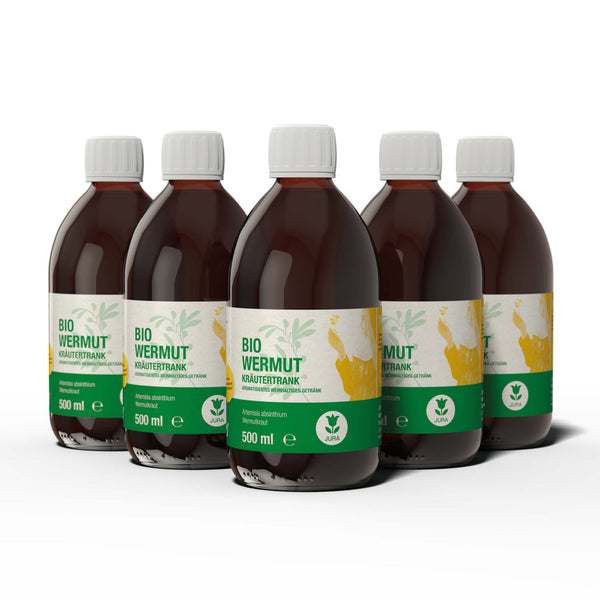
| BIO Wormwood Drink | Wormwood herb | Distinctly bitter – the classic bitter note |
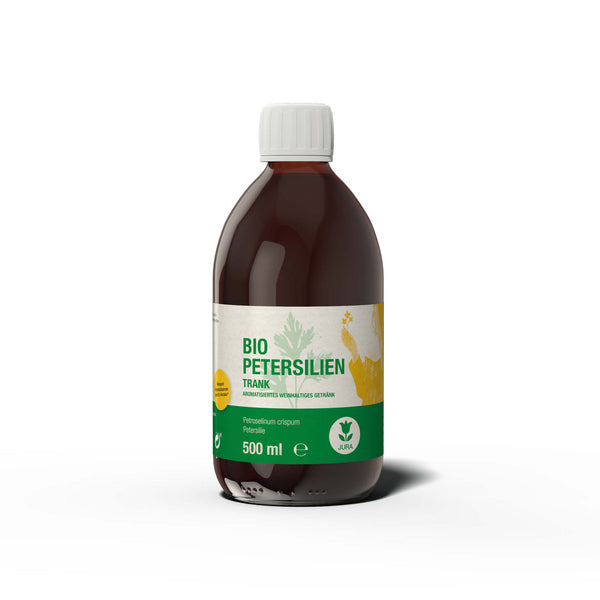
| BIO Parsley Drink | Parsley | Herbal, savoury |
| BIO Blackberry Drink | Blackberry leaves, with hyssop, pellitory and oregano | Milder, fruity-herbal |
| Bio Mulberry Drink | Mulberry | Fruity, one of the mildest in the range |
| Hart's Tongue Herbal Drink | Hart's tongue fern herb | Herb-forward |
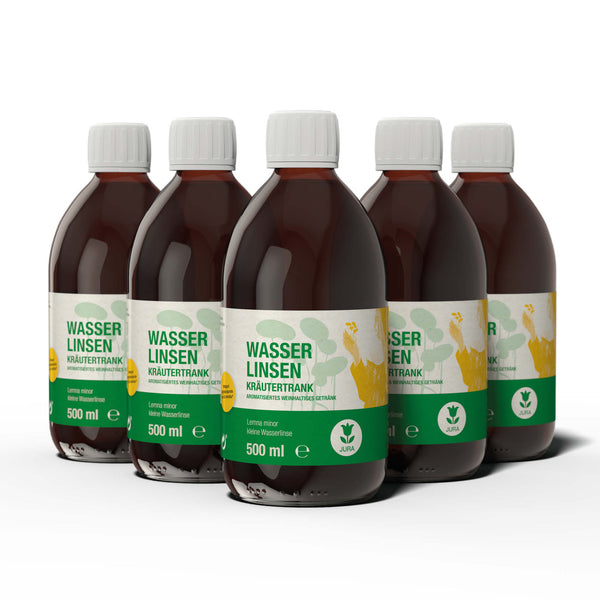
| Duckweed Herbal Drink | Duckweed | Green, herbal |
| Ground Ivy Herbal Drink | Ground ivy herb, with nutmeg, basil and galangal | Savoury, spice-forward |
| Clary Sage Drink | Clary sage | Aromatic and savoury |
| Hildegard´s Brennnessel Walnuss Elixier® | Nettle and walnut | Bitter, herb-forward |
| Juractiv | Ginseng root, hawthorn and others | Savoury – the recipe with the most components |
Important note: Hildegard´s Brennnessel Walnuss Elixier® contains walnut and therefore a labelling-required allergen from the tree nut group. It is not suitable for people with nut allergies.
Matching this article
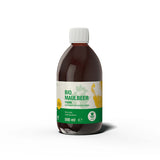
Single bottle or cure pack?
The rule of thumb is simple: anyone who has never tried a drink before should buy the single bottle. The taste of these preparations is unfamiliar, and six bottles of something you don't enjoy is frustrating.
The cure packs with six bottles are intended for those who already know their drink and are planning for a continuous period. The price advantage is significant:
- BIO Wormwood Drink (Cure)
- BIO Parsley Drink (Cure)
- Bio Blackberry Drink (Cure)
- Bio Mulberry Drink (Cure)
- Hart's Tongue Herbal Drink (Cure)
- Duckweed Herbal Drink (Cure)
- Ground Ivy Herbal Drink (Cure)
- Clary Sage Drink (Cure)
- Juractiv (Cure)
The bitter specialities
The concentrated bitter preparations are somewhat different in nature. They are not drunk by the glass like a beverage, but enjoyed in very small portions – and thus occupy their own category.
- Hildegards 6-Kräuterbitter – a composition of six herbs; also available as a bulk pack with three bottles.
- Viriditas Bitterelixier No. 1 – a bitter spirit made to a proprietary recipe, available in a small bottle size.
The rhythm of the year
In the monastic tradition, herbal preparations were tied to the cycle of the year – not as a matter of principle, but of practicality: people processed what was available and laid in stores.
Two points in time have endured to this day. Spring, traditionally the period between Ash Wednesday and Easter, when the wormwood drink has its established place. And autumn, after the harvest and before the dark season. Those who wish to use the annual cycle as a framework will find ready-assembled packages in the Hildegard cures.
What applies to all drinks
- Label first, everything else second. The consumption recommendation is on the bottle and is tailored to the specific recipe. Information from one product cannot be transferred to another.
- Read the ingredients list before your first purchase – especially if you have known allergies or intolerances.
- Check the alcohol content. Some of the drinks contain wine. The information is stated on the packaging.
- Store cool, dark and tightly sealed. After opening, observe the use period stated on the packaging.
- During pregnancy, breastfeeding, regular medication use or existing illness, consult a doctor beforehand.
Frequently asked questions
Where do I start as a beginner?
With a single bottle from the milder camp – such as the mulberry or blackberry drink. The bitter varieties like wormwood take more getting used to.
Can I combine several drinks?
In principle, yes. Follow the label instructions for each individual product and, if in doubt, clarify combinations with a doctor.
What is the difference between a drink and a cure?
The contents are the same. The cure pack contains six bottles instead of one and is intended for a continuous period.
Do the drinks contain alcohol?
Some of the recipes contain wine. You will find the precise information on the respective packaging.
How long does an opened bottle keep?
This is stated on the packaging and varies depending on the recipe. Opened bottles should be stored cool and tightly sealed.
What is organically certified?
The drinks with "BIO" in the product name carry the DE-ÖKO-006 designation. The others are conventionally produced.
And if a drink is not what you want
Not everyone enjoys wine-based herbal extracts. For everyday use, spelt coffee offers a caffeine-free alternative from the same tradition. The complete overview of all beverages can be found in the herbal drinks category.