Most people know pelargoniums as colorful balcony plants. But only a few know that they also play a special role in the herbal tradition of Hildegard of Bingen. The pelargonium spice blend has been one of the most popular products in the Hildegard range for decades. This article explains what makes this fascinating plant so special.
What is the noble pelargonium – and what does Hildegard have to do with it?
Botanically, pelargoniums belong to the genus Pelargonium in the geranium family (Geraniaceae). The type used in Hildegard’s teachings is the noble pelargonium (Pelargonium graveolens or related species from its South African homeland). It’s quite different from the common balcony pelargoniums: it’s smaller, more aromatic, and its essential oils are more concentrated.
In her main work Physica, Hildegard of Bingen describes a plant called stork’s bill, which is now associated with pelargonium in the Hildegard tradition. Thanks to Dr. Gottfried Hertzka, pelargonium became one of the key spices in Hildegard’s teachings.
What’s special about it: While other Hildegard spices like quendel or galangal are well known, pelargonium as a spice is hardly recognized by the public.
What Hildegard of Bingen wrote about pelargonium
Hildegard’s descriptions of stork’s bill-like plants focus mainly on their warming and drying qualities. According to her teachings, these plants are a spice that’s supposed to “counteract moisture and phlegm” in the body.
Through Dr. Hertzka’s tradition, this description was linked to the noble pelargonium. That’s how the pelargonium spice blend came about, which is now one of the most well-known Hildegard products from JURA.
The ingredients of noble pelargonium
Noble pelargonium contains a range of remarkable ingredients:
Coumarins: An important group of ingredients in pelargonium that’s currently being researched.
Proanthocyanidins: Plant-based secondary compounds found in high concentrations in pelargonium.
Flavonoids: Plant compounds that are common in many herbs from the monastic tradition.
Essential oils: The leaves and stems of noble pelargonium contain essential oils. They’re also responsible for the plant’s signature rose-like aroma.
Tannins: Typical components of many herbs from the monastic tradition.
Pelargonium in herbal tradition
Pelargonium plays a role in the Hildegard tradition in several ways:
In the monastic tradition: Hildegard described stork’s bill in her writings as one of her valued herbs. In the modern Hildegard tradition, the pelargonium spice blend is one of the best-known recipes.
As a spice: In Hildegard’s teachings, pelargonium is described as a daily spice that fits well into a mindful diet.
In skincare: Pelargonium oil (Pelargonium graveolens) is used in natural cosmetics for skincare – a principle you’ll also find in our Hildegard natural cosmetics.
Note on distinction: Pelargonium sidoides extracts are approved as a medicine (Umckaloabo®) in Germany. The JURA pelargonium spice blend is different: it’s a traditional Hildegard spice blend – with lower concentration and a different use.
The pelargonium spice blend from JURA
The pelargonium spice blend from JURA is a mix of dried pelargonium leaves and flowers, developed according to Dr. Hertzka’s tradition and combined with other Hildegard spices. It’s offered as a fine powder that you can sprinkle on food daily or brew as a tea.
This product has been one of the most popular in JURA’s Hildegard range for decades.
How is pelargonium used?
As a daily kitchen spice
The simplest way to use it: Sprinkle the pelargonium spice blend daily over warm dishes – soups, spelt dishes, veggies, or meat. Just a pinch per meal is enough. This follows Hildegard’s tradition of adding herbs to your diet every day.
As a tea
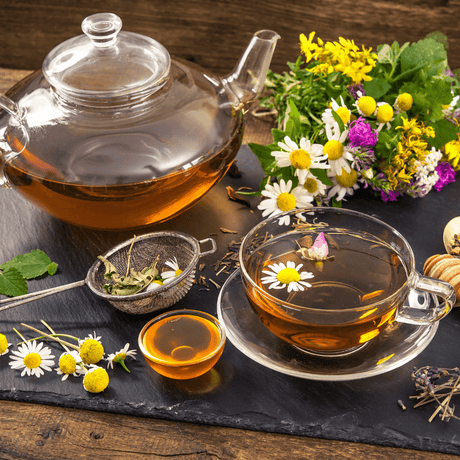
Pour 250 ml of boiling water over a teaspoon of pelargonium spice blend, let it steep for 10 minutes, then strain. Two to three cups a day – a warming herbal tea ritual, especially nice in the colder months.
As part of the Hildegard diet
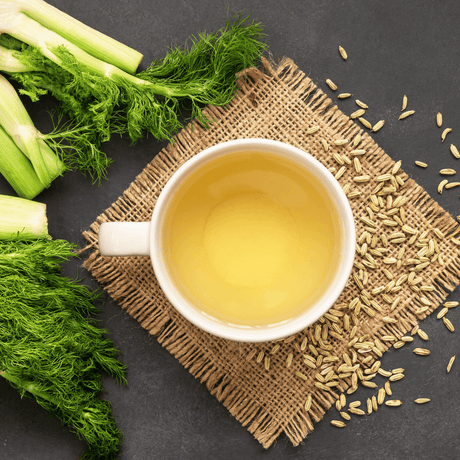
In Hildegard’s teachings, pelargonium is described together with other spices like quendel and fennel tea. Light meals like spelt soup and steamed veggies go well with it.
Externally as a scent
The essential oil of noble pelargonium (Pelargonium graveolens) is used in aromatherapy for room scenting. Its signature rose-like fragrance is described as balancing and calming.
Pelargonium in Hildegard’s seasonal teachings
In Hildegard’s teachings, pelargonium is clearly an autumn and winter spice. When the days get shorter and the temperatures drop, Hildegard’s tradition says it’s time for warming spices.
That fits perfectly in the sa
Safety and Tolerability
Used as a spice in normal food amounts, pelargonium is well tolerated and safe for most people.
Pregnancy and breastfeeding: Used occasionally and in small amounts as a spice, pelargonium is safe. Larger amounts should be avoided during pregnancy.
Interactions: If you take medication regularly, we recommend checking with your doctor.
Frequently Asked Questions about Pelargonium
Is the pelargonium spice blend the same as Umckaloabo?
No. Umckaloabo® is a standardized medicinal extract from Pelargonium sidoides in high concentration. The pelargonium spice blend from JURA is a traditional spice based on Hildegard’s recipe—with a lower concentration and a broader mix of herbs.
Can you use the pelargonium spice blend all year round?
Yes—you can use it daily, all year. In Hildegard’s teachings, it’s especially highlighted in autumn and winter.
What does pelargonium taste like?
Mild and aromatic, slightly floral with a hint of rose and fresh herbal notes. In JURA’s spice blend, it’s combined with other Hildegard herbs, which gives it a harmonious flavor.
Where can I buy the pelargonium spice blend?
Directly in our shop: Pelargonium Spice Blend. You’ll find all our spice blends and herbs under Herbs and Spices according to Hildegard’s Teachings. Also check out our full range.