The sitz bath with chamomile is one of the best-known uses from herbal tradition. Chamomile has been used for external care for centuries and is also a valued plant in Hildegard’s teachings. This page gives you an overview of how to prepare, use, and what’s good to know about the chamomile sitz bath.
What is a chamomile sitz bath?
A sitz bath is a traditional method where your lower body—from your hips to your thighs—sits in warm water. By adding chamomile tea or chamomile concentrate, the water is enriched with the plant’s natural ingredients. The sitz bath is used only externally and has been a traditional care method for centuries.
Important: A sitz bath is not a substitute for medical treatment. If you have symptoms beyond mild skin irritation or if symptoms persist, always check with a doctor.
Chamomile in Hildegard’s teachings
Hildegard of Bingen (1098–1179) mentioned chamomile in her natural science work Physica and described it as a plant for external use. In medieval herbal tradition, chamomile was considered gentle and mild—qualities that still make it one of the most popular herbs in monastic medicine today.
Hildegard’s teachings place great value on using natural plants for external care. Chamomile fits well into Hildegard’s holistic approach: body and soul should be in harmony—through nutrition, herbs, movement, and rhythm. You can find more about the basics of Hildegard’s teachings on our page about nutrition according to Hildegard of Bingen and in our overview of herbs in the Hildegard tradition.
How to prepare a chamomile sitz bath – step by step
What do you need?
- A sitz bath tub, a large basin, or a regular bathtub (just fill with a little water)
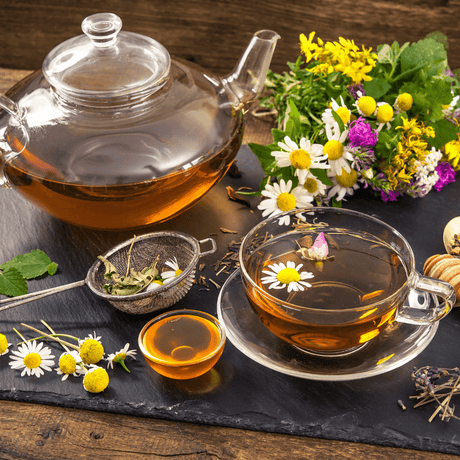
- Chamomile tea (tea bags or dried chamomile flowers) or ready-made chamomile concentrate
- Warm water (about 37–39 °C)
- A towel for drying off
Preparation with chamomile tea
- Pour one liter of boiling water over about 5–10 tea bags or 3–4 tablespoons of dried chamomile flowers
- Let the tea steep for 10–15 minutes, then strain
- Add the strained tea to the sitz bath water
- Check the water temperature—it should feel pleasantly warm, not hot
- Sit for 10–15 minutes, then dry off thoroughly
Preparation with chamomile concentrate
- Add the chamomile concentrate to the sitz bath water as directed on the package
- Check the water temperature (about 37–39 °C)
- Sit for 10–15 minutes, then dry off well
Chamomile sitz bath – tea bags as an easy alternative
If you don’t have loose chamomile flowers, you can also use several chamomile tea bags. Pour boiling water over them, let them steep, and then add them to the sitz bath water. The process is the same—tea bags are a simple way to prepare a sitz bath at home.
How long should a chamomile sitz bath last?
Traditionally, a chamomile sitz bath is done for 10 to 15 minutes. More than 20 minutes isn’t recommended, as sitting in water for too long can soften your skin. After the sitz bath, gently and thoroughly dry your skin.
How often you use a sitz bath depends on your individual needs. If you’re unsure or if symptoms persist, it’s always best to check with a doctor.
Chamomile sitz bath – different uses
Chamomile sitz bath for hemorrhoids
The chamomile sitz bath is also traditionally used for anal care. Chamomile’s gentle and mild nature makes it a popular plant for external use. For hemorrhoids or anal fissures: a sitz bath can be used as a supportive care measure—but it’s always a good idea to get a doctor’s opinion on the cause.
Chamomile sitz bath for the intimate area
The chamomile sitz bath is also traditionally used for gentle care of the intimate area—like for mild skin irritation or as part of a gentle body care routine. For vaginal infections, yeast, or other gynecological issues, you’ll need medical treatment. A sitz bath is not a substitute for a diagnosis or medical therapy.
Chamomile sitz bath for bladder issues
With a bladder infection, a warm sitz bath can feel soothing as an external application—but it’s not a replacement for medical treatment. Always have a bladder infection checked by a doctor, especially if you have a fever, severe pain, or blood in your urine.
Chamomile sitz bath during pregnancy
If you’re pregnant, always check with your midwife or doctor before using a chamomile sitz bath. Warm sitz baths aren’t generally off-limits during pregnancy, but the water temperature and how often you use them should be tailored to you.
Chamomile sitz bath for kids and babies
Extra caution is needed for kids and babies. The water temperature should be lower than for adults. For children under two and babies, only use a chamomile sitz bath after talking to a pediatrician. Avoid chamomile concentrates for very young children—simple chamomile tea is usually better tolerated.
Chamomile sitz bath after birth (perineal incision)
Midwives also traditionally recommend the chamomile sitz bath after birth—especially after a perineal incision—as a supportive care measure. Always check with your midwife or doctor before use.
Buying chamomile – pay attention to quality
For a sitz bath, use high-quality dried chamomile flowers or a certified chamomile concentrate if possible. Look for natural products without synthetic additives. Dried chamomile flowers from controlled cultivation are a great base for a quality sitz bath.
In our shop, you’ll find herbal teas from the Hildegard tradition, carefully selected and blended according to time-honored principles. Check out our chamomile products for external use too.
Chamomile sitz bath – practical tips
- Don't make the water too hot – around 37–39 °C is comfortable and gentle
- Limit sitting time to 10–15 minutes
- Dry off well and gently after the bath
- If you have sensitive skin, start with a small amount of chamomile
- If you're allergic to chamomile (aster family allergy), don't use a chamomile sitz bath
- If symptoms persist, always see a doctor
Chamomile and Other Herbs in the Hildegard Tradition
Chamomile is just one of many plants that play a role in Hildegard's teachings and the monastic tradition. Hildegard of Bingen described a wide range of herbs and spices in her natural history – from galangal and bertram root to fennel and lavender. Each plant was described according to its properties and traditional uses.
You can find a comprehensive overview of herbs in the Hildegard tradition on our page about herbs according to Hildegard of Bingen. To learn more about the basics of Hildegard's teachings, check out our page on Hildegard of Bingen – Life and Work.
Frequently Asked Questions (FAQ)
How do you make a chamomile sitz bath?
Pour one liter of boiling water over 5–10 tea bags or 3–4 tablespoons of dried chamomile flowers, let it steep for 10–15 minutes, then strain. Add the finished tea to the sitz bath water (about 37–39 °C). Sit for 10–15 minutes, then dry off well. Alternatively, you can use a ready-made chamomile concentrate as directed on the package.
How long should you stay in a chamomile sitz bath?
Usually 10 to 15 minutes. More than 20 minutes isn't recommended, as the skin can get too soft. After the bath, gently and thoroughly dry your skin.
How often can you take a chamomile sitz bath?
That depends on your individual needs. Many traditional sources recommend taking a sitz bath once or twice a day for a few days. If symptoms persist, you should always see a doctor.
Is a chamomile sitz bath suitable during pregnancy?
In general: If you're pregnant, always check with your midwife or doctor before taking a sitz bath. The water temperature should be lower than usual, and the treatment should be tailored to your needs.
Can you use a chamomile sitz bath for kids and babies?
Be especially careful with young children and babies. The water temperature must be much lower than for adults. For kids under two and babies, always ask your pediatrician first. Chamomile concentrates aren't ideal for very small children – simple, well-diluted chamomile tea is gentler.
What's the difference between chamomile tea and chamomile concentrate for a sitz bath?
Chamomile tea (from tea bags or loose flowers) is prepared fresh and added to the bathwater. Chamomile concentrate is a ready-made, stronger preparation that's dosed according to the package instructions. Both are suitable for sitz baths – concentrates are easier to use, while tea preparations are more natural and familiar to the Hildegard tradition.
Are there people who shouldn't use a chamomile sitz bath?
If you're allergic to chamomile or other aster family plants (like yarrow or calendula), you should skip the chamomile sitz bath. If you're unsure, it's a good idea to get an allergy test or check with your doctor.
Note: This page provides general information about herbal traditions and Hildegard's teachings. It doesn't replace medical advice or diagnosis. If you have health concerns, please contact a doctor.