
Note: This article is for informational purposes only and does not replace medical assessment – especially in cases of sudden, painful or one-sided swelling.
What does "water in the legs" mean?
We speak of water in the legs when fluid accumulates in the tissue of the lower legs, ankles or feet. A typical sign is that the swelling increases throughout the day and is reduced in the morning.
A simple self-test is the so-called pressure test: if you press a finger on your shin for a few seconds and a dent remains, this may indicate fluid retention.
Water in the legs – causes
The causes are varied. Often several factors play a role simultaneously:
- Lack of movement (prolonged sitting or standing)
- Heat (blood vessels dilate, fluid escapes more easily)
- Hormonal changes (e.g. pregnancy)
- Venous insufficiency
- Heart failure (cardiac insufficiency)
- Kidney or liver disease
- Medications (e.g. cortisone, blood pressure drugs)
According to the Mayo Clinic, oedema often develops when the return transport of blood and lymphatic fluid is not functioning optimally – for example due to venous disease or heart problems.
Matching this article
Water in the legs: symptoms & early stages
Typical signs of water in the legs include:
- Swollen ankles or feet
- A feeling of tension or heaviness in the legs
- Visible marks left by socks or shoes
- Shiny or taut skin
- In advanced stages: pain or restricted mobility
In the early stages, swelling often only occurs in the evenings and subsides overnight. This is precisely where many everyday measures are particularly effective.
When does water in the legs become dangerous?
Many people ask this question – and it is absolutely justified. Doctors strongly advise seeking medical assessment if:
- the swelling occurs suddenly
- only one leg is affected
- pain, redness or warmth accompany the swelling
- shortness of breath occurs
- there are known heart, kidney or lung conditions
The Deutsche Herzstiftung points out that water in the legs can be an early warning sign of heart failure – particularly when shortness of breath or rapid weight gain also occur.
Water in the legs – what to do? (Home remedies & everyday tips)
In many cases, fluid retention can be relieved by simple measures:
Movement & positioning
- Regularly elevate the legs
- Walks, calf pumps, foot circles
- Avoid prolonged sitting or standing
Diet & fluid intake
- Drink enough fluids (sounds paradoxical, but it helps fluid balance)
- Reduce salt and heavily processed foods
- Incorporate bitter substances and herbs as part of a mindful diet
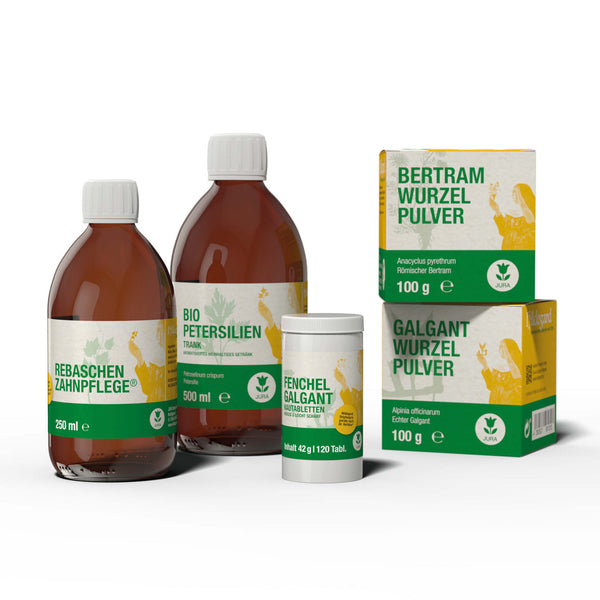
Those interested in mindful nutrition with herbs will find a selection based on Hildegard's teachings in our herb and spice range.
External applications
- Alternating warm and cold showers for the legs
- Cooling compresses
- Gentle massages directed towards the heart
Water in the legs in special situations
During pregnancy
Fluid retention is common during pregnancy and usually harmless. Nevertheless: sudden severe swelling or headaches should always be assessed by a doctor.
In heart failure
In cases of cardiac insufficiency, swollen legs are a classic symptom. According to experts at the Cleveland Clinic, oedema occurs here because the heart is no longer able to pump blood back efficiently enough. Consistent medical care is essential in these cases.
Hildegard's teachings and mindful nutrition
Hildegard von Bingen viewed wellbeing in connection with the balance of the body's humours – a historical perspective described in her teaching on the four humours. Those interested in Hildegard's herbal knowledge and mindful nutrition will find inspiration here:
- Hildegards 6-Kräuterbitter – a classic from Hildegard's herbal teachings
- Fennel-Galangal Tablets – a popular recipe according to Hildegard
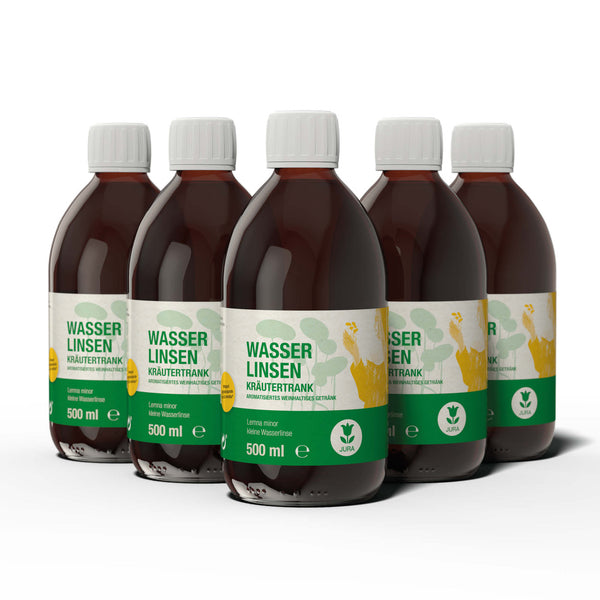
- Duckweed Herbal Drink – one of the best-known preparations from Hildegard's tradition
- Fasting Soup according to Hildegard von Bingen – a classic of the Hildegard kitchen
Conclusion: Take water in the legs seriously – but don't panic
Water in the legs is common, but not always harmless. Those who pay attention early, make use of movement, diet and simple home remedies, and are aware of warning signs can do a great deal for their quality of life.
When in doubt, the rule always applies: it is better to seek medical advice one time too many than one time too late. Also discover our complete range based on Hildegard's teachings.