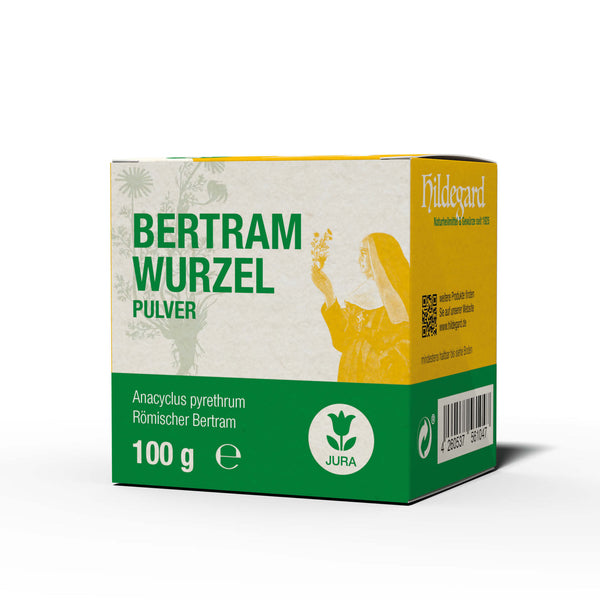



One of the most well-known classics in Hildegard's teachings is certainly Bertram, also known as Anacyclus pyrethrum. Chewing a piece of dried Bertram root stimulates the flow of saliva – a popular ritual in the Hildegard tradition.
The coneflower (Echinacea purpurea) also has a long tradition in herbal lore. The indigenous peoples of North America valued it centuries ago. The polysaccharides and alkylamides it contains make it one of the best-known plants in the herbal tradition. Prepared as a tea, tincture or juice, Echinacea is a firm fixture in many herbal rituals during the cooler seasons.
And then there is the elderberry, affectionately referred to by Hildegard as the "Holderbaum" (elder tree). Both the flowers and the berries of the black elder (Sambucus nigra) have been part of the herbal tradition for centuries. They contain flavonoids, anthocyanins and vitamin C. An elderflower tea is a firm part of the autumn and winter ritual for many people.
Those interested in Hildegard's herbal teachings will find many recipes in her traditions that can be integrated into everyday life as a mindful ritual – especially during the transitional periods between the seasons.
Lifestyle also played a central role in Hildegard's teachings, of course. She emphasised a mindful, natural diet, plenty of exercise in the fresh air and sufficient rest. For Hildegard, a mindful way of life was the foundation of her holistic approach.
With the variety of herbs and a mindful lifestyle, Hildegard's teachings can be incorporated into everyday life in many ways. Her traditions have been inspiring people for centuries – discover them for yourself!
In our online shop you will find a large selection of products based on Hildegard's teachings. Discover our herbs and spices and let yourself be inspired by Hildegard's tradition.