Hildegard von Bingen (1098–1179) wasn’t just an abbess, composer, and visionary—she was one of the most important nutrition thinkers of the Middle Ages. Her writings about food, herbs, and lifestyle are surprisingly precise and still fascinate many people today. This guide explains what makes the Hildegard diet unique, which foods she described—and which ones she clearly rejected.
1. The Basic Principles of the Hildegard Diet
Hildegard von Bingen’s approach to nutrition is based on a holistic understanding of people. For her, body, mind, and soul form an inseparable unit. Food isn’t just fuel—it’s a way to care for this unity.
At the center is the concept of “Viriditas”, a kind of life force that, according to Hildegard, is especially concentrated in certain foods, herbs, and spices. She made a clear distinction between foods that boost this force and those that weaken it.
Hildegard also recommended closely following the seasons. Each season brings different foods. Cleanses and fasting periods should be timed with intention.
2. The Concept of “Viriditas” – Hildegard’s View on Food
Hildegard developed her own teachings, inspired by ancient humoral theory but going far beyond it. She described how certain foods, in her view, increase or reduce the body’s inner moisture (mucus), how they create warmth or cold, and how they affect different parts of the body.
For Hildegard, mucus (Latin: phlegma) was a central topic. She believed too much “bad mucus” comes from eating the wrong foods, lack of exercise, and careless living. In her teachings, nutrition is the most important way to keep this balance.
Especially important: Hildegard distinguished between “good” and “bad” mucus. Foods like spelt or fennel she described as beneficial, while foods like raw cabbage or pork were seen as less advisable.
3. Foods Recommended by Hildegard
In her main work Physica, Hildegard described and evaluated hundreds of foods, herbs, and spices. Here are the main recommended categories:
Grains
Hildegard especially described spelt as the best grain (more on this in the next section). She also spoke positively about oats. According to her teachings, wheat should only be used as whole grain.
Vegetables
Hildegard most often mentioned: fennel, radish, beets, celery, beans, and chestnuts. Onions and garlic, according to her writings, should preferably be used cooked.
Fruit
Hildegard described apples (for sensitive people, steamed or baked), pears (dried or cooked), medlars, and quinces. Preparation plays a big role in her teachings.
Meat and Animal Products
Hildegard described moderate meat consumption. She especially mentioned poultry and lamb. She was critical of pork. Eggs, milk, and dairy products are allowed in moderation according to her teachings. River fish (like pike, trout) were valued.
Sweeteners
Honey is the preferred sweetener in Hildegard’s kitchen. Refined sugar was unknown in her time.
4. Spelt: Hildegard’s Grain
No food is as central to the Hildegard diet as spelt. She described it as the “best grain”—warm, rich, nourishing, and milder than all other grains.
The classic Hildegard breakfast is the so-called Habermus: a spelt porridge prepared with apples, cinnamon, a pinch of galangal, and some bertram. It’s one of the best-known recipes from Hildegard’s kitchen.
5. Spices According to Hildegard: Galangal, Bertram, Fennel & More
Probably the most distinctive feature of the Hildegard diet is the spices. Hildegard was way ahead of her time, describing certain spices not just as flavorings but as central elements of her teachings.
Galangal
Galangal (Alpinia officinarum) is one of the key spices in Hildegard’s teachings. It belongs to the ginger family and has a spicy, aromatic flavor. Hildegard gave it special attention in her writings:
In Hildegard’s tradition, galangal plays a central role. Our galangal tablets are among the most popular products in shop.
Bertram Root
Bertram (Anacyclus pyrethrum) is an almost forgotten plant whose root Hildegard mentioned especially often in her writings—for daily use:
Our bertram root powder can be sprinkled on food daily.
Fennel
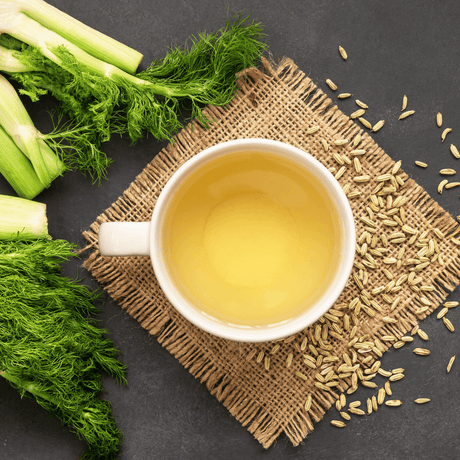
Fennel (Foeniculum vulgare) is probably the spice Hildegard mentioned most often
Quendel (Wild Thyme)
Quendel is the old name for wild thyme and is another staple herb in Hildegard's kitchen. In the Hildegard tradition, it's used daily as a spice.
Bärwurz
Bärwurz (Meum athamanticum) is one of the well-known herbs in Hildegard's teachings. The famous recipe is the Bärwurz-Pear-Honey Cure, where the spice powder is taken with cooked pears and honey.
| Spice | Importance in Hildegard's Teachings | Use |
|---|---|---|
| Galgant | Key spice, mentioned often | Tablets, powder on food |
| Bertramwurzel | Highly praised spice | Powder, daily on food |
| Fennel | Most versatile herb in Hildegard's writings | Tea, tablets, powder |
| Quendel | Staple spice in Hildegard's kitchen | Spice in dishes |
| Bärwurz | Well-known cure herb | Powder with pear honey (cure) |
| Wormwood | Classic for spring cleanse | Drink, elixir (cure) |
6. Less Recommended Foods
A key part of the Hildegard diet is to avoid or greatly reduce certain foods. Hildegard was surprisingly specific about this.
Strawberries
Hildegard explicitly warned against strawberries—they grow close to the ground and, for her, are exposed to impurities. This ban is one of the best-known and most debated in the Hildegard diet.
Pork
Hildegard was critical of pork. She allowed it in small amounts but didn't recommend it as a regular food source.
Raw and Cold Foods
Hildegard was a fan of warm, cooked meals. Raw food is seen as less ideal in her teachings. This goes against some modern nutrition trends—but fits perfectly with her logic.
Legumes (with exceptions)
Hildegard was critical of lentils and certain beans. Peas and chickpeas, on the other hand, are described as okay in moderation.
Coffee, Alcohol, Sugar
Hildegard didn't know these substances as we do today—but based on her principles, followers of the Hildegard diet clearly reject coffee and refined sugar. Herbal tea, spelt coffee, and honey are the alternatives.
| Food | Assessment by Hildegard |
|---|---|
| Spelt | Highly recommended |
| Fennel, Galgant, Bertram | Use daily |
| Steamed apples, pears | Recommended |
| Poultry, lamb | In moderation |
| Strawberries | Avoid |
| Pork | Better to avoid |
| Raw food | Only rarely, better warm |
| Refined sugar, coffee | Avoid (modern understanding) |
7. Cleanses and Fasting Periods
Besides everyday nutrition, targeted cleanses play an important role in Hildegard's teachings. She described them as mindful rituals throughout the year.
Wormwood Cleanse (May Cleanse)
The best-known Hildegard cleanse is the wormwood cleanse in spring (April to May). Wormwood elixir is taken on an empty stomach—a classic Hildegard tradition, which she described as an annual ritual from May to October.
Bärwurz-Pear-Honey Cleanse (Autumn)
The Bärwurz cleanse is especially recommended for autumn. The Bärwurz powder is taken daily with cooked pears and honey—for several weeks.
Hildegard Fasting
Fasting according to Hildegard isn't total abstinence from food, but a conscious reduction to light meals: spelt porridge, vegetable soups, herbal teas. Hildegard described fasting periods at least once a year—preferably during Lent before Easter.
Read more: Our detailed fasting articles on the blog.
8. Typical Hildegard Recipes
Habermus (Spelt Porridge)
The classic Hildegard breakfast: 100 g cracked spelt is boiled with 200 ml water and left to swell. Add a grated apple, a pinch of cinnamon, a knife tip of galgant, and a bit of bertram. Sweeten with honey.
Spelt Herb Bread
A bread made from whole spelt flour, seasoned with fennel, quendel, and galgant. No yeast—instead, a mild sourdough is used.
Parsley Soup
Hildegard especially valued parsley. A simple soup made from spelt semolina, fresh parsley, vegetable broth, and a splash of parsley drink is perfect as a light dinner.
Wormwood Drink (Wormwood Elixir in Wine)
For the May cleanse: Wormwood extract is diluted with a good splash of white wine and drunk on an empty stomach. A tradition Hildegard described explicitly.
9. JURA and the Hildegard Tradition
The Hildegard diet is appreciated not only by the general public but also by trained professionals.
Dr. Gottfried Hertzka (1913–1997) is considered the founder of the modern study of Hildegard's teachings. Starting in 1960, he worked closely with JURA and made Hildegard's recipes available to pharmacies for the first time. His book "So heilt Gott" is a classic and can still be found in many practices today.
For more scientific information, check out the study on medieval botany in the Journal of Ethnopharmacology.
10. Hildegard Nutrition Today
Modern nutrition scie
Science has confirmed some of Hildegard's observations – though of course, the explanations are different from the medieval theory of bodily fluids.Spelt: Spelt actually contains more protein and a different amino acid profile than modern wheat. Many people who are sensitive to wheat tolerate spelt better.
Galangal: Compounds like galangin, found in galangal, are being studied in botanical research.
Fennel: Fennel is a staple in European botanical medicine (there’s an ESCOP monograph on it).
Bottom line: The Hildegard diet isn’t conventional medicine. It doesn’t replace medical treatment. But it does offer a coherent, natural approach to nutrition that many people find enriches their daily lives.
11. How to Get Started – Practical Tips for Everyday Life
Step 1: Introduce spelt. Gradually swap wheat bread for spelt bread. In the morning, make Habermus – with apple, cinnamon, and a pinch of galangal.
Step 2: Use spices daily. Sprinkle a pinch of bertram root on a warm meal every day. Enjoy fennel as an evening tea.
Step 3: Try a seasonal cleanse. Start a wormwood cleanse in spring or a masterwort-pear-honey cleanse in autumn. Our cleanse kits have everything you need.
Step 4: Choose warm meals. Meals should be at least room temperature – ideally warm.
Step 5: Pay attention to the seasons. Eat what’s in season. Go light in summer, hearty and warming in winter.
Frequently Asked Questions about the Hildegard Diet
Is the Hildegard diet vegetarian?
No. Hildegard described moderate meat consumption – mainly poultry and lamb. But she did put plant-based staples like spelt, veggies, and spices at the center.
Can I combine the Hildegard diet with my current eating habits?
Yes. The principles work well together. If you’re gluten sensitive, try spelt in small amounts first. If you have chronic health issues, we always recommend checking with a doctor.
Where can I find authentic Hildegard products?
JURA has been making Hildegard products following Dr. Hertzka’s traditions since 1984. You’ll find all products at hildegard.de.