

There are Friday evenings when your head has already given up, but your hunger hasn't. When you don't feel like ordering delivery and the idea of a homemade pizza is floating around, the question almost automatically arises: which flour? Anyone who has once ventured into baking with spelt instead of wheat will often never want to go back. A pizza dough with spelt flour has a slightly nutty character, becomes hearty and chewy rather than merely fluffy, and has held its place in the Hildegard tradition for many centuries as the staple grain that simply suits everyday baked goods. The following recipe is one of those reliable ones that always works – without complicated techniques, without a lengthy pre-dough marathon.
Why spelt flour is a good choice for pizza dough
Spelt is not a modern invention. It is an ancient European grain that was cultivated in medieval monastery gardens before wheat and is described in Hildegard von Bingen's Physica as the staple grain par excellence. What makes spelt particularly suited for pizza dough are a few characteristics you notice in practice:
- The flavour is more pronounced than wheat – slightly nutty, with a very delicate sweetness
- The crust becomes heartier and more aromatic
- The dough is easy to work with, as long as you pay attention to a few small details
- Many people find spelt baked goods easier to digest – though this varies from person to person
The most important point in practice: spelt contains gluten, but a different gluten profile than wheat. It is somewhat more sensitive, less elastic. Once you know this, you'll handle it just fine. Those who expect the same handling as with wheat are sometimes surprised. For more on the difference between the two grains, see our article on the question of whether spelt is healthier than wheat.
Which spelt flour you need
For pizza dough, the choice of flour is crucial. Too coarse – the dough becomes heavy and dense. Too light – it loses the typical spelt character. The classic compromise and standard choice:
Spelt flour type 630. This is the light, but not too white, refined spelt flour. Comparable in behaviour to wheat flour type 550, with a clear spelt aroma. For pizza dough it is almost unrivalled. We use the organic spelt flour type 630 from our range – a traditionally milled organic flour of monastery quality that delivers exactly the consistency needed for a good pizza dough.
If you wish, you can replace a portion (about one third) with wholegrain spelt flour – this gives a heartier crust, but also a denser dough. For starters, I recommend the pure type 630. If you're making the recipe for the first time, you should first taste the result in the classic version. You can always fine-tune later.
Matching this article
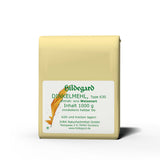
The basic recipe: pizza dough with spelt flour
Ingredients for two large baking sheets or four small pizzas
| Ingredient | Quantity |
|---|---|
| Organic spelt flour type 630 | 500 g |
| Lukewarm water | 300 ml |
| Fresh yeast | 10 g (or one packet of dry yeast) |
| Olive oil | 3 tablespoons |
| Salt | 1 level teaspoon |
| Sugar or honey | 1 teaspoon (for the yeast) |
| Optional: dried herbs (oregano, thyme) | 1 teaspoon |
Preparation
1. Activate the yeast. Stir the yeast in a cup with about 100 ml of the lukewarm water and the teaspoon of sugar or honey. Leave to stand for five to ten minutes until it begins to foam slightly. The yeast needs to wake up – a step that is often skipped but is important with spelt dough.
2. Mix the dry ingredients. Place the spelt flour in a large bowl, add the salt and optional herbs, and stir briefly.
3. Bring everything together. Pour the activated yeast, the remaining water and the olive oil into the centre. Stir from the inside out with a wooden spoon until everything is combined.
4. Knead. Turn the dough out onto a lightly floured surface and knead for about eight to ten minutes. Not too long – spelt dough requires less kneading time than wheat. It should be smooth, but not overworked.
5. Let it rise. Return to the bowl, cover with a damp cloth and leave to rise in a warm place (not hot!) for about 60 to 90 minutes. The dough should visibly increase in size, but does not need to double in volume. With spelt this happens more slowly than with wheat – patience pays off.
6. Knead again briefly. Knead briefly, halve (for two baking sheets), shape into a ball. Leave to rest for another ten minutes – this makes rolling out significantly easier.
7. Roll out. Roll out thinly on a floured surface – about three to four millimetres. For spelt pizza: not too thin, otherwise the crust will become hard. Place directly onto the baking sheet lined with baking paper.
8. Top and bake. Add your toppings as you like (see below). Bake in a preheated oven at 230 °C top/bottom heat for about 12 to 15 minutes, until the edge is golden brown and the cheese has melted gently. With fan-assisted heat, use around 220 °C and slightly less time.
What you do differently with spelt dough compared to wheat dough
A few points that make the difference – and that no recipe explicitly states:
Knead less. This is the most important point. Spelt gluten is more sensitive than wheat gluten. Kneading too long destroys the structure. Eight to ten minutes is entirely sufficient.
Slightly less water. Spelt absorbs water differently. Start with the 300 ml and add a splash more if needed, rather than adding it all at once. The dough should feel slightly tacky, but not sticky.
Longer rising is better than too short. If you have time, you can also let the dough rise overnight in the fridge – this develops much more flavour. The next day, let it acclimatise at room temperature for half an hour, then continue.
The oven can be very hot. Really hot. If you have a pizza stone: perfect. If not, place the tray in the lower part of the preheated oven so the heat comes from below.
Topping ideas: classic and Hildegard-inspired
The dough is the base. What goes on top is a matter of taste. A few suggestions:
Classic Italian
Tomato sauce made from sieved tomatoes with salt, pepper, olive oil and a hint of oregano. Top with buffalo mozzarella and fresh basil added after baking. Simple, but reliable.
White pizza with herbs
Ricotta or cream cheese as a base, with rosemary, thyme and a few drops of good olive oil. Scatter rocket over the top after baking. Wonderfully unfussy.
Hildegard-inspired
Steamed root vegetables as a topping (fennel, carrot, celeriac), with a dollop of fresh goat's cheese, a pinch of galangal and fresh herbs. Sounds unusual, tastes surprisingly good. Those interested in monastery cuisine will find further ideas in our Hildegard recipe collection.
Herb flatbread
Simply brush with olive oil, sprinkle with sea salt, rosemary and oregano. A focaccia-style variation, essentially. Goes wonderfully with a soup such as our calf's foot broth or a fasting soup.
When the dough doesn't cooperate
A few common problems and what you can do about them:
| Problem | Likely cause | What helps |
|---|---|---|
| Dough doesn't rise | Water too cold or too hot, yeast old | Test water temperature, replace yeast |
| Dough is very sticky | Too much water or not kneaded enough | Dust with a little more flour, continue kneading |
| Dough tears when rolling out | Too little resting time or too cold | Wait 10 minutes, work more gently |
| Base stays soft | Oven not hot enough, too many toppings | Preheat oven properly, reduce toppings |
| Crust too hard | Rolled out too thin, baked too long | Leave it a little thicker, check baking time |
Other spelt products from our range
Once you've started baking with spelt, you'll often quickly discover further uses for it. The classic monastery kitchen knows a whole repertoire of spelt products – each for a different purpose:
- Organic spelt flour type 630 – the light baking flour for pizza dough, breads, cakes and fine pastries
- Spelt semolina – for semolina porridge, gratins and as a thickener in soups
- Spelt flakes – for muesli, porridge and oat porridge
- Spelt melt flakes – especially fine, ideal for baby porridge and soup thickening
- Spelt oat porridge – the classic Hildegard breakfast staple
- Spelt nerve biscuits – the traditional monastery biscuit with the classic spice blend
- Organic spelt cream soup – for quick soups on cold days
- Spelt pasta in various shapes – from fiori to radiatori and campanelle
- Organic spelt butter rusk – the mild classic
- Spelt coffee – the caffeine-free monastery coffee made from roasted spelt
You can find all the classics together in our spelt products collection. Those interested in the role of spelt in Hildegard's work will find more background in our article on spelt semolina and its tradition and the fundamental overview of nutrition according to Hildegard.
Spelt in the monastery tradition
A brief look at the cultural history, because it changes the experience of baking once more: Hildegard von Bingen writes about spelt in her Physica in almost rapturous terms. She describes it as the grain particularly beneficial to humankind, which should be consumed in various forms of preparation – bread, semolina, soup, food. In her four humours doctrine, she assigns it to the balancing foods.
Without making any health-related claims here: what is certain is that spelt has been the central building block of the diet in the transmitted monastery tradition since the Middle Ages. Anyone baking a spelt pizza dough is continuing a very old tradition in a very modern form. That in itself is not the worst thing.
Storage and preparation
The dough can be prepared well in advance. A few practical points:
After kneading, instead of resting at room temperature, you can also place the dough in the fridge for 12 to 24 hours. The slow rise develops much more flavour. Allow to acclimatise at room temperature for 30 minutes before rolling out.
Rolled-out, untopped dough can also be frozen. Place between sheets of baking paper in a freezer bag – this works easily for two to three months. To defrost, transfer to the fridge overnight.
Baked pizza tastes best fresh, but keeps well for a day in the fridge. When reheating: put it back briefly in a hot oven, not the microwave. That way the base stays crispy.
What remains in the end
Pizza dough with spelt flour is one of those quiet little switches that you barely notice in a week, but after half a year you no longer want to undo. The flavour is fuller, the character heartier, and the feeling of baking with an ancient European grain has something quietly reassuring about it. Add to that a recipe that is done in one hour of active time, can be prepared at any time and always works – as long as you observe the few special requirements. And good organic spelt flour is half the way to a good result. The other half is patience when kneading and waiting.
Further reading
- All spelt products at a glance
- Organic spelt flour type 630
- Is spelt healthier than wheat?
- Spelt semolina in the Hildegard tradition
- Nutrition according to Hildegard von Bingen
- Hildegard recipe collection
- Fasting soup according to Hildegard
- Calf's foot broth according to Hildegard
Frequently asked questions about pizza dough with spelt flour
Which spelt flour is best for pizza dough?
Spelt flour type 630 is the standard choice – light enough for an airy dough, but with a distinct spelt aroma. The organic spelt flour type 630 from the monastery range delivers very reliable results.
Can I also use wholegrain spelt flour?
Yes, but the dough will be denser and heavier. For starters, it is recommended to replace at most one third of the light flour with wholegrain flour. Those who like the hearty character can gradually work towards a higher wholegrain proportion.
How long does a spelt pizza dough need to rise?
At room temperature, 60 to 90 minutes. For more flavour, let the dough rise overnight in the fridge – twelve to 24 hours. Allow to acclimatise for 30 minutes before rolling out.
Why does my spelt dough sometimes become crumbly?
Usually because it has been kneaded too long. Spelt gluten is more sensitive than wheat gluten. Eight to ten minutes is entirely sufficient. Too little water can also be a reason.
Do I need to knead spelt dough differently from wheat dough?
Yes. Significantly less. Spelt tolerates less mechanical stress than wheat. Knead more gently and for a shorter time – that is the most important difference.
Can I prepare the dough in advance?
Very well, in fact. It can rise in the fridge for 12 to 24 hours – this develops more flavour. Freezing the rolled-out, untopped dough also works without any problem for two to three months.
What toppings go well on a spelt pizza?
Classic tomato and mozzarella, but also white pizzas with ricotta and herbs, root vegetable toppings with goat's cheese, or herb flatbread in focaccia style. The spelt base goes well with anything that brings a little more character to the table.
What does Hildegard von Bingen say about spelt?
She describes it in her Physica as the staple grain particularly beneficial to humankind. For her, spelt is the central grain, to be used in many forms of preparation. More on this in our article on nutrition according to Hildegard.
Can I bake on a pizza stone?
Yes, this produces a particularly good base. Heat the stone in the preheated oven for at least 30 minutes. Then slide the pizza onto a floured wooden board and transfer it from there onto the stone.
Where can I get good organic-quality spelt flour?
At a well-stocked organic food shop, a health food store, or directly from the Hildegard monastery range. The organic spelt flour type 630 is a reliable choice for pizza dough and other baked goods.
Note: This article is intended solely for general information about traditional recipes and the Hildegard kitchen. It does not constitute a medical or therapeutic recommendation. Spelt products are not suitable for those with gluten intolerance or coeliac disease.