Is water mint edible?
Water mint is generally considered edible, but is used far less frequently than peppermint or spearmint. The leaves can be used fresh or dried to flavour teas or dishes. As it has a rather restrained aroma, it is well suited to light dishes and for people who are sensitive to essential oils. As with all wild herbs: only use it if the plant has been identified with certainty.
Is water mint poisonous?
No, water mint is not poisonous. It belongs to the mint family and contains essential oils – like its better-known relatives – but in lower concentrations. No harmful effects are known from normal consumption or external use. As with all plants gathered from the wild, attention should be paid to clean origin and moderate use.
Matching this article
Water mint in the herbal tradition
In traditional herbalism, water mint is described as a mild herb. Its essential components are restrained, which makes it interesting for more sensitive individuals. It has barely been scientifically researched so far – it is valued primarily through botanical tradition.
How can water mint be used as a tea?
Water mint can be brewed as a herbal tea using fresh or dried leaves. To do so, pour hot water over the leaves and leave to steep for about five to seven minutes. The flavour is rather mild and slightly herbaceous. Those expecting a stronger mint flavour can combine water mint well with peppermint or lemon balm.
- Pour 250 ml of hot water over 1–2 teaspoons of dried water mint
- Leave to steep for 5–7 minutes
- Combine with honey or fennel as desired
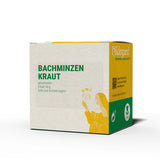
In our shop you will find cut water mint herb in verified quality – ideal for making tea or as part of herbal blends. Also discover our other herbs and spices according to Hildegard's teachings.
How deep should water mint be planted?
The planting depth for water mint corresponds approximately to the depth of the pot when repotting. A moist location is important – for example, at the edge of a garden pond or in permanently slightly moist soil. The roots should be completely covered with soil, but not planted too deep.
- Location: semi-shaded to sunny, moist soil
- Planting depth: as deep as in the growing pot
- Water regularly, avoid waterlogging
Frequently asked questions about water mint
How does water mint taste compared to peppermint?
Water mint has a distinctly milder aroma than peppermint. It tastes more herbaceous and less mentholated – ideal for finely balanced tea blends.
Can water mint be grown in the garden?
Yes, water mint is well suited to moist garden areas, e.g. at the edge of a pond or in a semi-shaded bed. Consistent moisture without waterlogging is important.
Is water mint also described in herbalism?
In classical herbalism, water mint plays a subordinate role. Its use is more of a traditional nature – as a mild herb in tea blends or herbal preparations.