This page sorts the range into groups: the four basic spices that practically everyone starts with, then the roots, the herbs, the ready-made blends, and finally the trade spices that have been coming from the south since the Middle Ages.
The four basic spices
Anyone starting out with the Hildegard kitchen doesn't need forty jars. Four spices cover the majority of classic recipes – they appear in almost every combination.
| Spice | Flavour | Typical use |
|---|---|---|
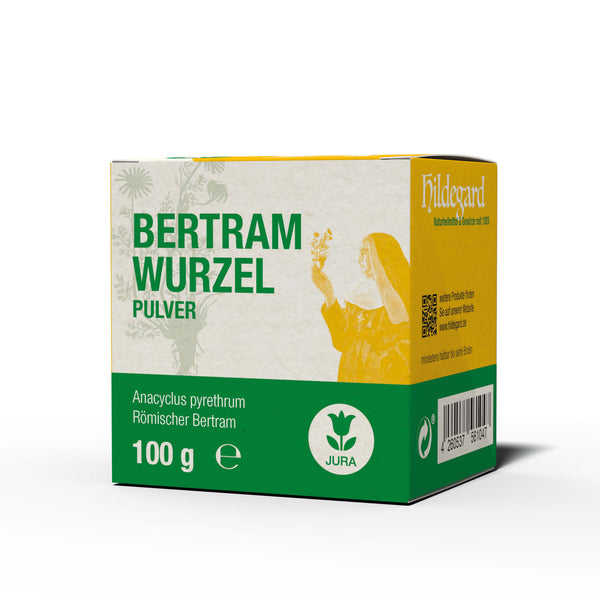
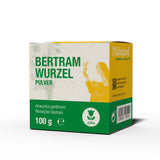
| Bertram root powder | Mildly earthy, then noticeably tingling on the tongue | Sprinkled over finished savoury dishes |
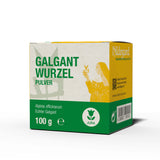
| Galangal root powder | Warm, ginger-like, mildly pungent | Savoury and sweet alike, very versatile |
| Fennel powder | Sweetish, anise-like | Vegetables, soups, baked goods |
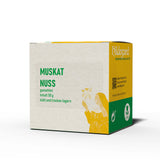
| Nutmeg, ground | Bitterish-warm | Potatoes, light sauces, baked goods – use very sparingly |
Anyone who wants all four at once will find them in the Hildegards Startpaket together with other classics.
The root spices
Roots are the most potent group in the range – intense in flavour and therefore to be used sparingly.
- Bertram root powder and Bertram root, cut – tingling, the leading spice of the tradition.
- Galangal root powder and galangal root, cut – warm and ginger-like.
- Zedoary root powder – related to turmeric, bitterish.
- Dittany root powder – aromatic, frequently mentioned in the tradition.
- Gentian root powder – distinctly bitter.
- Polypody powder – from the common polypody fern, with a sweetish note.
- Liquorice root powder – noticeably sweet, liquorice-like.
- Ginger, powdered – pungent and warm.
Matching this article
The herbs
Leaf and herb spices are milder than roots and can be used more generously. Many of them are familiar from everyday cooking; others are specialities of the monastic tradition.
- Hyssop herb, also available as organic hyssop, rubbed – bitterish and aromatic, one of the most frequently mentioned herbs in the tradition.
- Wild thyme herb powder – wild thyme, mildly aromatic.
- Yarrow herb powder and yarrow herb, cut – bitterish.
- Pennyroyal herb powder – minty, robust.
- Water mint herb – the milder relative of peppermint.
- Hart's tongue fern herb, powdered – bitterish, the basis of several recipes.
- Hawkweed powder – herbaceous and bitterish.
- Sanicle herb, cut – a plant with a long tradition.
- Organic Betonica herb – Stachys officinalis, frequently described in old herbals.
- Fennel herb, cut – for infusions.
- Organic dill herb, organic oregano and savory – the classic kitchen herbs of the group.
- Organic lavender flowers – floral and bitterish.
- Violet leaves with flowers – mild and floral.
The trade spices
Part of the range does not originate from Central European monastery gardens but arrived via trade routes from Asia and the Mediterranean. In the Middle Ages, these were costly rarities.
- Cinnamon bark, powdered – fine Ceylon cinnamon.
- Clove powder – intense, to be used very sparingly.
- Nutmeg, ground – bitterish-warm.
- Long pepper – mild heat with a minty note.
- Cubeb pepper – peppery with its own almost resinous aroma.
- Cumin powder – cumin, the all-purpose spice of the group.
The ready-made blends
Blends take the balancing act out of your hands – practical for anyone who doesn't want to juggle eight individual jars.
| Blend | Composition |
|---|---|
| Bertram mixed powder | Bertram with further spices from the tradition |
| Fennel spice blend | Fennel-based, also listed under other names in the literature |
| Celery spice blend | Celery, nutmeg, clove |
| Fenugreek spice blend | Fenugreek, white pepper, cumin |
| Cumin spice blend | Cumin as the base |
| Masterwort spice blend | Masterwort as the base |
| Ginger powder blend | Ginger with further spices |
| Spiced biscuit powder | The classic baking blend of the tradition |
| Hart's tongue spice | Hart's tongue fern herb with Ceylon cinnamon and others |
Powder or cut – which for what?
Several plants are available in both forms. The decision is not a matter of taste but of preparation:
- Powder goes directly into or onto the dish. It does not dissolve but remains in the food – so add it at the end; prolonged cooking depletes the aroma.
- Cut material is intended for extracts and infusions, i.e. for steeping and then straining. It is also suitable for cooking along if the pieces are removed afterwards.
In practice: five rules for the spice cupboard
- Start small. Two or three spices are enough to begin with. Forty jars, thirty-eight of which age unopened, help no one.
- Add powder at the end. Essential oils are volatile – heat and time deplete the aroma.
- Store in a dark, dry place. Not above the stove, not on the windowsill. Keep jars well sealed.
- Buy small quantities. Ground spices lose their potency faster than whole ones. It is better to restock more often.
- Follow the label. Where a consumption recommendation is given, it applies – regardless of what books or forums may say.
Frequently asked questions
Which spices should I start with?
Bertram and galangal are the two that appear in most recipes. Together they cover the majority of classic combinations.
What is the difference between Bertram and galangal?
They are very different in taste: galangal is warm and ginger-like, while Bertram is tingling and mildly numbing on the tongue. Many people use both alongside each other.
Are these all spices from Hildegard's time?
The plants are described in medieval herbals, including Hildegard von Bingen's Physica. The specific blends and degrees of grinding are modern compositions that refer to this tradition.
How long do ground spices keep?
The best-before date is printed on the packaging. In terms of aroma, ground spices stay at their peak for considerably less time than whole ones – one to two years is a realistic timeframe.
Is there an organic range?
Part of the range is organically certified (DE-ÖKO-006), recognisable by the "BIO" in the product name – for example hyssop, dill, oregano, fennel powder and lavender.
What should I bear in mind with nutmeg?
Nutmeg is the most sensitive spice in the range. In culinary quantities it is unproblematic, but in significantly larger amounts it is harmful to health. Use sparingly and keep out of reach of children.
Browse further
The complete category with all herbs and spices can be found under Spices according to Hildegard von Bingen. The appropriate basis for cooking is available among the spelt products, and an overview of the entire range is provided by Products from A to Z.