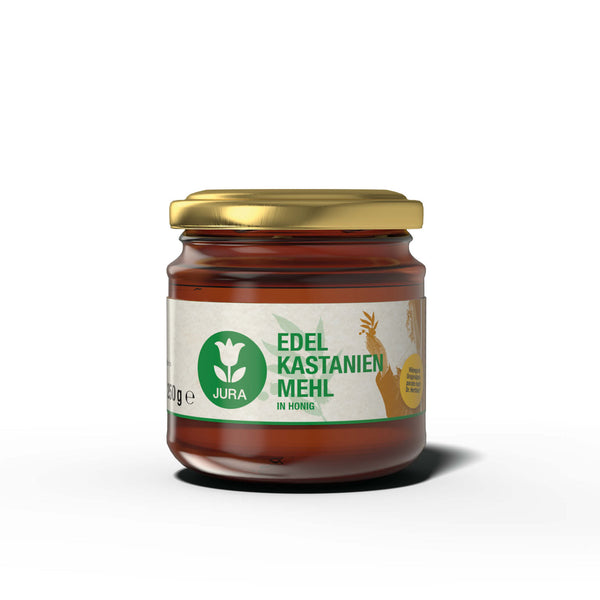
On this page you will find everything that tradition has to say about fennel: which parts of the plant Hildegard mentions, how fennel was traditionally used, and which products we at JURA produce according to these principles.
What is Fennel?
Fennel (Foeniculum vulgare) is a perennial umbellifer plant that originally comes from the Mediterranean region. Today it is cultivated throughout Europe. The plant can grow over a metre tall and forms delicately feathered leaves as well as yellow flower umbels.
Its characteristic sweetly spicy scent, reminiscent of anise, comes from the essential oils in the seeds – more precisely in the fruits, which are simply called "fennel seeds" in common parlance. Depending on tradition, different parts of the fennel plant are used:
| Plant Part | Form of Use |
|---|---|
| Fruits (seeds) | Tea, powder, chewable tablets |
| Herb (leaves) | Tea, seasoning, herbal blends |
| Bulb | Cooking, light diet |
| Root | Historical, less common |
Fennel in Hildegard von Bingen
Hildegard describes fennel in the Physica as a plant of particular value. She recommends it primarily for digestion and values it as one of the few plants for which the herb – that is, the green leaves – is also explicitly mentioned.
According to tradition, it is said in essence that fennel promotes inner warmth and is beneficial to the stomach. In her teachings, Hildegard made strong distinctions according to the temperament of foods and herbs. She considered fennel to be warm and dry – a quality that played an important role in the medieval concept of the four humours.
Particularly interesting: Hildegard recommends fennel not only as a single herb, but also in combination – for example together with galangal, which is likewise considered especially valuable in the monastic tradition. This combination is still found today in our Fennel-Galangal Tablets.
Matching this article
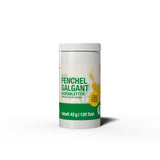
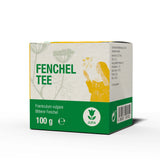
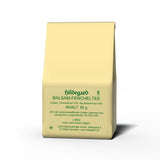
Fennel Tea – Preparation According to Old Tradition
Fennel tea is the best-known and simplest form of preparation. In the monastic tradition, the tea was made from dried fruits, lightly crushed so that the essential oils can pass more readily into the water.
This is how fennel tea is traditionally prepared:
- Lightly crush a teaspoon of fennel fruits in a mortar or leave them whole
- Pour freshly boiled water that is no longer at a rolling boil over them (approx. 90 °C)
- Cover and steep for 8–10 minutes
- Strain and drink without additives or with a touch of honey
Covering while steeping is important – otherwise the essential oils would escape with the steam. If desired, you can also mix in some fennel herb, which gives the tea a slightly fresher note.
We produce our Fennel Tea and Balsam Fennel Tea according to these traditional principles. Those who prefer something particularly mild should choose balsam fennel – a variety with a lower content of bitter compounds.
Fennel in the Kitchen – Hildegard's Nutritional Teachings
In Hildegard's nutritional teachings, fennel plays a greater role than one might initially expect. She recommends it not only as an herbal tea, but explicitly also as a culinary spice. This fits well with the plant's Mediterranean origins, as it continues to be used in many versatile ways in the kitchen today.
Fennel can be integrated into everyday life in several ways:
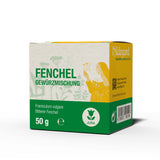
- As a spice: Fennel seeds go well with bread, cheese, soups and vegetable dishes. Our Fennel Spice Blend contains the plant in combination with other herbs from the monastic tradition.
- As tea: Daily, especially in the morning or after meals.
- As powder: Fennel powder can be worked into warm dishes, muesli or smoothies. Here we offer Fennel Powder and Organic Fennel Powder.
- As chewable tablets: For on the go – convenient and requiring no preparation. Our Fennel Chewable Tablets are composed according to Hildegard's tradition.
More on the topic of nutrition according to Hildegard can be found on our Nutrition Page as well as in the blog article on Hildegard Nutrition.
Fennel and Galangal – A Classic Combination
Anyone who delves deeper into the Hildegard tradition will soon encounter the combination of fennel and galangal. Both plants were considered particularly wholesome in the monastic tradition, and according to Hildegard, both were attributed to the stomach.
Galangal – a root from the ginger family, originating in Southeast Asia – was a coveted spice and trade commodity in medieval Europe. Hildegard valued it so highly that it remains closely associated with her name to this day. The combination of both plants in one product therefore has a direct basis in tradition.
Our Fennel-Galangal Tablets are one of the most sought-after products in our range. You can learn more about galangal on its own in our blog article on Galangal Root.
Fennel Herb – The Green Counterpart to the Seeds
Alongside the fruits, fennel herb is also mentioned in the tradition. The delicate, feathered leaves taste fresher and less intense than the seeds. They can be used to make mild herbal teas or as a culinary herb in the kitchen.
We carry both Cut Fennel Herb and Organic Cut Fennel Herb in our range.
Our Fennel Products at a Glance
| Product | Form | Special Feature |
|---|---|---|
| Fennel Tea | Loose tea | Classic preparation |
| Balsam Fennel Tea | Loose tea | Particularly mild, low in bitter compounds |
| Organic Fennel Tea | Loose tea | Certified organic |
| Fennel Powder | Powder | For food and drinks |
| Organic Fennel Powder | Powder | Certified organic |
| Fennel Chewable Tablets | Chewable tablets | For on the go |
| Fennel Spice Blend | Spice | With additional monastery herbs |
| Cut Fennel Herb | Herb | Leaves of the plant |
| Organic Cut Fennel Herb | Herb | Certified organic |
| Fennel-Galangal Tablets | Tablets | Classic Hildegard combination |
Fennel in the Light Diet
In the light diet according to Hildegard, fennel also plays a role. The monastic tradition recommended light, easily digestible food during times when the body needed particular rest. Fennel fits well with this – it is mild, aromatic and can be integrated into many simple dishes.
Anyone wishing to use fennel during fasting periods will find further inspiration in our section on Fasting according to Hildegard.
Frequently Asked Questions About Fennel
What does Hildegard von Bingen say about fennel?
Hildegard mentions fennel in her work Physica and describes it as warm and beneficial to the stomach. She recommends both the fruits and the herb and sees the plant as part of a balanced diet in accordance with the principles of the monastic tradition.
What is the difference between fennel and balsam fennel?
Balsam fennel (Foeniculum vulgare var. dulce) is a sweeter variety with fewer bitter compounds and a milder aroma. It is often described as a particularly gentle option and is well suited for people who find regular fennel tea too intense.
Can you drink fennel tea every day?
In the tradition of the monastic tradition, fennel was regarded as an everyday plant that lends itself well to daily use. As with all herbs, variety is advisable. For questions about individual use, we recommend consulting a doctor or pharmacist.
What fennel products are available at hildegard.de?
We carry fennel in various forms: as loose tea (classic and as balsam fennel), as powder, as chewable tablets, as a spice blend, as dried herb, and in combination with galangal as tablets. You can find an overview in the table further up on this page.
What is the difference between fennel seeds and fennel herb?
What is botanically correctly referred to as "fennel seeds" are actually the fruits of the fennel plant. They are more intense in aroma and contain more essential oils than the herb. Fennel herb – the green, feathered leaves – is milder and is used both as a tea and as a culinary herb. Hildegard mentions both parts of the plant in the tradition.
Does fennel fit into the Hildegard diet?
Yes. Fennel is explicitly mentioned in Hildegard's nutritional teachings as a spice and culinary herb. More on the principles of nutrition according to the monastic tradition can be found on our Nutrition Page.
Note: The contents of this page are based on the transmitted writings and the monastic tradition of Hildegard von Bingen. They do not replace medical advice. For health complaints, please consult a doctor or pharmacist.