This page explains how the stinging actually works, how to harvest the plant without getting stung, and what can be made from it in the kitchen.
What the stinging nettle is botanically
Two species are common in Central Europe. The Common Stinging Nettle (Urtica dioica) grows up to one and a half metres tall, is perennial and spreads via underground runners. The Small Nettle (Urtica urens) stays considerably shorter, is annual – and stings noticeably more intensely.
Both bear opposite, toothed leaves with a heart-shaped base and a square stem. The flowers are inconspicuous and hang in long panicles from the leaf axils.
How the stinging works
The stinging hairs are small silica tubes with a predetermined breaking point at the tip. On contact, this tip snaps off, leaving a sharp needle that penetrates the skin. At the same time, the contents of the hair are injected – a mixture of formic acid, histamine and other compounds.
The principle is that of a hypodermic needle, only miniaturised. It also explains the best-known trick: the hairs point diagonally upwards. Stroking a leaf from bottom to top bends them flat rather than snapping them off. That said, this is not reliable – gloves are the safer option.
After contact
The wheals usually disappear on their own within half an hour to an hour. Cool water soothes; rubbing makes it worse, as the broken-off hair fragments are driven deeper into the skin.
In cases of large-area contact, with children, or if symptoms go beyond the usual reaction, a medical assessment is advisable.
Matching this article
Harvesting
- Gloves and scissors. Anything else is bravery, not a method.
- Take young shoot tips. The top four to six leaves are tender. Old, tough leaves from the lower stem are coarse.
- Before flowering. After that, the leaves develop small crystal deposits that feel rough in the mouth.
- Not from roadsides or the edges of conventionally farmed fields.
- In the morning, once the dew has dried.
The plant reliably regrows after cutting – a stand can be harvested several times over the season.
In the kitchen
The sting disappears completely once the hairs are destroyed. Any one of three things is sufficient: brief blanching, vigorous rolling with a rolling pin, or simple chopping.
- Like spinach. Blanch, squeeze out, chop, toss in butter. The flavour is more herbaceous and slightly more bitter than spinach.
- As soup. Start with onion and potato, add the nettles only at the end and let them steep briefly to keep the colour green.
- In dough. Finely chopped in pancakes, Spätzle or bread dough.
- As pesto. Briefly blanched with nuts, oil and hard cheese.
- The seeds. Harvested in late summer, dried and sprinkled over salad or bread – nutty in flavour.
Drying
Stinging nettle dries well. Tie into bundles, hang upside down in a dark, airy spot, and wait one to two weeks. Light bleaches the colour. The leaves are ready when they rustle and snap when bent.
The process in detail is described in the article Drying herbs: methods, timings and proper storage.
The stinging nettle in the monastic tradition
The stinging nettle is among the plants described in Hildegard's Physica. It was neither an imported commodity nor a garden plant – it simply grew everywhere – exactly the kind of plant that monastery gardens and farmhouse households were familiar with.
For context: the Physica is a 12th-century text and follows an understanding of nature that is not comparable to today's. It documents the historical use of the plant.
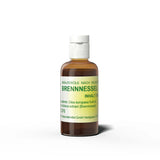
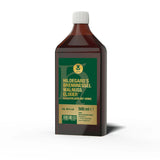
In the product range, the stinging nettle appears in two forms: as an ingredient in Hildegard´s Brennnessel Walnuss Elixier – application and consumption recommendations are covered in the dedicated article – and as a stinging nettle skin oil, a care oil for external use.
Note: The elixir contains walnut and therefore a labelling-required allergen from the tree nut group.
Frequently asked questions
Why does the stinging nettle sting?
The stinging hairs are small silica tubes. On contact, the tip snaps off, penetrates the skin and releases the contents of the hair – including formic acid and histamine.
What helps after contact?
Cool water. Do not rub – it only spreads the hair fragments. The wheals usually subside within an hour. Seek medical advice if the reaction is unusually severe or widespread.
Can you eat stinging nettle raw?
Only once the stinging hairs are destroyed. Rolling, chopping or blanching is sufficient. Untreated, it will sting in the mouth too.
When do you harvest stinging nettle?
The young shoot tips from spring through summer, ideally before flowering. The seeds in late summer.
What does stinging nettle taste like?
Herbaceous and slightly more bitter than spinach, with a mildly nutty note.
What is the difference between the Common Stinging Nettle and the Small Nettle?
The Common Stinging Nettle grows up to one and a half metres tall and is perennial; the Small Nettle stays low, is annual and stings more intensely.
Can you dry stinging nettle?
Yes, it is one of the more straightforward herbs to dry. Tie bundles upside down in a dark, airy spot.
More from the range
The herbal preparations can be found in the Herbal drinks category, with a comparison on the Herbal drinks after Hildegard von Bingen page. The care oils are listed under Hildegard Cosmetics, with a sorted overview on the Natural cosmetics after Hildegard von Bingen page.