
This article covers when to harvest, which drying methods are available, how long each takes, and how to store dried herbs afterwards so they retain their aroma.
When to Harvest?
The timing of the harvest has more influence on the outcome than the drying method. Three rules:
- In the morning, after the dew has dried. Around nine to eleven o'clock. That's when the essential oils are at their strongest, and the plant is dry.
- Just before flowering. For most leafy herbs, the aromatic content is at its highest at this point. After flowering, it diminishes.
- During dry weather. After rainy days, it's better to wait two or three days.
Cut with sharp scissors, about a hand's width above the ground — this way the plant will sprout again.
Preparation
Only wash herbs if it is truly necessary. Water significantly extends drying time and increases the risk of mould. Shaking them out is usually sufficient. If washing is necessary: pat thoroughly dry and spread out for an hour before proceeding.
Sort out wilted, yellow or spotted leaves. What doesn't look good before drying won't improve afterwards.
Matching this article


Comparison of Methods
| Method | Temperature | Duration | Suitable for |
|---|---|---|---|
| Air-drying, hanging | Room temperature | 1–2 weeks | Stemmed herbs: thyme, oregano, sage, hyssop |
| On a rack or net | Room temperature | 3–7 days | Individual leaves and flowers |
| Oven | 35–50 °C, door slightly ajar | 2–4 hours | All, when speed is needed |
| Food dehydrator | 35–40 °C | 2–6 hours | All — the most controlled method |
| Air fryer | Lowest setting, usually 40 °C | 10–30 minutes | Small quantities, check frequently |
| Microwave | Low setting | 30-second intervals | Last resort for small quantities |
Air: the classic method
Tie small bundles of five to ten stems and hang them upside down — in a dark, airy, warm location. An attic, pantry or storage room. Not in the kitchen, as it's too humid there, and not in the sun: light destroys colour and aroma.
The bundles should not touch each other. A paper bag placed over the bundle keeps dust off and catches any falling leaves.
Oven: quick, but tricky
The most common mistake is using too much heat. Above 50 °C, the essential oils evaporate, and what remains is green paper. Set the lowest temperature and wedge a wooden spoon in the door so that moisture can escape. Fan-assisted heat helps and further shortens the time — check more frequently in that case.
Food dehydrator: the most reliable
For those who dry herbs regularly, this is the best option. Constant low temperature, even air circulation, no overheating. Spread leaves in a single layer, do not stack them.
Air fryer: works, but use caution
Works for small quantities on the lowest setting. However, the airflow is strong — light leaves will be tossed around. A rack or a perforated baking mat placed on top solves this. Check every five minutes, as things move quickly here.
How Do I Know When It's Done?
Leaves must rustle and snap when bent, not fold. Stems should snap cleanly in two. If something can still be bent, residual moisture remains — and that leads to mould in the jar.
If in doubt, do a test: place a handful in a sealed jar and leave it for a day. If the inside fogs up, further drying is needed.
Proper Storage
- Keep whole, don't crush. Whole leaves retain their aroma significantly longer. Only crumble shortly before use.
- Seal airtight. Screw-top jars or tins with a seal. Paper bags are only suitable for short periods.
- Store in a dark place. Not on a windowsill, not above the stove. Light and heat are the two great aroma killers.
- Label with the date. After a year, oregano looks like thyme, and no one can remember which summer it came from.
- Be realistic about shelf life. Dried leaf herbs are at their best for about one year. After that they don't go bad, but they do fade.
What Dries Poorly
Not every herb is suitable. Basil, chives, parsley and coriander lose almost all of their aroma when dried — they are far better kept frozen. Robust, oil-rich varieties, on the other hand, dry well: thyme, oregano, sage, hyssop, savory, marjoram, rosemary, lavender.
A Safety Note on Foraging
Only dry plants that you can identify with certainty. When foraging in the wild, there is a risk of confusing plants with poisonous species, and a dried plant is even harder to identify than a fresh one. Anyone who is unsure should stick to their own balcony box or use verified purchased goods.
What You Don't Dry Yourself
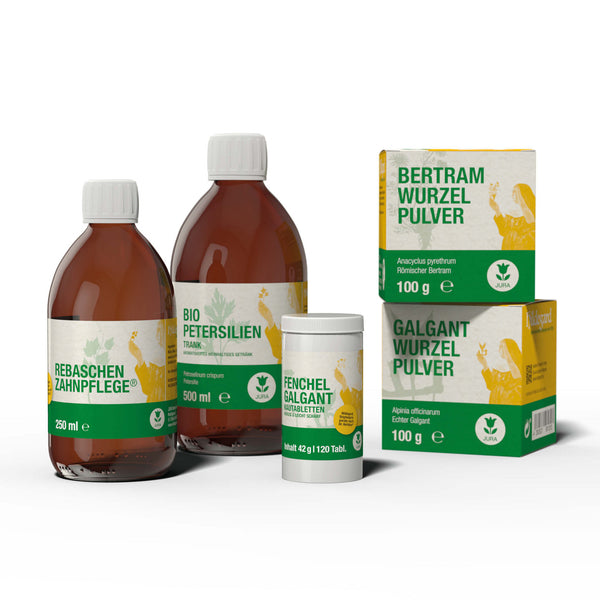
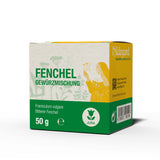
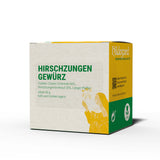
Some herbs from the monastic tradition don't grow on the balcony or are hard to come by. For these, there is ready-dried produce of culinary quality:
- Organic hyssop herb, rubbed and hyssop herb, coarsely powdered — one of the most frequently mentioned herbs in the tradition
- Wild thyme herb powder — the wild thyme
- Yarrow herb, cut
- Water mint herb, cut — the milder relative of peppermint
- Pennyroyal herb powder
- Fennel herb, cut
- Organic betony herb
- Organic lavender flowers
- Organic oregano, organic dill herb and savory, rubbed — the kitchen classics
A full overview can be found in the category Spices according to Hildegard and on the page The most important spices according to Hildegard von Bingen.
Frequently Asked Questions
How long does air-drying take?
One to two weeks, depending on the herb, room temperature and humidity. Spread out on a rack it goes faster than in a bundle.
At what temperature should herbs be dried?
As low as possible, 35 to a maximum of 50 °C. Higher temperatures cost aroma.
Can I dry herbs in the sun?
Possible, but not recommended. Direct light bleaches the colour and destroys essential oils. Shady and airy is better.
Do I need to wash herbs before drying?
Only if necessary. Water extends drying time and increases the risk of mould. Shaking them out is usually enough.
How long do dried herbs keep?
Whole leaves, stored airtight and in a dark place, retain their full aroma for about one year. Crushed, significantly less.
Why are my herbs going mouldy in the jar?
Residual moisture. The herbs were not completely dry when they were filled in. The jar test before filling prevents this.
Which herbs are not suitable?
Basil, chives, parsley and coriander. These are better off in the freezer.
Conclusion
Drying herbs is not an art, but a matter of patience plus two rules: not too hot, and let them dry through completely. Anyone who follows these guidelines will still have summer in a jar come January — exactly as it has been done in monastery gardens for centuries.
More about individual plants and their uses can be found in the overview article Herbs – The Complete Overview for Garden, Kitchen and Tradition.