
Yet star anise is a versatile spice that fits well beyond the Advent season. This article explains what star anise is, how to recognise good quality, and what must be kept in mind when buying it.
What star anise is
Star anise, botanically Illicium verum, is the fruit of an evergreen tree that grows up to ten metres tall. Each star is an aggregate fruit made up of usually eight boat-shaped segments, each holding a glossy brown seed. The fruits are harvested shortly before they ripen, while they are still green. As they dry in the sun they turn reddish brown and become woody.
The flavour sits mainly in the fruit wall, less in the seeds. That is why the whole star is used.
Star anise and anise
The name suggests a relationship that does not exist. Anise (Pimpinella anisum) is an umbellifer like fennel and caraway, an annual herb from the Mediterranean region. Star anise grows on a tree in East Asia.
The two taste similar all the same, because they contain the same main aroma compound: anethole. It is also found in fennel. Star anise does, however, taste stronger, warmer and a little woodier than anise, with a slightly liquorice-like sweetness.
Matching this article

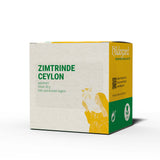
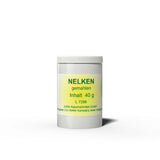

Where it comes from
Star anise is native to southern China and northern Vietnam. To this day almost the entire world production comes from there.
The spice reached Europe late, towards the end of the 16th century. Hildegard von Bingen therefore did not know star anise. It does not appear in her Physica from the 12th century. The spices available to her for this flavour were fennel and anise from the monastery garden.
Beware of confusion
With star anise there is one point that matters more than with most other spices: Japanese star anise (Illicium anisatum) looks very similar but is poisonous. It contains anisatin, which can cause convulsions and nausea. Cases have come to light in the past in which commercial goods were contaminated with it.
Telling the two apart is difficult for a layperson. Japanese star anise is usually smaller and more irregular in shape, the tips curve upwards more strongly, and it smells resinous or of camphor rather than of anise. The only safe option is produce from the food trade and from reliable suppliers. Star anise from decorative ranges does not belong in the kitchen.
For infants and small children, specialist bodies generally advise against tea made from star anise.
How to recognise good quality
- Whole stars. Good produce consists mostly of complete stars with eight points. A fair amount of breakage is normal, but a bag full of crumbs points to old or inferior goods.
- Reddish-brown colour. Evenly reddish brown, not grey or faded.
- Strong fragrance. A star rubbed between the fingers should immediately smell distinctly of anise and liquorice.
- Glossy seeds. The seeds in the compartments are smooth and shiny.
Flavour and dosage
Star anise is intense. A single star is enough for a pot of red cabbage or a litre of compote. For a large quantity of mulled wine or punch, two are sufficient.
The rule of thumb: Start with one star and add more if needed. Remove whole stars before serving. Ground, even a knife tip can be clearly tasted.
Uses in the kitchen
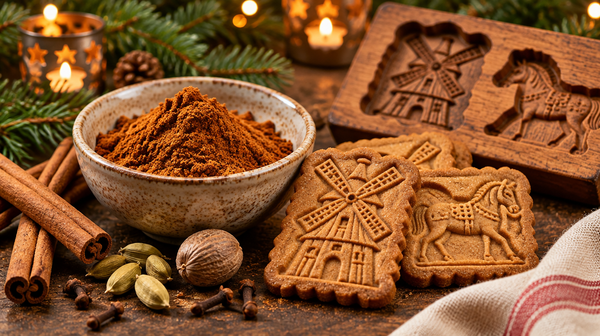
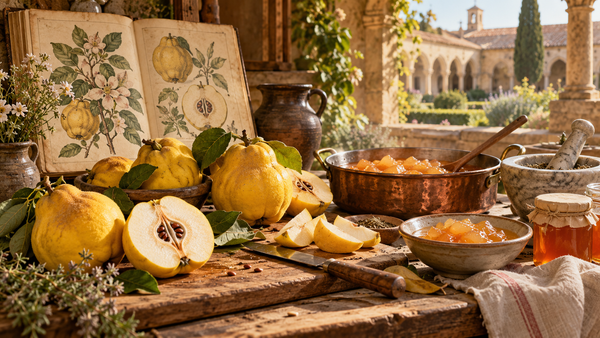
- Sweet: Plum and pear compote, baked apples, quince jelly, rice pudding, spiced biscuits.
- Savoury: Red cabbage, braised dishes with beef or duck, pumpkin soup, game sauces.
- Asian: Star anise is part of Chinese five-spice powder and one of the defining notes in the Vietnamese soup pho.
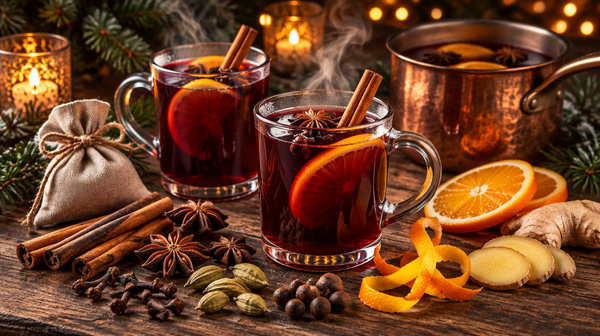
- In drinks: Mulled wine, children's punch, spiced tea, hot apple juice. The recipe for a homemade blend can be found in the article Make your own mulled wine spice.
Star anise goes particularly well with cinnamon and clove. These three form the classic winter trio. In quince jelly, a single star in the cooking liquid adds a Christmassy note.
Whole or ground?
For anything that steeps, simmers or braises, use whole stars: they release their flavour slowly and can be removed again. Ground star anise is suitable for baking and spice blends. It is best ground fresh in a spice mill as needed, because the powder quickly loses its fragrance.
Storage
- Whole stars should be stored dry, dark and airtight. This way they keep for one to two years.
- Ground star anise should be used up within a few months.
- Keep it separate from decorative stars so that there are no mix-ups.
Frequently asked questions
Is star anise the same as anise?
No. Anise is an umbellifer from the Mediterranean region, star anise the fruit of a tree from East Asia. The two taste similar because they contain anethole.
How much star anise should you use?
One star per pot or litre. Two for large quantities. Star anise is very aromatic.
Can star anise be eaten with the dish?
Whole stars are removed before serving. They are woody and hard.
Is star anise poisonous?
True star anise (Illicium verum) is a food. The similar-looking Japanese star anise is the poisonous one. For that reason use only produce from the food trade and no decorative stars.
How can star anise be replaced?
With anise or fennel seeds, about half a teaspoon per star in each case. The flavour becomes a little lighter and less woody.
How long does star anise keep?
Whole and properly stored, one to two years. Ground, considerably less.
More from the range
The other spices of the monastic tradition can be found in the category Spices according to Hildegard von Bingen, sorted by group on the page The most important spices according to Hildegard von Bingen. More on cinnamon, the most important companion of star anise, can be found on the page Ceylon cinnamon or cassia.