



Yet they are one of the most extraordinary spices there is: what we use are neither seeds, nor fruits, nor bark, but dried flower buds – harvested before they open.
What cloves are
The clove tree – Syzygium aromaticum – is an evergreen tree from the myrtle family and grows up to twelve metres tall. The flower buds are harvested just before they bloom, when they turn reddish. They are then dried in the sun, taking on the characteristic dark brown colour and nail-like shape.
Hence the name: the Latin clavus means nail – in English the spice is called clove, in French clou de girofle. It has no botanical connection to the garden flower known as a carnation.
Where they come from
The tree originally comes from the Moluccas, an island group in present-day Indonesia – known for centuries as the Spice Islands. The trade in cloves was among the most lucrative in the world, and wars were fought for control of it.
Today, the largest share of world production is harvested in Indonesia, Madagascar and Zanzibar.
Matching this article

How to recognise good quality
- By appearance. Good cloves are plump, uniformly dark brown nails with a clearly visible bud head. Broken, grey or headless pieces indicate old stock.
- By oil content. Press a fresh clove with your fingernail and oil will emerge, leaving the surface glistening.
- By the water test. Drop a clove into a glass of water: it will sink or stand upright with the head pointing up. If it lies horizontally at the surface, most of the essential oil is gone.
Flavour and dosage
Cloves taste intensely spicy, warm and slightly burning, with a resinous depth. The aroma is as assertive as almost any other spice – one clove too many can dominate an entire pot.
The rule of thumb: err on the side of fewer. Two to three whole cloves are enough for a pot of red cabbage or a litre of stock. With powder, a knife tip is sufficient.
Uses in the kitchen
- Savoury: red cabbage, sauerbraten, braised dishes, game sauces, pickled pumpkin and cucumbers.
- Studded into an onion. The classic for broth and stock: stud a halved onion with a bay leaf and a clove and let it steep.
- Sweet: spiced biscuits, compote, apple dishes, plum jam.
- In drinks: let whole cloves steep and remove before serving.
- Remove whole cloves. Anyone who accidentally bites into one will taste nothing but clove for the rest of the meal.
Whole or ground?
Whole cloves retain their aroma for years and can be removed from the dish afterwards – this is the way to go for anything that steeps or braises. Ground cloves are the choice for baking, where the spice needs to be evenly distributed. However, they lose their fragrance more quickly and should be bought in small quantities.
Cloves in the monastic tradition
The clove is among the spices described in Hildegard's Physica. In the 12th century it was an import from far away and correspondingly precious – in Central Europe not an everyday spice but a luxury item.
For context: the Physica is a 12th-century text and follows a understanding of nature that is not comparable to modern thinking. It documents which spices were known at the time and how they were used.
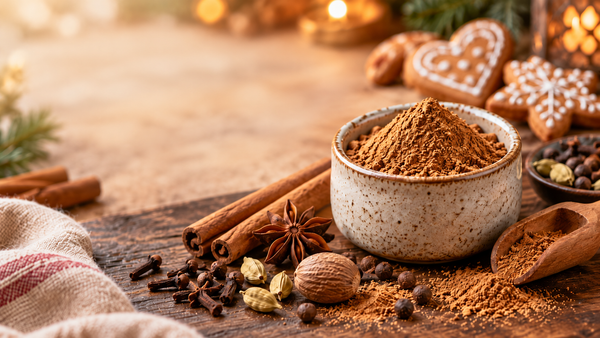
In today's Hildegard kitchen, the clove holds a firm place in baked goods recipes – alongside cinnamon and nutmeg. All three are found in the organic spelt nerve biscuits. Clove is also an ingredient in the savoury celery spice blend.
Cloves in spiced biscuits
In every classic gingerbread spice mix, clove is the second key note alongside cinnamon. The basic recipe for mixing your own can be found in the article Make your own gingerbread spice. Those who prefer a ready-blended version can reach for the spiced biscuit powder.
On the right cinnamon to go with it: which variety is suited to fine baked goods is explained on the page Ceylon cinnamon or cassia.
Storage
- Whole cloves – store dry, dark and tightly sealed; they will keep for several years.
- Powder – buy in small quantities and use within a few months.
- Not above the stove and not on the windowsill.
Frequently asked questions
What exactly are cloves?
Dried flower buds of the clove tree, harvested just before blooming. Not seeds and not fruits.
Where do cloves grow?
Originally on the Moluccas in Indonesia. Today the largest share comes from Indonesia, Madagascar and Zanzibar.
How many cloves should you use?
Two to three whole cloves for a pot or a litre of stock. A knife tip of powder. Cloves make their presence known quickly.
Can you eat whole cloves?
Whole cloves are usually removed before serving. They are very hard and taste overwhelmingly intense on their own.
How do you recognise fresh cloves?
By their plump shape, the oily sheen when pressed, and the water test: fresh cloves stand upright or sink, old ones lie horizontally at the surface.
How long do cloves keep?
Whole and properly stored, several years. Ground, considerably less – after a year the fragrance is noticeably weaker.
Are cloves related to the carnation flower?
No. Both share the name due to their shape, but they belong to entirely different botanical families.
More from the range
The other spices from the monastic tradition can be found in the category Spices after Hildegard, sorted by group on the page The most important spices according to Hildegard von Bingen.