


Nutmeg is one of those spices that almost everyone has in the cupboard and hardly anyone uses consciously. It ends up in béchamel, mashed potatoes, spinach – usually as an automatic reflex, without much thought. And yet nutmeg is a spice with an unusually long trading history and one characteristic you should know about: when it comes to quantity, it is the most sensitive spice in the entire cupboard.
This article explains what nutmeg is botanically, what place it holds in the monastery tradition, how it is used in the kitchen – and why the question of quantity deserves more serious attention here than with pepper or cinnamon.
Important upfront: the question of quantity
Nutmeg is a culinary spice and intended exclusively as such. In the amounts commonly used in cooking – a pinch, a few grates over the grater – it is unproblematic and has been in use for centuries.
Significantly larger amounts are a different matter. Nutmeg contains myristicin, and consuming quantities far above culinary doses can lead to serious poisoning symptoms – including circulatory problems, nausea, and conditions requiring medical treatment. This applies to adults and, in more severe form, to children.
In practical terms: nutmeg is grated, not spooned. Anyone using the spice in the kitchen as described is on the safe side. Anyone who has accidentally consumed a larger amount should seek medical advice – in Germany, the Poison Control Centre is available around the clock.
What nutmeg is botanically
The nutmeg tree – Myristica fragrans – originates from the Banda Islands in present-day Indonesia. Its fruit yields two spices: the seed kernel we know as nutmeg, and the red seed coat surrounding it, which is traded as mace. The two taste different – mace is more delicate and less pungent.
Nutmeg reached Europe via the Arab trade from the early Middle Ages onwards and was extremely expensive for centuries. The tree could not be cultivated in the monastery gardens of Central Europe; nutmeg was a traded commodity and correspondingly precious.
Matching this article

Nutmeg in the Hildegard tradition
Nutmeg is among the spices described in Hildegard's Physica – remarkable enough, since it was an imported rarity, not something from the garden. In today's Hildegard kitchen, nutmeg appears primarily in baked goods, often in combination with cinnamon and clove.
For context: the Physica is a text from the 12th century and follows an understanding of nature that is not comparable to that of today. What it hands down is the historical use of the plant.
Use in the kitchen
- Grate fresh rather than buying pre-ground. Nutmeg loses its aroma quickly. A whole nut with a small grater keeps for years; ground powder fades considerably faster.
- Add at the end. The aroma is volatile and does not hold up well to prolonged cooking.
- Classic partners: potatoes, spinach, cauliflower, light sauces, pumpkin, cheese dishes – and in sweet cooking, baked goods with cinnamon and clove.
- Use sparingly. Nutmeg dominates quickly. One to two grates over the grater are enough for a pot.
- Store in a cool, dark place, whole nuts well sealed.
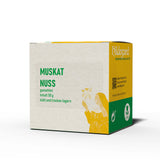
Those who prefer nutmeg in ground form will find it as ground nutmeg in the range.
Nutmeg in ready-made preparations
Several preparations from the Hildegard tradition already contain nutmeg in a balanced amount – which takes the question of quantity off your hands:
| Product | Type |
|---|---|
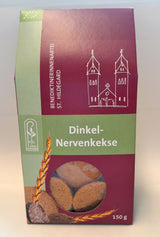
| Organic Spelt Nerve Biscuits | Baked goods with the classic spice combination |
| Spelt Energy Cookies | Baked goods, same recipe line |
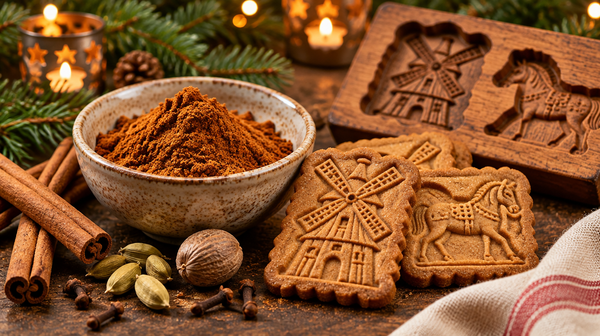
| Spiced Cookie Powder | Ready-made spice blend for home baking |
| Celery Spice Blend | Savoury blend with celery, nutmeg and clove |
| Ground Ivy Herbal Drink | Herbal drink refined with, among other things, nutmeg |
The other spices of the tradition – such as galangal and pellitory – can be found in the Hildegard spices category. The matching baking base is available among the spelt products.
Frequently asked questions
How much nutmeg should you use?
In the kitchen, one to two grates over a fine grater per pot. Nutmeg dominates quickly – you can always add more, but you cannot take it out.
What is the difference between nutmeg and mace?
Both come from the same fruit. The nut is the seed kernel; mace is the red seed coat surrounding it. Mace tastes more delicate and less pungent.
Whole nut or ground?
The whole nut retains its aroma considerably longer. Ground nutmeg is more convenient but should be used up promptly.
Is nutmeg suitable for children?
In the usual culinary amounts as a spice in food, yes. Larger quantities are dangerous for children – the nut should therefore be kept out of reach.
How should nutmeg be stored?
Whole nuts should be kept dry, dark and sealed. Stored this way, they remain usable for years.
Can nutmeg and galangal be combined?
Yes, both belong to the same culinary tradition. Galangal is warm and ginger-like, nutmeg pungently warm – the two complement each other well in baked goods and savoury dishes.
Conclusion
Nutmeg is a spice with clear rules: grate it fresh, add it late, use it sparingly. In culinary amounts it is a classic with centuries of history – and for everything beyond that, restraint is not a matter of taste but of necessity.
Those who want to avoid the question of quantity can reach for ready-made preparations such as the Organic Spelt Nerve Biscuits or the Spiced Cookie Powder, in which nutmeg is already included in a balanced amount.