

This is not the fruit's fault, but rather a misunderstanding: the quince is not a fruit for eating straight off the tree. This article explains why that is, when it is harvested and how the fruit can be processed.
Can you eat quinces raw?
Better not. Most quince varieties are as hard as wood when raw, distinctly tart and high in tannins. They are not poisonous – but it is not pleasant either, and the effort of chewing bears no relation to the result.
When cooked, the fruit transforms completely: the flesh becomes soft, often takes on a reddish colour, and the aroma develops into something floral and honeyed that no other fruit quite matches.
A note on the seeds: Quince seeds contain – like apple and cherry seeds – cyanogenic compounds. Nothing happens during normal processing, because the seeds remain whole and are removed. However, they should not be crushed, chewed or ground up.
What the quince is botanically
The quince – Cydonia oblonga – belongs to the rose family and is therefore closely related to the apple and pear. It originates from the Caucasus and the Near East and has been cultivated in Central Europe since antiquity.
The ripe fruit is golden yellow and covered with a fine, grey down. This should be rubbed off before processing – most easily with a rough cloth under running water. It tastes bitter and would make itself known in the jelly.
Apple quince or pear quince?
| Shape | Characteristics |
|---|---|
| Apple quince | Rounded, firmer flesh, more tart, stronger in flavour |
| Pear quince | Elongated, somewhat softer, milder, easier to cut |
Both are suitable for jelly. Anyone processing quinces for the first time will find the pear quince easier to handle.
Matching this article
Harvest time and ripeness
Quinces ripen late – depending on the variety and location, from the end of September through to November. They are ripe when the greenish colour has completely given way to a rich yellow and the fruit has an intense fragrance.
Unlike apples, quinces continue to ripen after picking. Stored in a cool, well-ventilated place, they can be kept for several weeks – though not next to other fruit, as their strong scent transfers.
Why is my quince brown inside?
There are two explanations for this. A slight, even browning immediately after cutting is normal – the flesh oxidises in the air, just like an apple. A little lemon juice can slow this down.
It is a problem if the flesh is already brown, glassy or soft when you cut into it. This indicates over-storage or frost damage. Cut away such areas generously; if the whole fruit is affected, it belongs in the compost.
Processing
The main reason quinces are dreaded: they are very hard. A few simple steps make things considerably easier.
- A large, sharp knife and a sturdy chopping board. Halve first, then quarter – do not try to peel them whole.
- Brief pre-cooking makes everything easier: leave whole, rubbed quinces to sit in water for ten minutes, then cut.
- Remove the core generously. It is harder than an apple's and full of stone cells.
- Cook with the skin on. Much of the flavour and pectin is in the skin – for jelly, it is worth its weight in gold.
What can be made from quinces
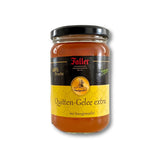
- Jelly – the classic, because the quince naturally contains a great deal of pectin. The recipe can be found on the Quince Jelly page.
- Juice – covered in detail on the Quince Juice page.
- Purée and compote – cooked until soft and passed through a sieve, goes well with game and root vegetables.
- Quince paste – thickened purée, dried and cut into cubes.
- In the oven – quartered and braised with honey and spices, as a side dish.
The right spices
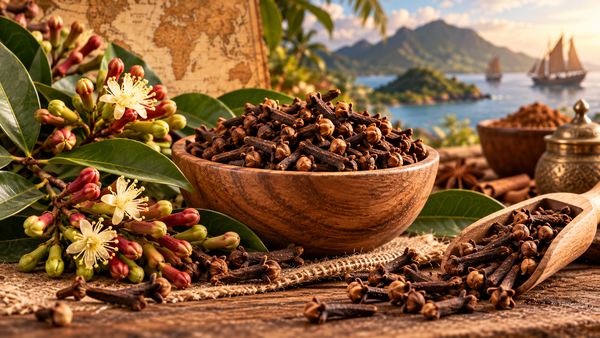
Quince takes surprisingly well to bold spicing. The classics are cinnamon bark and clove – when preserving, it is best to let whole cinnamon sticks and whole cloves steep in the mixture and remove them before filling the jars. Star anise, vanilla and a piece of ginger also work well.
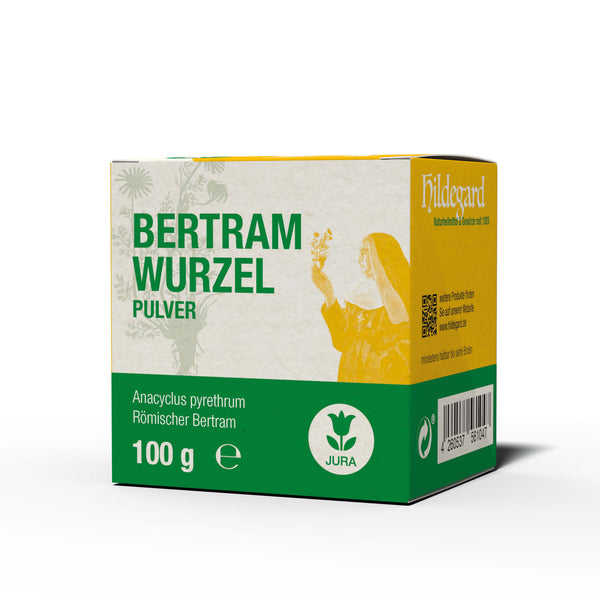
Anyone wishing to follow the direction of the monastery kitchen can add a knife-tip of galangal to the finished purée – warm and ginger-like, a good counterpoint to the tartness of the fruit.
The quince in the monastery tradition
The quince is among the plants described in Hildegard's Physica. This is unsurprising, as the quince tree stood for centuries in Central European monastery and cottage gardens – it is robust, long-lived and reliably productive.
For context: the Physica is a 12th-century text and follows an understanding of nature that is not comparable to that of today. It documents the historical use of the fruit.
The fact that the quince played such an important role for so long also has a practical reason: it ripens late in the year, can be stored and processed into long-lasting provisions – exactly what was needed before winter.
Frequently asked questions
Can you eat quinces raw?
Better not. Most varieties are very hard and tart when raw. They are not poisonous, but it is only when cooked that they develop their aroma.
When are quinces ripe?
From the end of September to November, recognisable by their rich yellow colour and intense fragrance.
Does the down need to be removed?
Yes. It tastes bitter. The easiest method is to rub it off with a rough cloth under running water.
What is the difference between apple quince and pear quince?
The apple quince is rounded, firmer and more tart; the pear quince is elongated, softer and milder. Both are suitable for jelly.
How do you cut a quince?
With a large, sharp knife on a sturdy chopping board – halve first, then quarter. Ten minutes of pre-cooking makes it considerably easier.
Why is the quince brown inside?
Slight browning after cutting is normal oxidation. If the flesh is already brown and soft when you cut into it, the fruit has been stored too long or has been exposed to frost.
Are quince seeds poisonous?
They contain cyanogenic compounds, like apple or cherry seeds. Removed whole and not chewed, they are unproblematic – they should not be crushed or ground up.
Further in our range
The spices that go with quince can be found in the Spices according to Hildegard category, sorted by group on the page The most important spices according to Hildegard von Bingen.