
What does conscious nutrition mean according to Hildegard von Bingen?
A central concept in Hildegard's teachings is discretio – moderation. Those who eat too much or too little throw themselves out of balance. Good food should nourish, not burden. How we eat is also important: consciously, slowly, and with gratitude. Because eating also means connecting with life.
Hildegard recommended natural, unadulterated foods that are in harmony with creation. Her diet is simple, but not boring – nourishing, but not heavy.
The most important staple foods according to Hildegard
Grains – spelt as Hildegard's favourite
Spelt was for Hildegard the "best grain". In her writings she described it as particularly valuable and devoted great attention to it. Especially as Habermus – a cooked spelt porridge – it is a popular start to the day. Barley, millet, buckwheat and oats were also indispensable in her kitchen.
Vegetables – cooked and digestible
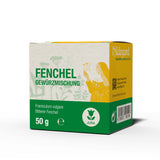
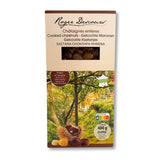
Raw food was barely common in Hildegard's time. Cooked vegetables were the standard – and even today it is evident: cooked food is often easier to digest. Particularly frequently mentioned in Hildegard's writings are fennel, celery, chickpeas, pumpkin, sweet chestnuts, beetroot and carrots.
Fruit – preferably warm rather than cold
Fruit too was mostly prepared as compote or purée. Hildegard valued apples, pears, quinces, blackberries and grapes. Cold fruits or unripe produce she rejected – in her teachings she described such foods as less digestible.
Meat & fish – to be enjoyed in moderation
Game, lamb, poultry and fish were mentioned by Hildegard in her writings as part of a conscious diet, when consumed in moderation. Pork, however, she avoided. It was less about prohibitions and more about giving the body what it truly needs – no more, no less.
Matching this article
Hildegard von Bingen recipes for everyday life
The recipes according to Hildegard are simple but well thought out. Here are some classics:
Habermus (breakfast porridge)
Cooked from spelt, water, fennel and a little butter – a warming morning meal according to Hildegard's tradition.
Spelt soup
Bring cracked spelt to the boil with vegetables such as carrots and celery, seasoned with caraway – a classic in Hildegard's kitchen.
Hildegard spiced biscuits
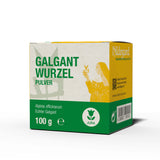
Baked with spelt flour, cinnamon, nutmeg and galangal – a popular treat from Hildegard's kitchen.
Such simple recipes help to eat more consciously in everyday life – without spending hours in the kitchen.
Bitter herbs & fasting: tradition and mindfulness
Bitter substances play an important role in Hildegard's diet. She devoted special attention to them in her writings and described specific bitter herb mixtures that are being rediscovered today.
Fasting also had its place in her teachings. It was meant to be gentle, mindful and accompanied – for example with spelt soup, herbal tea, spiced biscuits and inner contemplation. Hildegard did not see fasting as a diet, but as a conscious time out for body, mind and soul.

Quotes from Hildegard on nutrition
Some of her words still feel like a wake-up call today:
"A person should enjoy their food in moderation – neither too much nor too little."
"Spelt is the best grain, rich, powerful and more easily digestible than all other grains."
"Food should not only serve a person, but also bring them joy."
These quotes show how holistically Hildegard thought – and how modern her perspective seems.
Nutrition in Hildegard's teachings: tradition and significance
Hildegard also described certain foods and herbs of special significance in her writings. For example:
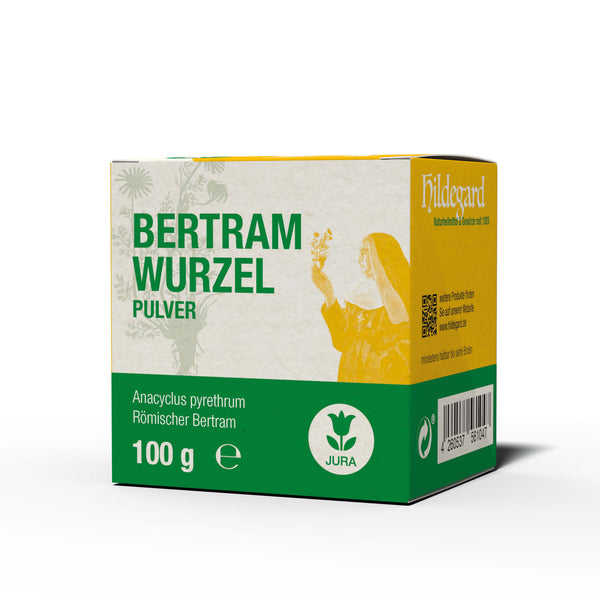
- Galangal and pellitory – two herbs to which Hildegard attributed central importance in her writings
- Spelt – the "best grain" according to Hildegard's teachings
- Quince juice – mentioned by Hildegard in her records
- Bitter herbs – a fixed component of Hildegard's herbal teachings
Hildegard understood how to create a conscious diet with simple ingredients – always in harmony with people and nature.
Conclusion: eating as a path to inner balance
Nutrition according to Hildegard von Bingen is neither a diet nor a rigid set of rules. It is a path – back to greater mindfulness, to natural foods and to a more conscious relationship with what we eat.
Those who engage with Hildegard's teachings learn not only to eat differently, but also to live differently. With more calm, more awareness – and perhaps also with more joy in the small things of everyday life. Discover our spelt range and our herbs according to Hildegard's teachings.