

Anyone who has ever stood in a Tyrolean alpine shop knows them: small dark pots containing a firm, resin-scented salve. Larch resin salve. The smell is unmistakable – woody, a little like an old wooden shed in summer, with that slightly sticky note of tree resin. The salve is no modern invention, but a home remedy that has been passed down in the Alps for centuries. Let's take a closer look at what's inside it, what it has traditionally been used for, and how it fits into the broader world of monastic tradition.
What Larch Resin Actually Is
Before we get to the salve, a brief look at its basis. Larch resin is the resin of the larch tree (Larix decidua). The larch is one of the most impressive trees in the Alps – the only native conifer that sheds its needles in autumn. Its resin is particularly viscous and has an intense, spicy scent strongly reminiscent of turpentine – no coincidence, as larch turpentine is derived from this resin.
In Alpine regions, the resin has always been collected and processed. Farmers would carefully tap the tree, let the resin flow out, and collect it in cattle horns or wooden vessels. It sounds like something from a museum – but in some Austrian mountain regions, it is still done this way today.
How a Classic Larch Resin Salve Is Made
The traditional recipe is straightforward. The salve usually consists of two to four ingredients:
- Larch resin (resin of the larch)
- An animal or vegetable fat – traditionally clarified butter, nowadays often beeswax and olive oil
- Sometimes beeswax for consistency
- Occasionally supplemented with essential oils such as Swiss pine oil or spruce needle oil
Production is a matter of patience and heat. The resin is slowly heated in the fat until it dissolves – in the process, the characteristic scent develops, which makes everyone curious in the kitchen. The mixture is then filtered through a cloth (resin always contains a bit of bark and needles), cooled slightly, and poured into jars. Leave to cool, and it's done.
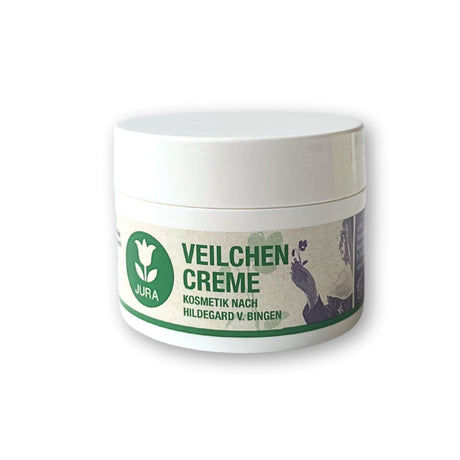
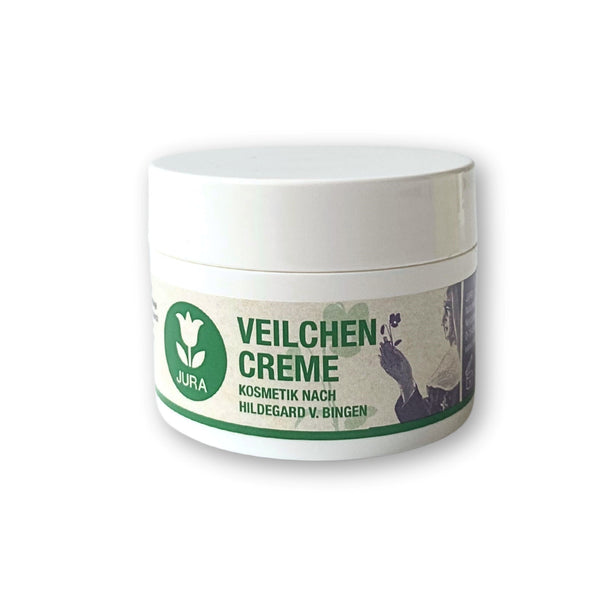
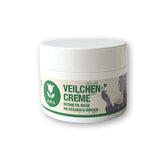
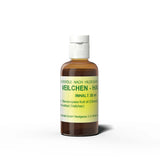
Those interested in traditional salve-making in general will find a good comparison in our article on the violet salve after Hildegard – a completely different tradition, but a similarly simple basic structure.
Matching this article
What Larch Resin Salve Has Traditionally Been Used For
In the Alpine home remedy tradition, larch resin salve appears in many contexts. An important note upfront: what tradition has passed down is cultural experiential knowledge – not medical proof of efficacy. Specific health-related claims are not permitted today. The salve is a home remedy, not a medicinal product.
Traditionally, it is mentioned in historical accounts for external use – for muscle tension, in traditional application to joints, for minor skin issues, and as a "drawing salve" for small splinters or impurities. Alpine folk wisdom can be quite direct about this: "Draws out what doesn't belong." Whether this holds true in a medical sense remains to be seen – but the tradition is well established.
For larger open wounds, deeper injuries, or skin rashes that won't go away, this salve is not the right answer. Those situations call for a visit to the doctor.
The Characteristic Scent
A word about the fragrance. Larch resin salve does not smell like a wellness product. It smells of forest, resin, and a little like a workshop. Those accustomed to subtly fragranced skincare may be surprised when they first open the jar. In the Alps, this is precisely a mark of quality – the more intense the resin scent, the more honest the preparation. If you can't smell anything, you've probably got a lot of fat and very little resin.
Larch Resin Salve and the Hildegard Tradition
To be honest: larch resin salve is not an original Hildegard recipe. It comes from Alpine folk medicine – a Tyrolean and Austrian classic, not a monastery recipe from the Rhineland-Hesse region of the 12th century. Hildegard von Bingen does not explicitly mention the larch in her Physica. What she did pass down, however, are her own salve recipes that follow a similar idea: making a plant usable in a fat-based carrier.
Still vibrantly preserved in the Hildegard tradition today are:
- The violet cream – a classic from Hildegard's Physica
- The wormwood cream – likewise passed down through the centuries
- The thyme cream – based on Hildegard's description of field thyme
- The fir salve – which is conceptually closest to the larch resin salve
Those interested in traditional monastic cosmetics after Hildegard will find the handed-down classics in our Hildegard cosmetics collection.
Making Larch Resin Salve Yourself
For those who would like to try it themselves – it is surprisingly simple. The prerequisite: pure larch resin, which can sometimes still be found in Alpine regions, otherwise through specialist suppliers. Wild harvesting from trees is legally sensitive and not recommended without experience.
A Simple Basic Recipe
- 50 g pure larch resin
- 200 g olive oil or another high-quality vegetable oil
- 25 g beeswax for consistency
Preparation
Place the resin and oil in a small pot and heat very slowly at a very low temperature – do not boil, do not fry, truly gentle heat. After about 30 to 60 minutes, the resin will have largely dissolved. Strain through a fine cloth (a coffee filter will do in a pinch) into a second pot to remove the fine bark residue. Add the beeswax, heat briefly until everything is liquid. Pour into small jars and leave to cool.
The salve keeps well at room temperature for up to six months. Those who want to store it longer can put it in the refrigerator – this easily doubles its shelf life.
Experiences from Tradition
In accounts of larch resin salve, the same things tend to come up: the scent takes some getting used to, the consistency is dense (almost waxy), and very little is needed – a small dab covers a large area. Those expecting a light, quickly absorbed cream will be disappointed. Those who embrace the experience of a traditional mountain salve will usually find they enjoy it.
And an honest word: what one person finds pleasant is individually different for another. Individual intolerances to conifer resin are possible. The first time, it is best to test a small area before applying over a larger surface.
What Larch Resin Salve Is Not
The salve is a home remedy – not a medicinal product. It does not replace medical care. Anyone who notices the following should not reach for the salve jar, but make an appointment with a doctor:
- Wounds that won't heal
- Skin changes that appear newly or change over time
- Persistent rash or itching
- Redness with a sensation of warmth (signs of inflammation)
- Injuries with foreign objects or deep bleeding
- Persistent joint complaints
Tradition complements everyday life – it does not replace a diagnosis. For serious complaints, the rule is: see a doctor first, then possibly consider the home remedy.
Between Alpine Tradition and Monastic Garden
What makes larch resin salve so special is its long, living tradition. It is an example of how regional knowledge is passed down over centuries – without studies, without marketing, but with a great deal of observation. In this sense, it fits surprisingly well into the world of Hildegard, even if it comes from a different geographic corner: simple ingredients, gentle preparation, a home remedy for everyday life.
Those who would like to read more about similarly rooted monastic recipes will find further background in our article on nutrition according to Hildegard von Bingen and on the fir salve.
Further Content
- Hildegard cosmetics collection
- Violet cream after Hildegard
- Wormwood cream after Hildegard
- Thyme cream after Hildegard
- Fir salve
- Violet salve – tradition and preparation
- Nutrition according to Hildegard von Bingen
- Herbs, spices and teas
Frequently Asked Questions About Larch Resin Salve
What is larch resin salve?
A traditional salve from the Alpine region, made from the resin of the larch tree (larch resin), a fat-based carrier such as olive oil or clarified butter, and usually some beeswax. A classic home remedy, not a medicinal product.
What is larch resin salve traditionally used for?
In the Alpine folk tradition, it is mentioned for external use with muscle tension, in application to joints, for minor skin issues, and as a classic "drawing salve." Specific health-related claims are not permitted – but the tradition as a home remedy is nonetheless rich.
What does larch resin salve smell like?
Intensely of forest and resin, with a spicy note reminiscent of turpentine. Not a wellness scent – but in the Alpine tradition, this is more a mark of quality than a drawback.
Can you make larch resin salve yourself?
Yes. You need pure larch resin, a good oil (such as olive oil), and some beeswax. The resin is gently dissolved in the oil, filtered, brought to the right consistency with wax, and poured into jars. Production takes about an hour.
How long does larch resin salve keep?
About six months at room temperature, around one year in the refrigerator. Clean removal with a small spatula is important – this keeps it fresh for longer.
Is larch resin salve part of the Hildegard tradition?
No, it comes from Alpine folk medicine, not from Hildegard's work. Hildegard passed down her own salve recipes – such as the violet cream or the wormwood cream. Those looking for a similar conifer tradition will find the closest relative in the Hildegard world in the fir salve.
Can larch resin salve be applied to open wounds?
No. For open wounds, deeper injuries, or skin rashes that won't go away, medical consultation is the right course of action. The salve is a home remedy for everyday use – not for wound care.
Is larch resin salve suitable for children?
Caution is advised with children, and especially with young children. A paediatrician should be consulted before use – not least because of possible individual reactions to conifer resins.
What should you do in the event of an allergic reaction?
If redness, itching, or a rash occurs after application, immediately wash off the salve with lukewarm water and mild soap and discontinue use. Seek medical advice in the case of severe or persistent reactions.
Note: This article is intended solely for general information about traditional home remedies and herbalism. It does not constitute a medical or therapeutic recommendation. For health-related questions, please consult a doctor or pharmacist.