
Some recipes carry more than just ingredients and instructions. The nerve cookies according to Hildegard von Bingen are among them. Whoever tries them for the first time receives a small cookie – cinnamony, spicy, with a note of clove and a hint of nutmeg. The scent that drifts through the house while baking immediately reminds some people of their grandmother, others of a monastery kitchen in autumn. And the name? A legacy from Hildegard's works and their later translation. What it's all about and how the recipe is traditionally prepared, we'll take a calm look at here.
Where the Name Comes From
Before we get to the recipe: the term "nerve cookies" is a name that became established in the 20th century. Hildegard von Bingen herself did not use the word in this form – she wrote in Latin in the 12th century and described individual ingredients and preparations in a language far removed from our everyday bakery speech. In her works – above all in the Physica and in Causae et Curae – she dedicates separate chapters to the spices that are found in the nerve cookies today.
The folk name became established later, probably during the rediscovery of the Hildegard kitchen in the late 20th century. It is a tradition, not a health-related claim – specific promises of effects on nerves or concentration are not permitted under EU law. What the pastry certainly is, however: a fine, spicy reminder of one of the richest European herb and spice traditions.
The Three Decisive Spices
What makes nerve cookies nerve cookies is the characteristic spice blend. Three spices form the heart of it:
| Spice | Mentioned by Hildegard | Character |
|---|---|---|
| Nutmeg | "nux muscata" | Warm, sweetly earthy, unmistakable |
| Cinnamon | "canel" or "cinnamomum" | Sweetly warm, classically festive |
| Cloves | "gariofilum" | Strong, aromatic, slightly pungent |
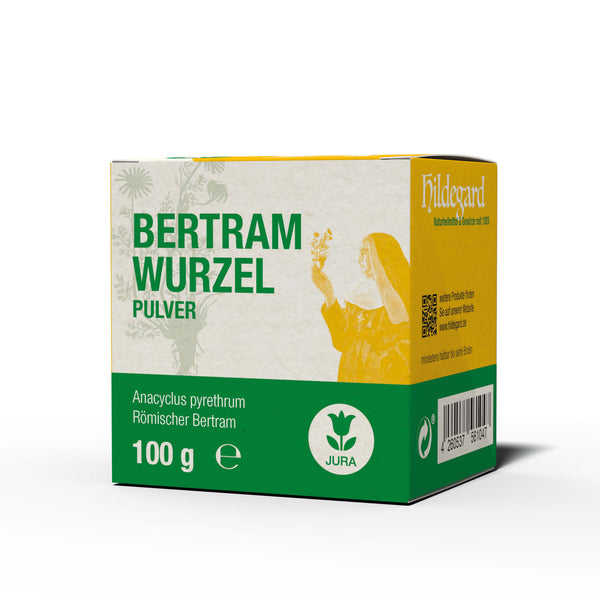
These three together produce the typical nerve cookie note. In the Hildegard kitchen they are sometimes supplemented with additional ingredients – Bertram or galangal appear in some handed-down variants. The basic blend, however, remains: nutmeg, cinnamon, clove.
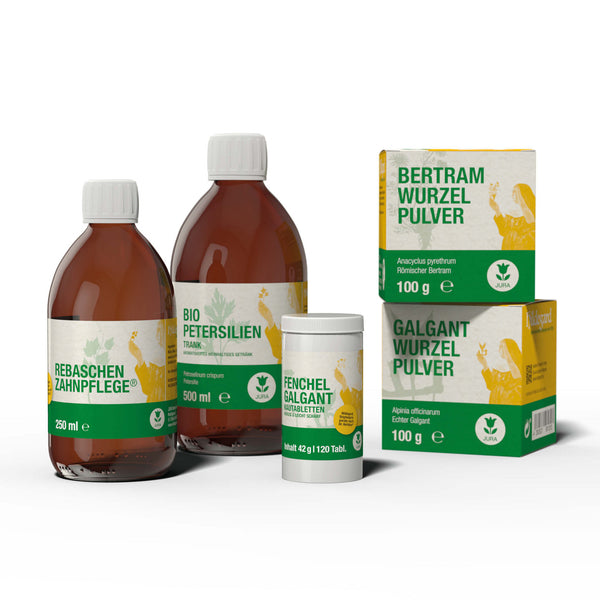
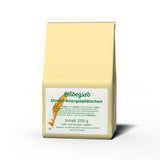
Anyone who would like to buy the classic spice blend ready-made will find it in the nerve cookies range with the traditional recipe.
Matching this article
The Original Recipe – Classic Variant
Ingredients for approximately 40 to 50 cookies
- 250 g spelt flour (type 630 or wholegrain – classic in the Hildegard tradition)
- 125 g butter, softened
- 100 g cane sugar or whole cane sugar
- 50 g ground almonds
- 1 egg (medium)
- 1 teaspoon ground cinnamon
- 1 level teaspoon ground nutmeg
- 1 level teaspoon ground cloves
- Pinch of salt
- Optional: 1 knife tip of Bertram and/or galangal for the complete Hildegard blend
- Optional: grated zest of half an organic lemon
Preparation
1. Mix the spices. Combine cinnamon, nutmeg and cloves – along with Bertram and galangal if using – in a small bowl. Rub briefly with your fingers. This allows the essential oils to combine.
2. Mix the base. Beat butter with sugar in a bowl until fluffy – about three minutes with a hand mixer. Add the egg and continue mixing until a homogeneous mixture forms.
3. Fold in the dry ingredients. Mix the spelt flour, ground almonds, spice blend, salt and optional lemon zest together and work into the butter mixture. Knead briefly until a smooth dough forms. Not too long – shortcrust pastry does not like prolonged kneading.
4. Allow to rest. Shape the dough into a flat ball, wrap in cling film and refrigerate for at least one hour. Overnight is even better.
5. Roll out and cut. Roll the dough out on a floured surface to about 4 to 5 mm thick. No thinner – the cookies should be substantial, not cracker-like. Cut out with round or classically festive cookie cutters.
6. Bake. Place on a baking tray lined with baking paper, with a little space between them. Bake in a preheated oven at 175 °C top/bottom heat for about 10 to 12 minutes, until the edges just barely brown. Don't let them get too dark – the spices will change otherwise.
7. Cool and let rest. Allow the cookies to cool completely on a wire rack. For those who are patient: they only truly taste their best after one to two days. The aromas need time to develop.
What You Should Know When Baking
A few points that one learns over time and that no recipe explicitly writes down:
The spice quantities are guidelines. Those who prefer more intensity can add an extra half teaspoon of clove and nutmeg. Those who prefer a subtler flavour can reduce them. The classic nerve cookie sits at the more intense end – it should be spiced, not just taste of butter.
The cloves are the trick. They are the strongest of the three spices and give the cookie its grown-up note. Anyone uncertain about cloves should start with a modest amount – you can't re-season baked goods after the fact.
Spelt is not a decoration. In the Hildegard tradition, spelt is the foundational grain – not wheat. The difference is noticeably apparent in flavour: spelt gives the cookie a nuttier, denser character. Whoever uses wheat gets a different cookie. Not worse, but not the same one. More on the foundational grain of the Hildegard kitchen in our article on whether spelt is healthier than wheat.
Why the Aromas Need Time
A frequently overlooked point: nerve cookies taste different fresh from the oven than after two days. Warm baked goods allow the spices to come through more sharply and individually. Only after one to two days in an airtight tin do the aromas round out, combine, and the typical nerve cookie profile comes into its own. In old monastery recipes this was taken for granted – cookies were never served on the day of baking.
The tin should be airtight, but the cookies should not lie in a heap. Anyone who layers them with baking paper between each layer will still have them in top quality after four weeks.
Variants of the Recipe
Nerve cookies are a living recipe. Over the decades, various variants have become established:
- With honey instead of sugar: Results in a softer, moister cookie. Use approximately 80 g honey instead of 100 g sugar.
- With whole cane sugar: Classic in the Hildegard kitchen, stronger flavour.
- With hazelnuts instead of almonds: Pairs well with the spices in terms of flavour, darker character.
- Vegan: Replace butter with a plant-based alternative, egg with two tablespoons of apple sauce or one tablespoon of flaxseed with three tablespoons of water.
- Prepared with a Thermomix: Works perfectly – add all ingredients in sequence, use the dough setting.
- With the complete Hildegard spice blend: Cinnamon, nutmeg, clove plus Bertram and galangal – the most intense aroma.
Anyone interested in further recipes from the Hildegard kitchen will find classics from pear porridge to fasting soup in our recipe collection.
The Nerve Cookies in the Hildegard Tradition
Hildegard von Bingen dedicates a separate chapter in her Physica to each of the three main spices of the nerve cookies. She describes nutmeg as "warm" – whereby "warm" in her terminology does not refer to temperature, but to a specific quality within her four humours doctrine. She also assigns cinnamon and clove to the "warm" spices.
What later made these into "nerve cookies" is a combination that is not actually formulated as a recipe in this specific form by Hildegard. The tradition of using these spices to make a baked good developed mainly in the 20th century in the context of the Hildegard renaissance – following the popular translations by Gottfried Hertzka and others. The recipe is therefore a child of the monastery tradition, but not directly handed down from the 12th century. An honest word that one should be aware of.
More on Hildegard's system of dietary teaching in our article on nutrition according to Hildegard von Bingen and on the four humours doctrine in Hildegard.
Where to Buy Nerve Cookies
Anyone who doesn't want to bake themselves, or would like to try the classic version, will find ready-baked nerve cookies in the Hildegard range. The spice blend is also available to buy separately – for those who bake themselves but don't want to measure out six individual spices. Visit the nerve cookies range with original spice blend.
When Caution Is Advisable
The spices in the nerve cookies are culinary classics. In the usual baking quantities they are harmless. A few points worth knowing nonetheless:
- Nutmeg contains the active compound myristicin in very large quantities, which can become problematic. In the quantities of a cookie recipe this is a non-issue; in concentrated portions (spoonfuls neat) it would be one.
- Pregnant women are traditionally advised against excessive consumption of nutmeg. One to two cookies are not an issue – a daily handful is better avoided.
- With known spice allergies (clove, cinnamon), avoid them as a matter of course.
- For young children under two years of age, the intensely spiced cookies are rather unsuitable – their sense of taste is still made for milder things.
Why Baking Is Worth It
In the end, the most beautiful thing about nerve cookies is not their reputation and not their history – it is the afternoon spent baking them. The scent that drifts through the house is one of the finest a kitchen can produce. Cinnamon, nutmeg and clove in warm butter, accompanied by the smell of spelt flour in the oven. Anyone who knows this will quickly understand why these cookies have held such a firm place in the Hildegard renaissance for decades. It is no miracle cure, no superfood capsule. It is a piece of monastery tradition, wrapped in butter and spice.
Further Reading
- Nerve cookies range with original spice blend
- Hildegard recipe collection
- Nutrition according to Hildegard von Bingen
- Is spelt healthier than wheat?
- Bertram according to Hildegard
- Galangal according to Hildegard
- The four humours doctrine in Hildegard
- Pear porridge according to Hildegard
Frequently Asked Questions About the Nerve Cookies According to Hildegard
What are nerve cookies according to Hildegard von Bingen?
A baked good from the Hildegard tradition with the classic spice blend of nutmeg, cinnamon and cloves. Some variants additionally contain Bertram and galangal. The name became established in the 20th century – the cookies in this specific form do not actually appear in Hildegard's own writings.
Which spices are in the original recipe?
Nutmeg, cinnamon and cloves form the classic base. In the extended Hildegard variant, Bertram and galangal are added. All spices are described in detail by Hildegard in her Physica.
Why are they called "nerve cookies"?
The name became established during the Hildegard renaissance of the 20th century. It is a handed-down folk term – not a health-related claim. Specific effects may not be asserted.
Can I make the nerve cookies with a Thermomix?
Yes, without any problem. Add all the ingredients in sequence to the mixing bowl and knead on the dough setting until a homogeneous dough forms. Then leave to rest, roll out and bake as described in the recipe.
How long do the cookies keep?
In an airtight tin at room temperature for at least four weeks. Best stored in layers with baking paper between the cookies so they don't stick together.
Can I bake the nerve cookies vegan?
Yes. Replace the butter with a plant-based alternative, and the egg with two tablespoons of apple sauce or a flaxseed mixture (1 tbsp flaxseed with 3 tbsp water, leave to swell for 10 minutes). The character of the cookie changes slightly, but the basic profile remains.
Does it have to be spelt flour?
For the authentic character, yes. Spelt is the foundational grain in Hildegard's tradition; its nutty, dense character pairs well with the spices. Wheat flour also works, but produces a different result.
When do the cookies taste their best?
After one to two days. Fresh from the oven the spices are still sharp and individual; only after the resting period in the tin do the aromas round out.
Where can I buy the spice blend?
The ready-made original spice blend as well as ready-baked nerve cookies are available in the nerve cookies range. Those who source the spices individually will find them in organic quality at well-stocked shops or online.
Are the cookies suitable for children?
For children aged three and above in normal quantities, no problem. For toddlers under two years of age, rather not – the intense spicing is often too strong for young palates. Avoid in cases of known spice allergies.
Note: This article is intended solely for general information about traditional recipes and the Hildegard kitchen. It does not constitute a medical or therapeutic recommendation. For special dietary needs or health questions, please consult your doctor.