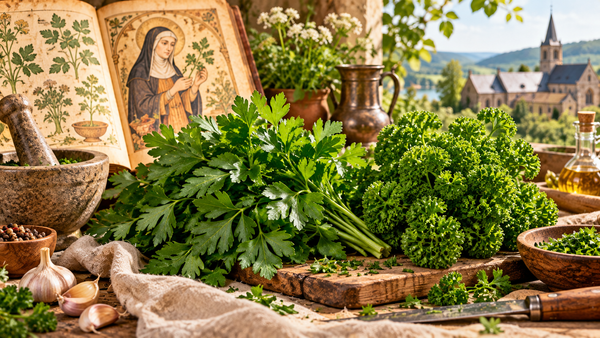

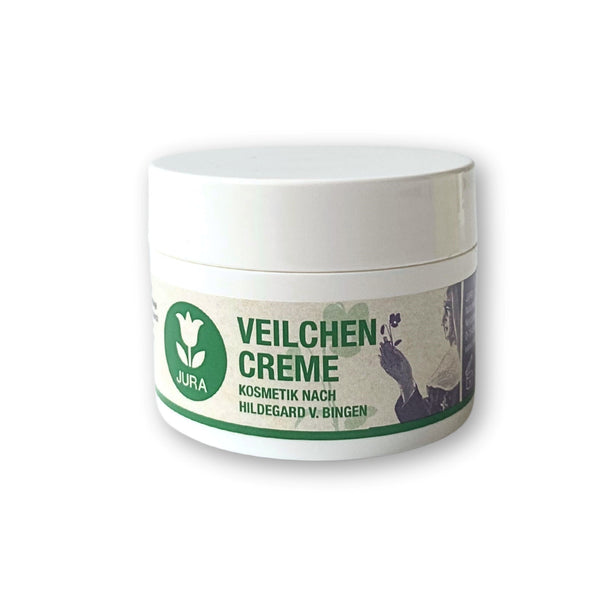


Beautiful skin is a peculiar topic. We spend more money on it today than ever before – and feel more uncertain than ever. Three steps, seven steps, ten steps. Serums with names that sound like code words. In the monasteries of the Middle Ages, things were far more relaxed. There, people knew: herbs for radiant skin are only half the story. The other half is called: living well. Hildegard von Bingen would probably smile gently today if she saw our beauty shelves. And then say a few very sober things.
What the Monasteries Thought About Beauty
In the medieval monastery tradition, skincare was not an end in itself. Clear, well-tended skin was considered a sign of an orderly life – not the product of a lengthy care routine. This view sounds pious, but at its core it is surprisingly modern: what shows on the skin comes largely from within. Sleep, digestion, water, stress, movement – all of it eventually writes itself onto the face.
Hildegard sums up this idea in her favourite concept: discretio, moderation. Not too little, not too much – in any area. Those who observe this have already done more for their skin than most creams can achieve. Sounds unspectacular. It is. More on Hildegard's philosophy of life in our article on the Hildegard teachings at a glance.
What Monastery Cosmetics Actually Knew
In the monastery gardens there were indeed some plants that have been associated with skincare for centuries. An important note upfront: what tradition has handed down is cultural knowledge – not medical proof of efficacy. Specific health-related claims are not permitted today.
| Herb | In the Monastery Tradition |
|---|---|
| Marigold | A classic in old skincare recipes |
| Chamomile | A monastery herb for centuries |
| Violet | A firm fixture in the Hildegard tradition |
| Yarrow | A wayside and monastery garden plant |
| Rose | A classic inhabitant of the monastery garden |
| Lavender | From the Mediterranean into the monasteries |
| Pansy | Folk name: "skin flower" |
These plants appear time and again in old monastery recipes – as infusions, in ointments, in baths. More on the world of Hildegard plants in our article on Hildegard herbs.
Matching this article
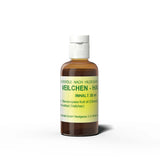
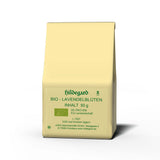
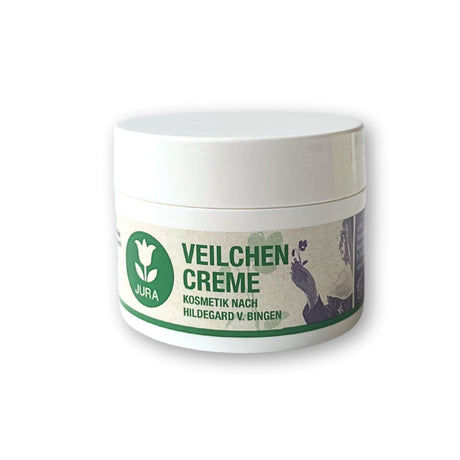
Violet Cream – A Hildegard Classic
In the Hildegard tradition there is a recipe that has been passed down to this day: the violet cream. Hildegard devotes an entire chapter to the violet in her Physica. The plant is one of the classics that holds a firm place in Hildegard's teachings – much like galangal or pellitory. You can find out more about the entire plant world of the Hildegard tradition in our herb assortment.
What makes the violet cream so special is that it is a piece of living monastery tradition. Passed down over centuries, still described in many Hildegard writings. In traditional use it is applied externally – as a gentle care product in the spirit of the handed-down monastery cosmetics.
What Hildegard Would Say About Skin
When you read Hildegard's works carefully, one thing stands out: she rarely talks about the skin in isolation. She talks about the whole person. Those who sleep poorly, eat heavily, and are constantly under pressure – it shows. Hildegard's skin recommendations are therefore not cream recipes but life recommendations.
Here are a few points that recur throughout her teachings and relate to the topic of skin:
- Enough, but not too much sleep – ideally at a regular rhythm
- Moderate, rather warm foods
- Water or herbal tea instead of sugary drinks
- Daily movement in fresh air
- Quiet islands in the day – stillness as a remedy for sensory overload
- As regular a daily schedule as possible
Those who do this for a while will notice something. Not dramatic, but perceptible. That is the unspectacular Hildegard truth.
Water, Tea and the Inner Diet
In the monastery tradition, water was not what it often is today – a quick bottle grabbed in passing. It was a companion, drunk calmly and at leisure. Alongside it came herbal teas, which were both tradition and pleasure. What the skin definitely appreciates is adequate fluid intake spread throughout the day – not in one rush in the evening because you forgot to drink all day.
A classic monastery tea blend fits surprisingly well into today's routine: nettle, marigold, a little lemon balm, a touch of lavender. A quiet cup in the morning, one in the afternoon. In our herbal tea assortment you will find various time-honoured blends.
What the Monastery Kitchen Provides for the Skin
Hildegard's diet plan is cleverly composed in many respects – even without vitamin charts. The star of the show is spelt as the staple grain, complemented by pulses, nuts, cheese, fresh herbs, and occasionally meat. From today's perspective, this is a diet rich in zinc, iron, B vitamins, and good fats – precisely the nutrients from which the skin benefits.
More on Hildegard's diet plan in our article on nutrition according to Hildegard von Bingen. And those who want to know more about zinc-rich foods will find it in our article on zinc in the diet.
Sleep – The Most Unassuming Skincare
There is no beauty trick as effective as a few good nights in a row. The monastery tradition knew this long before any skincare industry existed. Those who consistently sleep too little can pit the most expensive cream against it – the cream will not win.
Hildegard's teachings describe a clearly ordered day, with a calm evening phase and a regular bedtime. More on this in our article on falling asleep with herbs.
Stress – The Secret Enemy
One point that is better documented today than ever before: sustained stress leaves its mark – including, and especially, on the skin. The monastery tradition knew this in its own way. In Hildegard's works the idea recurs again and again that a soul out of balance can also be seen in the body. She had no cortisol chart, but she had the observation.
From this nothing esoteric follows. What follows is: take breaks seriously. Plan for stillness. Don't constantly approach your days at a sprint. A very old and very current recommendation at the same time.
Monastery Cosmetics in Everyday Life – A Few Suggestions
Anyone who wants to bring a little monastery spirit into their own skincare can do so without any programme:
- Marigold or chamomile tea as a gentle infusion to drink
- A steam bath with chamomile and lavender on a quiet evening
- Violet cream or marigold ointment from the Hildegard tradition
- A mild herbal addition to a full bath – without strongly concentrated essential oils
- Fresh air, a few steps outside, every day
Nobody needs to throw away their existing skincare routine. It is more about a different attitude: less chasing, more accompanying.
What Monastery Medicine Would Not Have Promised
An honest word at the close of this section: the monastery tradition never claimed to be able to resolve every skin condition with herbs. For genuine skin problems, a dermatologist is the right address – that applies then as now. Hildegard would not have recommended "more violets" to a woman with persistently severely irritated skin. She would have called upon the healers of her time.
If any of the following apply, a visit to a dermatologist is advisable:
- Persistent skin changes that do not resolve
- Sudden changes in pigmentation or new moles
- Stubborn rash or itching
- Acne that causes psychological distress
- Wounds that take an unusually long time to heal
- Accompanying symptoms such as fatigue or hair loss
Tradition complements – it does not replace a diagnosis.
What Remains in the End
Radiant skin is not a product you buy. It is – from the perspective of the monastery tradition – the by-product of a well-led life. Enough sleep, good food, fresh air, rest, water, friendly routines. Herbs have their place in this picture – as a component, not a solution. Hildegard would probably have summed it up concisely: live with moderation, and look kindly in the process. That's really all it takes.
Further Reading
- Hildegard's Teachings at a Glance
- Nutrition According to Hildegard von Bingen
- Hildegard Herbs at a Glance
- Falling Asleep Better with Herbs
- Zinc in the Diet
- Galangal According to Hildegard
- Herb Assortment
- Herbal Teas
Frequently Asked Questions About Herbs and Skin
Which herbs are associated with skincare in the monastery tradition?
Classics include marigold, chamomile, violet, yarrow, rose, lavender, and pansy. Specific health-related claims are not permitted today – but that makes the cultural tradition no less rich.
What does Hildegard say about skin?
Hildegard does not view the skin in isolation. She sees it as a mirror of the whole person – sleep, nutrition, movement, stress, all of it eventually writes itself onto the face. Her recommendations are life recommendations, not cream recipes.
What is violet cream according to Hildegard?
A traditional recipe from the Hildegard tradition in which the violet is handed down as the central plant. It has been passed on for centuries and remains part of the Hildegard classics to this day.
What does "discretio" mean in Hildegard – and what does it have to do with skin?
Moderation. Applied to the skin: neither too little sleep nor too much, neither food that is too heavy nor too few nutrients, neither sensory overload nor lack of movement. Sounds unspectacular – but it is the most honest skincare there is.
What does calm skincare in the spirit of the monastery tradition look like?
Little, good, regular. A gentle cleanse, a mild moisturiser, an occasional herbal bath, a warm cup of herbal tea. Add sleep, movement, and good nutrition. That is the compact answer.
Which herbal teas suit skincare from within?
Nettle tea, marigold tea, mild herbal blends with lemon balm and lavender. What matters is regularity – not a peak performance on a single day.
When should I see a dermatologist?
For persistent skin changes, new moles, stubborn rashes, distressing acne, or poorly healing wounds. Also for accompanying symptoms such as fatigue or hair loss. Tradition complements – it does not replace a diagnosis.
Note: This article is intended solely for general information about cultural tradition and the teachings of Hildegard von Bingen. It does not constitute a medical or dermatological recommendation. For persistent or distressing skin problems, please consult your dermatologist.