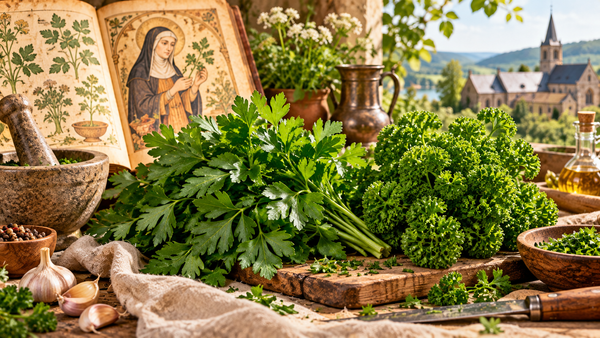





At the end of February, beginning of March, there comes a moment when you step outside in the morning and suddenly notice: something smells different. The air is still cold, but it has a different quality. The first hours of sunshine feel like a small promise. And with them comes, for many people, the urge to change something – the meal plan, the home, one's own rhythm. This is exactly where an old tradition takes hold. In monastic medicine, the spring cleaning for the body was a natural part of the year. And Hildegard von Bingen has some surprisingly relaxed things to say about it.
Why Spring Has a Rhythm of Its Own
In the monastic life of the Middle Ages, the meal plan followed the cycle of the year much more closely than we know today. In winter, the foods were heavier, warming, more calorie-rich – with preserved foods, root vegetables, legumes, and cured meat. With spring came movement in the menu. Fresh herbs, young leaves, light soups, more greens. This was no diet and no cleansing cure – it was simply what the garden had to offer at that moment.
Hildegard embraces this rhythm. For her, the year is a living being with phases, and people live best when they align with this rhythm rather than working against it. More on this perspective in our article on nutrition according to Hildegard von Bingen.
Hildegard's Favourite Concept – Even in Spring
It always comes back to discretio, the practice of moderation. Hildegard was not a follower of radical cures. Those in the Middle Ages who wanted to "cleanse the body" rarely had miracle preparations in mind – they had moderation. Eating less heavily, adding more fresh foods, moving a little more, being outdoors. Sounds unspectacular. That's precisely why it worked.
Those searching today for a grand spring programme will sometimes be disappointed by Hildegard. She had no seven-day plan on offer. She had an attitude.
Matching this article

What the Monastic Tradition Recommends for Spring
In the handed-down tradition of monastic medicine, certain things come up again and again when it comes to the transition from winter to spring. An important note upfront: what has been passed down as tradition is cultural knowledge – not medical proof of efficacy. Specific health-related claims are not permitted today.
| Element | In the Tradition | In Everyday Life Today |
|---|---|---|
| Lighter foods | Young herbs, fresh vegetables | Wild herb salad, spring soups, greens |
| Less heaviness | Reduction of winter stores | Fewer fatty dishes, more fresh foods added |
| Water and tea | Herbal infusions as daily drink | Low-mineral water, herbal teas |
| Outdoor movement | Walks, gardening | Daily time outside, fresh air |
| Moderation | Eating earlier and more lightly | Creating a mindful end to the day |
All of this can be put into practice today just as easily – without powders, without apps, without hashtags. More on Hildegard's philosophy of life in our article on the overview of Hildegard's teachings.
Spring Herbs Mentioned in the Monastic Tradition
Anyone walking through a meadow or a monastery garden in spring will find a whole range of plants that have belonged to the season for centuries. They are a firm part of the transition in the handed-down monastic tradition.
| Herb | Character | In the Tradition for the Season |
|---|---|---|
| Stinging nettle | Fresh, slightly tart | Classic spring herb |
| Dandelion | Bitter, robust | Classic wayside plant |
| Wild garlic | Garlic-like | Harbinger of spring |
| Ground elder | Parsley-like | Old monastery garden resident |
| Yarrow | Aromatic, slightly tart | Traditional meadow plant |
| Daisy | Mild | Fresh salad companion |
More on classic spring herbs can be found in our article on bitter herbs, which is particularly well suited to the season.
Galangal, Bertram, Spelt – The Hildegard Classics
Anyone wishing to move through spring in the spirit of Hildegard's teachings will find a few classics hard to avoid. Galangal is probably the best-known Hildegard herb of all, a firm part of everyday life in the tradition for centuries. Bertram root powder is traditionally incorporated into the meal plan as a seasoning component. And spelt – yes, spelt – is nothing less than the foundational grain of Hildegard's teachings.
For those who would like to try some of these classics: more on galangal according to Hildegard can be found in the linked article. The herb range includes various traditionally handed-down plants from the tradition.
The Spring Meal Plan
Hildegard's spring recommendation is more practical for everyday life than one might think. Essentially: less heavy food, more freshness, plenty of warmth. In concrete terms, this means in modern everyday life:
- A spelt soup instead of a cream sauce
- Wild herb salad instead of ready-made dressing
- Soaked legumes instead of ready-made tinned goods
- More steamed vegetables, fewer fried chips
- Herbal teas between meals
- Lighter evenings
Nobody has to turn their life upside down overnight. Changing even one or two of these points over several weeks changes how one feels. It is no magic – it is exactly what Hildegard means when she speaks of discretio.
Movement and Fresh Air – The Most Understated Spring Measure
The most effective recommendation from the monastic tradition costs nothing and appears in no product range: go outside. Especially in spring. The days grow longer, the sun returns, the body needs light. A daily walk of 20 to 30 minutes is one of the most unspectacular and most effective spring routines there is. Hildegard would have responded with an approving nod.
What Hildegard Would Not Have Recommended
With all due respect for the tradition – a few things that today often circulate on the internet in connection with "spring cleaning for the body" do not fit Hildegard's logic:
- Multi-day juice cleanses without medical supervision
- Radical fasting without prior experience
- Taking high doses of individual remedies all at once
- Herbal preparations taken on a whim, without background knowledge
- Strict lists of what is and is not permitted
Hildegard's teachings are not a diet programme. They are an attitude towards life. Those seeking a calm, moderate transition into spring will find what they are looking for with her. Those wanting a quick fix, less so.
What a Monastery Evening in Spring Might Look Like for Hildegard
Just imagine it – simply as a picture: a monastery garden, the first warm days. On the table, a simple spelt soup with fresh herbs, a piece of bread, water or a mild herbal tea alongside. Afterwards, a walk in the evening dusk. Half an hour of silence. Early to bed. This is Hildegard's answer, in its simplicity, to the question of how to do something good for the body in spring.
Nothing about it is spectacular. That is precisely the point.
When Medical Supervision Is Important
Those who make significant dietary changes in spring should keep a few points in mind:
- With chronic illnesses, diabetes, or metabolic issues, consult a doctor beforehand
- When taking medication, ask at the pharmacy whether interactions are conceivable
- During pregnancy and breastfeeding, no self-directed cures
- With persistent complaints – fatigue, digestive issues, sleep disorders – do not look for an answer in a spring routine, but have them medically investigated
Hildegard would have said exactly the same. She was pragmatic enough to know where tradition ends and medicine begins.
Further Reading
- Nutrition according to Hildegard von Bingen
- Overview of Hildegard's Teachings
- Hildegard Herbs at a Glance
- Bitter Herbs
- Better Sleep with Herbs
- Galangal according to Hildegard
- Herb Range
- Herbal Teas
Frequently Asked Questions About Spring Cleaning with Hildegard
What does Hildegard von Bingen recommend in spring?
Hildegard thinks of the year in phases. In spring, she recommends a transition to lighter foods, more fresh herbs, more movement, and a moderate daily rhythm. Strict cures or diets do not appear in her work.
Which herbs belong to spring in the monastic tradition?
Classics include stinging nettle, dandelion, wild garlic, ground elder, yarrow, and daisy. The Hildegard classics galangal and Bertram also appear in spring accompaniment.
What does "discretio" mean in Hildegard?
Moderation. Applied to spring, this means: less heaviness, more freshness, without exaggeration. No radical steps – but a calm, gentle transition.
Should I fast in spring?
Hildegard was not a follower of radical fasting cures without supervision. Those who wish to fast should seek medical advice beforehand – especially with pre-existing conditions, medication use, or during pregnancy and breastfeeding.
What does a Hildegard spring evening look like?
Simple: a light soup or spelt dish, fresh herbs, a walk in the evening air, early to bed. Hildegard was no friend of spectacular programmes.
When should I see a doctor?
With persistent complaints – regardless of the season. Anyone who is persistently tired, has digestive issues or sleep disorders over several weeks, belongs in a GP's practice. A spring routine is no substitute for a diagnosis.
Note: This article serves exclusively for general information about Hildegard von Bingen's life teachings and cultural tradition. It does not constitute a medical or therapeutic recommendation. For health-related questions, please consult your doctor.