
Liver Complex with Milk Thistle – What's Behind These Dietary Supplements?
Products under the term "liver complex" are growing in popularity. You can find them in drugstores, pharmacies and online shops in the form of capsules, drops or tablets – often combined with herbal ingredients such as milk thistle, dandelion, artichoke or turmeric. But what exactly is a liver complex, which ingredients are typically included, and what should you look out for when buying? Anyone interested in the topic of the liver from the perspective of the Hildegard teachings will find a first overview on this page.
What Is a Liver Complex?
The term "liver complex" is not a protected designation. It is used by various manufacturers to describe products that combine several herbal ingredients traditionally associated with the liver. In most cases, these are dietary supplements – not medicinal products. This means: no health-related promises may be made for such products that go beyond approved so-called health claims.
The compositions vary considerably from manufacturer to manufacturer. While some products rely on milk thistle as the main ingredient, others contain mixtures of several plant extracts, vitamins or secondary plant compounds. Those interested in traditional approaches to the liver can also read our article on traditional impulses according to Hildegard von Bingen relating to the liver.
Matching this article
Milk Thistle – The Best-Known Ingredient
Milk thistle (Silybum marianum) is a plant native to Central Europe from the daisy family (Asteraceae). It is recognisable by its characteristic whitish-veined leaves and purple-red flower heads. The fruits and seeds of milk thistle contain an active compound complex called silymarin, which consists of various flavonolignans.
Milk thistle has traditionally been used in European herbal medicine for centuries. In modern dietary supplements, the extract from the seeds is used, as this is particularly rich in silymarin. For approved health-related claims at EU level, there are currently no approved health claims from the European Food Safety Authority (EFSA) for milk thistle extracts.
Overview of Milk Thistle Constituents
| Constituent | Occurrence | Note |
|---|---|---|
| Silymarin | Seeds and fruits | Complex of flavonolignans |
| Silybin | Main component of silymarin | Secondary plant compound |
| Flavonoids | Leaves and fruits | Plant pigments |
| Fixed oils | Seeds | Contains linoleic acid |
| Bitter compounds | Entire plant | Typical of the daisy family |
Other Typical Ingredients in Liver Complex Products
In addition to milk thistle, many liver complex products contain further herbal ingredients. Commonly found are artichoke extract, dandelion root extract, turmeric, choline and various B vitamins. Choline is particularly relevant here, as an approved EFSA health claim exists for this nutrient: choline contributes to normal fat metabolism and the maintenance of normal liver function. Those generally interested in plant-based foods and their constituents will find further background information on our blog.
| Ingredient | Botanical name | Plant part used | Approved EFSA claim |
|---|---|---|---|
| Milk thistle | Silybum marianum | Seeds/fruits | No |
| Artichoke | Cynara scolymus | Leaves | No |
| Dandelion | Taraxacum officinale | Root, leaves | No |
| Turmeric | Curcuma longa | Rhizome | No |
| Choline | – | – | Yes – normal liver function |
Liver Complex as a Dietary Supplement – Legal Classification
Products placed on the market as dietary supplements are subject to strict regulations in Germany and the EU. They may not bear any statements attributing to them an effect in the prevention, treatment or cure of diseases. This fundamentally distinguishes them from medicinal products, for which clinical studies and approval procedures are required.
Health-related claims on dietary supplements must be approved by EFSA and must come from the so-called health claims list. Many herbal ingredients – including milk thistle extract – currently have no such approval for specific health benefit claims.
What Manufacturers May and May Not Say
| Permitted statements (examples with EFSA approval) | Non-permitted statements (examples) |
|---|---|
| "Choline contributes to normal liver function" | "Cleanses the liver" |
| "Vitamin B12 contributes to normal energy metabolism" | "Detoxifies the body" |
| "Zinc contributes to the normal function of the immune system" | "Strengthens the immune defences" |
| "Vitamin E contributes to the protection of cells from oxidative stress" | "Harmonises the metabolism" |
Buying a Liver Complex – What Should You Look Out For?
Anyone wishing to purchase a liver complex product should bear a few points in mind. First, it is worth taking a look at the complete list of ingredients and the stated quantities of the individual components. Quality products transparently state the exact quantities – both for the extract and for the standardised active ingredient content, for example the silymarin content in the case of milk thistle. Those who prefer traditional herbal products according to Hildegard von Bingen can browse our range of herbs and spices.
In addition, manufacturing standards play an important role. Products manufactured according to GMP (Good Manufacturing Practice) are subject to defined quality standards in production. Certifications by independent laboratories or corresponding quality seals can also be an indication of the manufacturer's quality awareness.
Checklist for Product Comparison
| Criterion | What to look for |
|---|---|
| Ingredient list | Complete, transparent declaration of all ingredients |
| Dosage | Exact quantity information per daily dose |
| Extract standardisation | Statement of active ingredient content (e.g. silymarin %) |
| Manufacturing standard | GMP-certified production |
| Additives | No unnecessary fillers or allergens |
| Dosage form | Capsules, tablets or drops according to preference |
Milk Thistle in the History of Herbal Medicine
Milk thistle has a long history in European herbal medicine. It was already described and cultivated in ancient Greece and in the Middle Ages. In folk tradition, it was regarded as one of the best-known plants of all when it came to the liver and gallbladder. Historical herbals from the 16th and 17th centuries, such as the herbal book by Hieronymus Bock, contain detailed descriptions of milk thistle and its use at that time.
Today the plant is the subject of numerous scientific investigations. The focus of research is primarily on the active compound complex silymarin. The findings to date do not yet permit any conclusive, universally valid statements about specific health effects in humans. Those interested in the liver from the perspective of traditional practices will find supplementary information in the article on liver compresses – application and background.
Traditional Plants in Nutrition According to Hildegard von Bingen
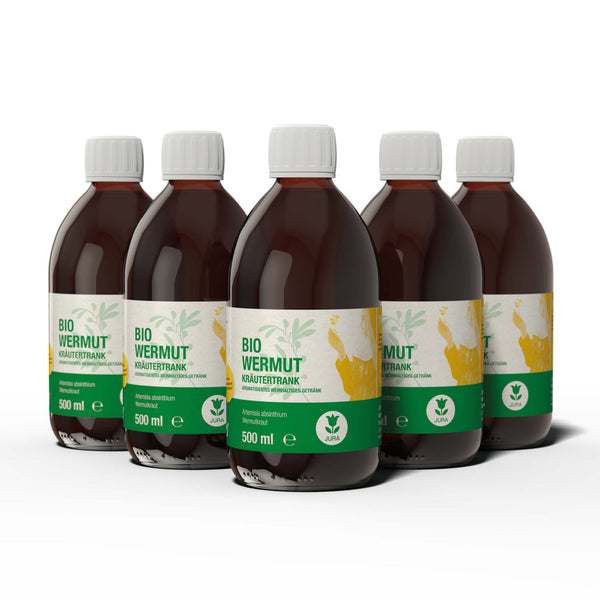
Hildegard von Bingen described a wide variety of plants and their use in nutrition in her works. Among the herbs mentioned in her writings that are still discussed today in connection with the liver are wormwood and celandine. The organic wormwood tonic is one of the traditional products that draws on these traditions. Wormwood is one of the bitter herbs that Hildegard mentioned in her work Physica. Celandine also appears in the context of bile and digestion in historical plant descriptions.
Those who wish to get to know the Hildegard teachings as a whole will find a comprehensive introduction to her world of thought around nutrition, nature and wellbeing on our blog.
Hildegard von Bingen and the Liver
In the writings of Hildegard von Bingen, the liver plays an important role. She viewed the organ as the central seat of warmth and vital energy in the human body. Many of her dietary recommendations and herbal applications were directly related to this understanding. A detailed overview is provided in our article on traditional impulses according to Hildegard von Bingen relating to the liver.
Those interested in a mindful retreat and cures according to Hildegard can also browse our cure range or learn about gut-conscious nutrition according to Hildegard – because according to Hildegard's teachings, the intestine and liver were closely connected.
Growing Milk Thistle in the Garden
Milk thistle can also be cultivated in your own garden. As a biennial or annual plant, it prefers sunny, warm locations with well-drained soil. It can be sown directly outdoors in spring and reaches a height of up to 1.5 metres. Its striking purple flowers are not only decorative but also very popular with insects – especially bees and bumblebees.
| Characteristic | Details |
|---|---|
| Botanical name | Silybum marianum |
| Family | Asteraceae (daisy family) |
| Height | 50–150 cm |
| Location | Sunny, warm |
| Soil | Well-drained, dry to moderately moist |
| Flowering period | June – August |
| Sowing | March – May outdoors |
Conclusion: Liver Complex with Milk Thistle – An Overview
Liver complex products with milk thistle are a widespread category of dietary supplements whose popularity has grown significantly in recent years. The combination of traditional plants such as milk thistle, artichoke and dandelion with modern extraction technologies makes these products interesting for many consumers.
When purchasing, it is worth paying attention to transparency in the ingredient list, comprehensible dosage information and reputable manufacturing standards. Anyone with health questions or who is already taking medication should seek medical advice before taking dietary supplements. Those who wish to read further into the world of traditional herbal medicine will find articles on our blog such as Bertram – an underrated spice in Hildegard's teachings or can browse our range of herbal drinks.