
At some point, a woman notices that something is shifting. Sometimes very quietly – sleeping a little differently, feeling tired a little faster, patience shorter than usual. Sometimes more noticeably – hot flushes in the middle of a meeting, waves of emotion that catch even her by surprise. The menopause is not an illness. It is a transition – and perhaps the least appreciated one in modern women's lives. Hildegard von Bingen would have seen it differently. In her view, every phase of life has its own character, its own weight, its own treasures. And yes, its own challenges too.
Hildegard's View of Life's Phases
Hildegard von Bingen thinks of human life in phases – childhood, youth, maturity, old age. For her, none of them is worth more or less than another. What is sometimes sold to us today as "loss" – the fertile years coming to an end – is not a loss in her teaching, but a change. A different task. A different depth. It sounds a little pious, and it is, slightly. But behind it lies something practical: those who interpret a transition as a deficiency suffer differently from those who understand it as transformation.
This attitude is what makes Hildegard's work still worth reading today. Learn more about her philosophy of life in our article on the Hildegard teachings overview.
Discretio: An Ancient Word for a Very Contemporary Idea
Hildegard's favourite concept, discretio – moderation – becomes suddenly very tangible during menopause. Many things that previously worked effortlessly no longer do so without effort. The quick meal on the go, the short night, the third espresso. The body tolerates it for a while – and then simply doesn't any more. Seen in this light, menopause is also an invitation to take a closer look: Where is too much? Where too little? Where am I demanding from my body what it can no longer deliver without strain?
Hildegard would have approved of this. She was never an advocate of deprivation or strictness. But she was a precise observer. Read more about this idea in our article on nutrition according to Hildegard von Bingen.
Matching this article
Menopause and the Menu
Hildegard does not write a dietary doctrine. But her recommendations are, in retrospect, remarkably well suited to menopause: warm meals rather than cold ones, spelt as the main grain, pulses, nuts, cheese, plenty of herbs, few heavy meat dishes. Something lighter in the late evening. No great mystery – but precisely what many women notice during this phase anyway: what was fine before now sits heavily on the stomach.
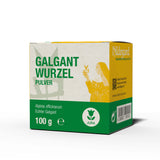
Galangal is one of the central everyday companions in the Hildegard tradition, passed down through centuries. If you would like to read more about it: our article on galangal according to Hildegard provides background. The Hildegard herb range also includes classics that have traditionally been recommended for this transition.
Herbs That Belong to This Phase of Life in the Monastery Tradition
An important note first: what tradition has passed down represents cultural experience – not medical proof of efficacy. Specific health-related claims are not permitted today. What can be considered reliable: these plants appear again and again in monastic healing in connection with women's lives.
| Herb | Known in tradition for |
|---|---|
| Lady's mantle | Classic monastery herb in women's lives |
| Yarrow | Time-honoured plant in old women's herbal books |
| Lemon balm | "Making the heart cheerful" – a Hildegard classic |
| Sage | Monastery herb with a long tradition |
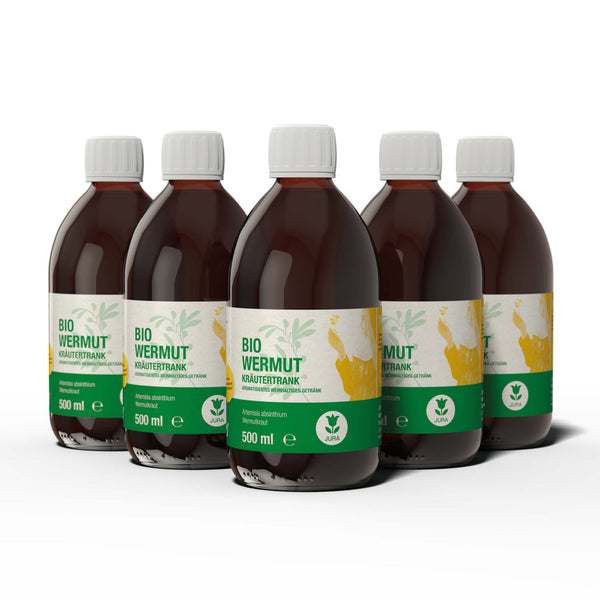
| Mugwort | One of the oldest women's plants in Central Europe |
| Hops | Traditionally associated with evening rituals |
Those who would like to try tea blends grown in the Hildegard tradition will find a variety of traditional classics in our herbal tea range.
Movement and Fresh Air – The Old Remedy
If one had to distil Hildegard's works into a single everyday tip, it would probably be this: go outside. Movement in fresh air. Not a marathon, not crossfit – but regular, gentle walking. The monastery tradition knows this as a self-evident part of the day. During menopause, this often becomes the most unobtrusive and yet most effective routine: bones, circulation, mood, sleep – all benefit.
Hildegard would probably be amused that modern research has since backed up this recommendation with studies. She knew it without them.
Stillness as a Counterbalance
What the monastery tradition takes for granted is today almost a luxury: stillness. Periods during the day without stimulation, without voices, without screens. Especially during menopause, when the nervous system is already reacting a little more sensitively, such islands are worth their weight in gold. Half an hour of stillness a day is not esoteric – it is a very old, very practical measure.
Sleep During Menopause
Sleep disturbances are among the most common topics during this phase of life. Hildegard's concept is, as always, holistic: the answer is not a sleeping pill, but a day brought to a calm close. A modest evening meal, subdued lighting, a herbal tea as a ritual, no screens in the last half hour. It sounds obvious – and it is. And at the same time challenging enough to take seriously.
Read more in our article on falling asleep with herbs from the Hildegard tradition.
What Hildegard Does Not Replace
It must be said clearly: Hildegard is not a substitute for a gynaecologist. Anyone struggling with severe symptoms during menopause – distressing hot flushes, persistent sleep problems, low mood over an extended period, physical changes that cause concern – should discuss this with a doctor. Some symptoms can be well managed. Others need more than tea and walks. That is not a weakness; it is wisdom.
Hildegard herself was pragmatic. She would not have responded to a woman who cannot settle at night and barely gets through the day with moderation alone. She would have sent her to the doctor – and then placed the evening tea beside her.
What Remains in the End
Perhaps this is the most valuable message from Hildegard's work for this phase of life: it is not a gap. It is a time of its own. With its own pace, its own depth, its own gifts. Menopause can – if given space – be a transition to a freer, clearer phase of life. Those who do not fight the change but accompany it have a head start within this tradition.
And sometimes it already helps simply to remember that women have passed through this phase for thousands of years – and that there is knowledge older than any modern lifestyle recommendation.
Further Reading
- Hildegard's teachings overview
- Nutrition according to Hildegard von Bingen
- Hildegard herbs overview
- Falling asleep better with herbs
- Natural calming remedies in tradition
- Galangal according to Hildegard
- Herb range
- Herbal teas
Frequently Asked Questions About Menopause and Hildegard
What does Hildegard say about menopause?
Hildegard does not use the term "menopause" in its modern sense – but she thinks of women's lives in phases and regards each of them as a time of its own with its own character. Her concept: understand a transition as transformation, not as loss.
Which herbs are associated with women's lives in tradition?
Classics include lady's mantle, yarrow, mugwort, lemon balm, sage and hops. Specific health-related claims are not permitted today – but the cultural tradition is no less rich for that.
What does "discretio" mean in Hildegard?
Moderation. During menopause, this concept takes on new weight: neither too much nor too little – in eating, movement, stimulation, duties. A very practical idea, neatly wrapped in an old Latin term.
What does Hildegard recommend for the evening meal?
Rather light, warm dishes. Soups, light stews, spelt dishes. No heavy food late in the evening. This applies as a general principle – during menopause, many women are grateful for it in any case.
When should I see a doctor?
With severe hot flushes, persistent sleep disturbances, low mood lasting several weeks, or physical changes that cause concern. The gynaecologist is the right point of contact – and can decide together with you what kind of support makes sense for you individually.
Does exercise help during menopause?
In the monastery tradition, movement in fresh air is part of daily life. Bones, circulation, mood and sleep all benefit – Hildegard knew this; modern research confirms it.
Note: This article is intended solely for general information about Hildegard von Bingen's philosophy of life and cultural tradition. It does not constitute medical or therapeutic advice. If you are struggling with distressing symptoms during menopause, please consult your gynaecologist or GP.