




You sit at your desk after lunch, and suddenly your trousers are too tight. Not just a little – properly. Your stomach is hard, tense, and it's not going to go away in the next few hours. Anyone who knows this feeling understands: a bloated stomach is not life-threatening, but uncomfortable enough in everyday life to give it some thought. The good news: in European monastery tradition, this issue has been known for centuries. With surprisingly pragmatic answers.
What a bloated stomach actually is
With a bloated stomach, air collects in the digestive tract – either because it gets swallowed during eating, or because more gases are produced during digestion than the body can discreetly remove. The causes are as varied as the people: eating too quickly, eating too heavily, too much raw food, individual intolerances, stress, lack of movement. Sometimes a mixture of everything.
Important to note first: if a bloated stomach occurs persistently, is associated with pain, comes with changes in bowel habits, or is accompanied by unintended weight loss, this needs to be medically assessed. A cup of fennel tea is not the right answer in that case. For most people, however, a bloated stomach is an everyday phenomenon – and that is precisely where the monastery tradition comes in.
The old monastery answer: three herbs that are almost always present
Anyone who opens old monastery books will encounter the same three plants again and again in connection with the stomach: fennel, anise, caraway. This trio did not come about by chance. It has established itself over centuries as a pleasantly digestible blend – so much so that it can be found almost everywhere today as "fennel-anise-caraway tea" or "F-A-C tea".
| Herb | Character | Known in tradition |
|---|---|---|
| Fennel | Mild, slightly sweet | A classic in the monastery garden |
| Anise | Sweet and aromatic | Used as a spice herb since antiquity |
| Caraway | Spicy, intense | An ingredient in many monastery recipes |
In terms of taste, the blend is surprisingly pleasant – even for people who don't usually enjoy herbal teas. In the herbal tea range you will find various traditional blends from this tradition.
Matching this article

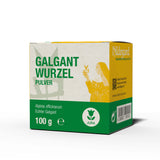


Hildegard's favourites: galangal, bertram, savory
In the Hildegard tradition, there is a league of herbs of its own that have been associated with digestion since the 12th century. Galangal is the best known – Hildegard dedicates its own passages to it in her Physica, and it remains one of the most widely used classics of Hildegard's teaching to this day. More on this in our article on galangal according to Hildegard.
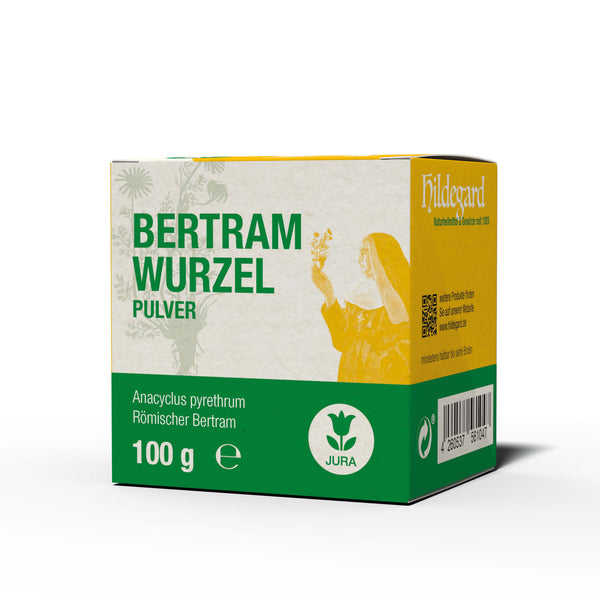
Bertram is the lesser-known relative. In the Hildegard tradition, bertram root powder is among the traditional components of a moderate diet. Savory – the old spice herb – has always been added to bean and lentil dishes, and not by coincidence: it makes the meal aromatic and easy to digest. More on this in our article on savory.
Anyone wishing to try traditional classics from the Hildegard tradition will find various plants in the herb range that have been passed down in this world for centuries.
What Hildegard says about digestive health
Hildegard's recommendations on digestion are neither dramatic nor mysterious. They are surprisingly matter-of-fact. At their core: discretio, moderation. Neither too much nor too little. Neither too hurried nor too late. Neither too cold nor too heavy. What sounds self-evident is often precisely what gets lost in modern everyday life.
Concretely, these points come up again and again in the monastery tradition:
- Warm foods before cold ones – the stomach likes warmth
- Well-chewed, slowly eaten meals
- Preferably light evening meals
- Herbs as a natural part of cooking, not as a special measure
- Movement after eating instead of sitting down immediately
- A spiced tea instead of sugary drinks with meals
For those who want to read more about Hildegard's view on diet: our article on nutrition according to Hildegard von Bingen describes this in detail.
What typically challenges the stomach
Before we draw up lists of foods to avoid, an honest note: what passes through one person without any problem can cause trouble for another. There is no universal list of "bloat-causers". There are only tendencies.
Typical candidates that often cause the stomach to protest:
- Legumes (beans, lentils, chickpeas) – especially when poorly soaked
- Raw cabbage vegetables
- Very fatty or fried foods
- Excessive bread, especially fresh and very yeasty
- Sweeteners such as sorbitol, xylitol, maltitol
- Carbonated drinks
- Quickly eaten meals
The most honest recommendation comes from the monastery tradition: observe. Note for two weeks what you eat and when your stomach reacts. That takes more mystery out of the matter than any list on the internet.
The little monastery rule: chew well
If one had to boil down Hildegard's recommendations for digestive health into a single sentence, it would probably be: eat slowly. Sounds banal. It isn't. Anyone who chews well swallows less air, gives digestion a head start, and notices sooner when they are full. The stomach is grateful.
In the old monastery rules, meals were eaten in silence, often accompanied by readings from spiritual texts. This had a devout background – but incidentally also meant that nobody ate quickly. Hildegard would surely have had no objection to this side effect.
The classic way to end a meal
There is a gesture that has been passed down in many cultures for centuries: something spicy after the meal. Anise seeds in India. An espresso with a star anise in Italy. In monasteries, often a small sip of herbal tea. The idea behind it is old and simple – a pleasant conclusion that marks the transition from "eating" to "getting on with things".
A classic traditional blend for after eating:
- Fennel
- Anise
- Caraway
- A small pinch of galangal (Hildegard tradition)
Pour hot water over a teaspoon of the blend, leave to steep for seven to ten minutes, then strain. Drink slowly after eating. No more monastery ritual is needed.
Movement after eating – the underestimated help
One of the oldest recommendations from the monastery tradition is also one of the simplest: a short walk after the meal. Ten to fifteen minutes often suffice. The stomach works better when the whole person is moving a little. "Solvitur ambulando", says an old adage – "it is solved by walking". This applies to many things in life, but especially to the stomach.
Stress – the silent player
A point that Hildegard understood in her own way: those who are tense digest differently. The nervous system and the digestive tract are closely connected, something that modern research now describes in detail. In the monastery tradition, this was a natural part of the rhythm of life: calm before eating, silence during eating, calm after eating. Sounds unspectacular. But it has effects.
Anyone who has problems with a bloated stomach while also living a life that is constantly on standby should bear this in mind. More on the holistic perspective of Hildegard's teaching in our article on an overview of Hildegard's teaching.
When medical assessment is important
A bloated stomach is usually harmless – but not always. Anyone who notices the following should not try to solve it with herbal tea, but should speak to their GP:
- Persistent bloating over several weeks
- Associated with pain, cramps or a feeling of pressure
- Changes in bowel habits
- Unintended weight loss
- Blood in the stool
- Severe fatigue or exhaustion
- Heartburn or nausea that does not go away
All of this can have harmless causes – or not. The difference is clarified by a diagnosis, not a blog article.
Further reading
- Nutrition according to Hildegard von Bingen
- An overview of Hildegard's teaching
- An overview of Hildegard's herbs
- Bitter herbs
- Savory – the old spice herb for bean dishes
- Galangal according to Hildegard
- Herb range
- Herbal teas
Frequently asked questions about bloating
What helps naturally with a bloated stomach?
In the monastery tradition, fennel, anise and caraway are mentioned above all as a tea – the classic trio. Hildegard's galangal and bertram also appear in this world. Equally important: chew well, eat slowly, move a little after eating. Specific health-related claims are not permitted – the cultural tradition is nonetheless rich.
Which herbs are traditionally mentioned for bloating?
Classic ones: fennel, anise, caraway, savory, peppermint. In the Hildegard tradition, additionally galangal and bertram. Savory has always been added to legume dishes.
What does Hildegard say about the stomach?
Hildegard does not consider the stomach in isolation. Her concept is holistic: moderate foods, warm meals, slow eating, movement and rest in the right balance. Galangal is a permanent fixture in her teaching.
Which foods should I avoid?
There is no universal list. Common triggers are legumes (especially poorly soaked ones), raw cabbage vegetables, fatty foods, carbonated drinks and certain sweeteners. Observe for two weeks what actually triggers reactions in you – that is more helpful than any list.
How do I prepare a fennel-anise-caraway tea?
Pour hot water over a teaspoon of the blend, leave to steep for seven to ten minutes, then strain. Drink slowly after eating – as a calm conclusion to the meal.
Does movement after eating really help?
A short walk of ten to fifteen minutes is an old recommendation well established in the monastery tradition. The stomach works better when the whole person is moving.
When should I see a doctor?
If the bloating persists for weeks, is accompanied by pain, changes in bowel habits, weight loss or blood in the stool – always. Also in cases of severe fatigue or persistent heartburn, the GP's practice is the right place to go.
Note: This article is intended solely for general information about plants, tradition and the teaching of Hildegard von Bingen. It does not constitute a medical or therapeutic recommendation. If you have persistent complaints, please consult your doctor.