
What has a diuretic effect? Herbs, foods and home remedies at a glance
Water retention in the body – medically referred to as oedema – is a widespread phenomenon. The legs, ankles and feet are particularly frequently affected. Those looking for natural ways to stimulate the excretion of fluid through the kidneys will find a wide variety of herbs, foods and drinks that are traditionally attributed with diuretic properties. This article provides a factual overview – from botany to the kitchen. Anyone who already suffers from pronounced water retention should first seek medical advice, as oedema can have various causes that require expert clarification. Additional information on this topic can also be found in our article on water in the legs: causes, symptoms and helpful tips.
What does "diuretic" mean?
Diuretic substances are those that stimulate the kidneys' urine production, thereby increasing the excretion of water and certain dissolved substances via the urine. Diuretics can occur both as pharmaceutical medicines and as herbal foods or herbs. The mechanism by which plant-based foods influence kidney function is often less pronounced than with synthetic diuretics, but has nevertheless been known in folk medicine for centuries.
Important: Plant-based foods and herbs that are traditionally attributed with diuretic properties are not medicines. No approved health claims apply to them under EU law, unless they are approved as medicines. They can be used as part of a balanced diet, but do not replace medical treatment.
Matching this article
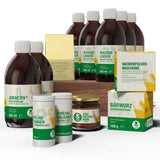
Which herbs are traditionally considered diuretic?
In European folk medicine and monastic healing, various herbs have been described for centuries in connection with increased urine output. Many of these can still be found today in herbal teas and herbal preparations.
Nettle
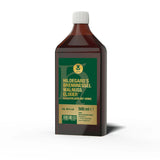
The stinging nettle (Urtica dioica) is one of the most well-known herbs in the European plant tradition. It grows as a wild plant almost everywhere in Central Europe and is rich in various active constituents such as flavonoids, minerals and silicic acid. In folk medicine, nettle tea was traditionally used for water retention and to stimulate kidney activity. A monographic assessment by the European Medicines Agency (EMA) exists for nettle leaf extract, which recognises its traditional use for irrigation therapy of the urinary tract – provided that adequate fluid intake is maintained. Our Hildegard´s Brennnessel Walnuss Elixier combines nettle with further time-honoured ingredients according to Hildegard von Bingen.
Parsley
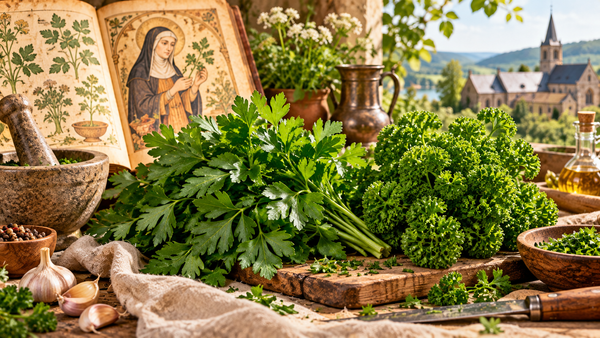
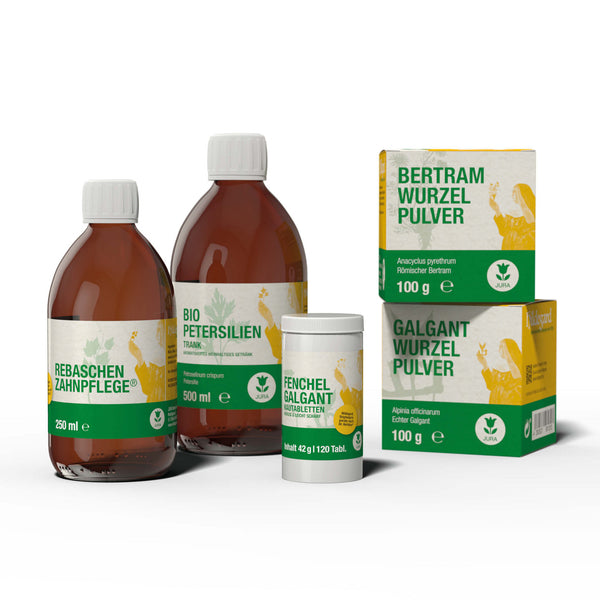
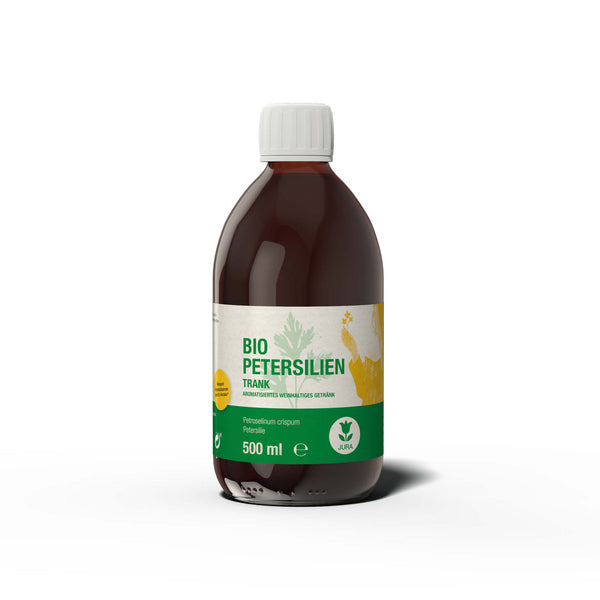
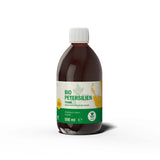
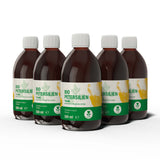
Parsley (Petroselinum crispum) is not only a well-known culinary herb, but also traditionally known as a plant with diuretic properties. In particular, the root and seeds of parsley were used in folk medicine for this purpose. Parsley tea made from fresh or dried leaves is a well-known home remedy. In the tradition of Hildegard von Bingen, parsley played a significant role as a spice and culinary plant. Our organic parsley drink draws on this tradition – also available as a parsley drink cure.
Dandelion
Dandelion (Taraxacum officinale) is one of the most versatile wild plants in Central Europe. Both the leaves and roots of dandelion were traditionally used to stimulate urine output. Dandelion contains, among other things, bitter substances, inulin and flavonoids. The EMA has recognised the traditional use of dandelion herb and root for irrigation therapy of the urinary tract. You can find out more about the diverse traditional applications of dandelion in our article on dandelion tincture.
Birch leaves
Birch leaves (Betula pendula) are also among the classic folk medicine herbs for water retention. They contain flavonoids, tannins and saponins. Birch leaf tea is a traditional application that is recognised in the EMA monograph for use in irrigation therapy of the urinary tract. Birch leaves are well suited as a tea infusion and are contained in many herbal blends.
Horsetail
Horsetail (Equisetum arvense) is one of the oldest plants on earth and a well-known herb in folk medicine. It contains primarily silicic acid as well as flavonoids. An EMA monograph also exists for horsetail, which recognises its traditional use for irrigation of the urinary tract.
Goldenrod
Common goldenrod (Solidago virgaurea) is another herb with a long tradition in connection with urinary tract conditions and irrigation therapies. It is monographed in the German Pharmacopoeia and is traditionally used to stimulate urine output. Goldenrod contains flavonoids, saponins and essential oils.
Traditional herbs with diuretic properties at a glance
| Herb | Botanical name | Part used | Traditional application | EMA monograph |
|---|---|---|---|---|
| Nettle | Urtica dioica | Leaves | Urinary tract irrigation | Yes |
| Dandelion | Taraxacum officinale | Herb, root | Urinary tract irrigation | Yes |
| Birch leaves | Betula pendula | Leaves | Urinary tract irrigation | Yes |
| Horsetail | Equisetum arvense | Herb | Urinary tract irrigation | Yes |
| Goldenrod | Solidago virgaurea | Herb | Urinary tract irrigation | Yes |
| Parsley | Petroselinum crispum | Leaves, root, seeds | Traditionally diuretic | Limited |
| Juniper berries | Juniperus communis | Berries | Traditionally diuretic | Yes |
Which foods have a diuretic effect?
In addition to herbal teas, there are a number of foods that are traditionally attributed with diuretic properties. Many of these have a high water content and contribute to better kidney flushing simply through increased fluid intake.
Cucumber
The cucumber (Cucumis sativus) consists of more than 95% water and contains potassium – a mineral that plays a role in regulating fluid balance. In folk medicine, cucumber is considered a classic diuretic food.
Asparagus
Asparagus (Asparagus officinalis) contains asparagine, an amino acid that is attributed a diuretic effect in folk medicine. Asparagus is also a traditional seasonal vegetable in German cuisine and was already known as a diuretic food in antiquity.
Watermelon
Watermelon consists of around 92% water and contains potassium as well as citrulline. In folk medicine, it is attributed a mildly diuretic effect. Especially in the warm summer months, it is a popular natural way to increase fluid intake.
Ginger
Ginger (Zingiber officinale) is a time-honoured spice used in many cultures. It is said to have, among other things, digestive and circulatory-stimulating properties. Ginger tea is also considered mildly diuretic in some traditions.
Diuretic foods at a glance
| Food | Relevant active constituent | Traditional property |
|---|---|---|
| Cucumber | Water, potassium | Classic folk medicine remedy |
| Asparagus | Asparagine | Traditionally diuretic |
| Watermelon | Water, potassium, citrulline | Mildly diuretic |
| Celery | Phthalides, flavonoids | Traditionally diuretic |
| Artichoke | Cynarin, flavonoids | Traditionally cholagogue and diuretic |
| Ginger | Gingerols, shogaols | Mildly circulation-promoting |
| Parsley | Flavonoids, essential oils | Traditionally diuretic |
| Dandelion (leaves) | Bitter substances, potassium | Traditionally diuretic |
What has a diuretic effect on the legs?
Water retention in the legs is frequently caused by prolonged standing or sitting, heat, hormonal fluctuations or – in more serious cases – by conditions of the heart, kidneys or liver. Anyone suffering from pronounced or persistent oedema in the legs should always consult a doctor. Our article water in the legs: causes, symptoms & helpful tips provides a comprehensive overview of causes and accompanying measures.
Mild, situational water retention – for example after a long flight or on hot summer days – can be supported by increased fluid intake, herb-rich teas and a potassium-rich diet. Exercise, elevating the legs and alternating hot and cold showers are also considered classic complementary measures in folk medicine.
Diuretic teas – preparation and use
Herbal teas are the most traditional way to use diuretic plants. For irrigation therapy – such as that used for mild urinary tract infections or water retention – an adequate fluid intake of at least 2 litres per day is essential. Without sufficient fluid, the diuretic effect of the herbs is lost.
| Herb | Preparation | Recommended amount per infusion | Steeping time |
|---|---|---|---|
| Nettle | Pour hot water over 1–2 tsp of dried leaves | 1–2 g | 5–10 minutes |
| Dandelion | Pour hot water over 1–2 tsp of dried herb or root | 1–2 g | 10 minutes |
| Birch leaves | Pour hot water over 2 tsp of dried leaves | 2–3 g | 5–10 minutes |
| Horsetail | Pour hot water over 2 tsp of dried herb | 2 g | 5–15 minutes |
| Parsley | Pour hot water over 1 tsp of fresh or dried parsley | 1–2 g | 5 minutes |
What has a diuretic effect during pregnancy?
Water retention is common during pregnancy and in many cases normal. Particular caution is warranted, however: many herbs with diuretic effects are contraindicated during pregnancy or only suitable to a limited extent. Parsley seeds and oil in high doses as well as juniper berries are considered unsuitable during pregnancy. Horsetail and goldenrod should also not be used during pregnancy without medical consultation.
As a general rule: during pregnancy, all herbal preparations and herbal teas should only be taken after consultation with a doctor or midwife. Mild, non-pathological oedema during pregnancy can be supported by adequate exercise, elevating the legs and a balanced diet.
Diuretic in the tradition of Hildegard von Bingen
In the writings of Hildegard von Bingen, numerous descriptions of plants can be found that are mentioned in connection with the kidneys and urine excretion. Hildegard regarded the kidneys as important organs of physical balance and described various herbs and foods that played a role in her concept. Parsley held a particularly special position – it is mentioned in detail in Hildegard's work Physica and is one of the most traditional culinary herbs in the Hildegard von Bingen tradition. Our organic parsley drink connects to this tradition.
Those interested in the fundamentals of nutrition according to Hildegard von Bingen will find a comprehensive introduction in our article nutrition according to Hildegard von Bingen. It is also worth taking a look at our Hildegards Herbstkur – a seasonal cure according to traditional lore. Further herbal drinks and plant-based products can be found in our herbal drinks range.
Practical tips for mild water retention
| Measure | Description |
|---|---|
| Drink enough | At least 1.5–2 litres of water or unsweetened teas daily |
| Reduce table salt | High salt consumption promotes water retention |
| Potassium-rich diet | Bananas, potatoes, pulses, leafy vegetables |
| Exercise | Regular physical activity promotes the return flow of tissue fluid |
| Elevate legs | Classic measure for leg oedema |
| Herbal tea | Nettle, birch or dandelion tea as a traditional accompaniment |
| Alternating showers | Promote circulation in the legs |
When should you see a doctor?
Mild, short-term water retention – for example after prolonged standing or on hot days – is generally harmless. However, persistent, severe or one-sided oedema, oedema associated with pain, redness or warmth, as well as water retention in the face or hands should always be clarified by a doctor. They may indicate serious conditions of the heart, kidneys or liver. Sudden oedema occurring during pregnancy also requires immediate medical attention.
Those who are generally interested in a more mindful, nature-based diet will find further useful background information in our article on foods for inflammation and a good overview of the diversity of traditional plants in our article on bitter herbs.