
Protein Deficiency Symptoms – Signs, Causes and Nutritional Knowledge at a Glance
Protein is one of the most important macronutrients in the human body. It is involved in the building of muscles, organs, skin, hair and enzymes, and plays a central role in nearly all biological processes. If too little protein is consumed over a prolonged period, this can manifest in various ways. In this article, you will learn which signs may indicate a protein deficiency, which population groups are particularly affected, and what constitutes a balanced, protein-rich diet – including from the perspective of the nutritional tradition of Hildegard von Bingen.
What Is Protein and Why Is It So Important?
Proteins are made up of amino acids. The human body requires a total of 20 different amino acids, nine of which are considered essential – meaning the body cannot produce them itself and must obtain them through food. Protein performs a wide variety of functions in the body: it serves as a building material for muscles, connective tissue, skin and hair, is a component of hormones and enzymes, plays a role in the immune system, and can also be drawn upon for energy production when needed.
The German Nutrition Society (DGE) recommends a daily protein intake of approximately 0.8 grams per kilogram of body weight for healthy adults. During certain life phases such as pregnancy, breastfeeding, growth or intense physical activity, requirements can be significantly higher.
Matching this article
Protein Deficiency Symptoms – What May Indicate Too Little Protein?
A protein deficiency typically develops gradually over a longer period of time. The symptoms are often non-specific and may have other causes. Medical clarification is therefore always advisable before drawing conclusions. The following signs are described in the specialist literature in connection with inadequate protein consumption.
Changes to Hair, Skin and Nails
Hair, skin and nails consist largely of proteins – in particular keratin. With persistently inadequate protein intake, these structures may show early signs. Described changes include brittle or thinning hair, dry and flaky skin, and brittle nails. Since keratin is one of the most common structural proteins in the body, these changes are among the early possible signs of protein deficiency.
Muscle Loss and Loss of Strength
Muscles consist to a considerable extent of protein. When protein intake is insufficient, the body draws on its own protein reserves – initially from muscle tissue. This can manifest as a gradual loss of muscle mass, declining strength and a general physical weakness. Older people are particularly susceptible to this process, as protein requirements tend to increase with age while food intake often decreases.
Oedema – Fluid Retention in Tissue
One of the classic clinical signs of severe protein deficiency is oedema, i.e. fluid retention in the tissue. The protein albumin plays a central role in maintaining osmotic pressure in the blood. If albumin levels fall due to protein deficiency, fluid can pass from the blood vessels into the surrounding tissue. The abdomen, legs and feet are frequently affected. In severe cases – such as in the clinical picture of kwashiorkor, a deficiency disease caused by extreme protein deficit – a distended abdomen is a characteristic feature.
Persistent Fatigue and Difficulty Concentrating
Proteins are involved in the production of neurotransmitters that are important for alertness, mood and cognitive function. A prolonged protein deficiency can therefore be accompanied by persistent fatigue, difficulty concentrating and a general lack of drive. Since these symptoms are very non-specific, however, medical diagnosis is essential to rule out other causes.
Slowed Wound Healing
The formation of new tissue during wound healing is a protein-dependent process. Collagen – the most common protein in the human body – is an essential building block in tissue regeneration. In the case of protein deficiency, wound healing can be slowed because the body lacks the necessary building blocks to replace damaged tissue.
Frequent Infections
Antibodies and certain immune cells consist of proteins. A persistently inadequate protein supply can contribute to impairment of the body's own defences, which can manifest as increased susceptibility to infections. Again, the same caveat applies: frequent infections can have many causes – protein deficiency is only one of them.
Overview: Possible Symptoms of Protein Deficiency
| Area | Possible Signs | Note |
|---|---|---|
| Hair | Hair loss, brittle, thin hair | Also possible due to other deficiencies |
| Skin | Dryness, flaking, slow wound healing | Dermatological assessment recommended |
| Nails | Brittle, ridged nails | May indicate various nutrient deficiencies |
| Muscles | Muscle loss, loss of strength | Particularly relevant in old age |
| Tissue | Oedema (fluid retention) | Clinical sign in severe deficiency |
| General wellbeing | Fatigue, difficulty concentrating | Very non-specific symptom |
| Immune system | Frequent infections, slowed recovery | Always seek medical clarification |
Who Is Particularly at Risk?
In Germany, a clinically relevant protein deficiency is relatively rare. However, certain groups of people have an increased risk of consuming too little protein.
| Risk Group | Possible Cause |
|---|---|
| Older people | Reduced food intake, altered digestion |
| People with a one-sided diet | Few or no protein-rich foods |
| Vegans and vegetarians | Possible undersupply with unbalanced planning |
| People with eating disorders | Insufficient total caloric intake |
| Pregnant and breastfeeding women | Increased requirements with potentially unchanged intake |
| People recovering from surgery | Increased requirements due to tissue regeneration |
| People with chronic illnesses | Absorption disorders, reduced uptake |
Protein Deficiency in a Vegan Diet
A vegan diet, when well planned, is perfectly capable of meeting protein requirements. Plant-based protein sources such as legumes, grains, nuts, seeds and certain algae or aquatic plants can ensure an adequate protein supply. The key is to combine different sources in order to cover all essential amino acids.
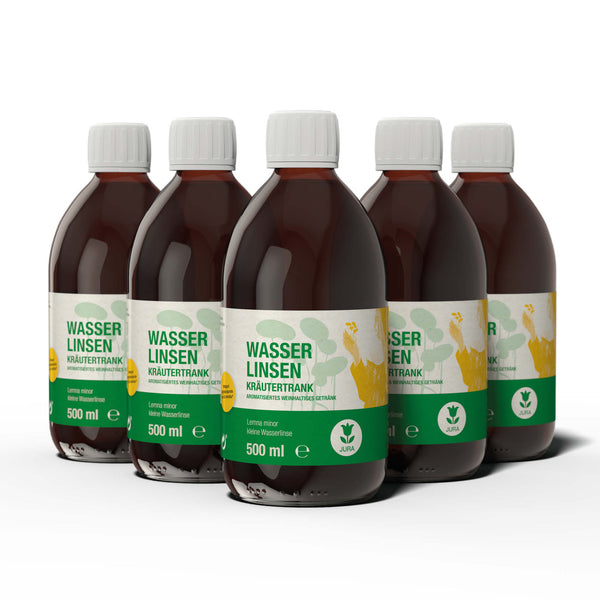
Particularly interesting in this context are duckweed – small aquatic plants that have been receiving increasing attention in recent years as a plant-based protein source. Their protein content is remarkably high compared to other plants. As a duckweed herbal drink, they are also available in the Hildegard tradition.
Protein-Rich Foods at a Glance
| Food | Protein content (approx. per 100 g) | Origin |
|---|---|---|
| Tuna (in water) | approx. 29 g | Animal |
| Chicken breast (cooked) | approx. 27 g | Animal |
| Lentils (cooked) | approx. 9 g | Plant-based |
| Chickpeas (cooked) | approx. 9 g | Plant-based |
| Eggs | approx. 13 g | Animal |
| Spelt (raw) | approx. 15 g | Plant-based (grain) |
| Duckweed | approx. 25–35 g (dried) | Plant-based |
| Pumpkin seeds | approx. 30 g | Plant-based |
| Quark (low-fat) | approx. 12 g | Animal |
Spelt as a Traditional Protein Source According to Hildegard von Bingen
In the nutritional tradition of Hildegard von Bingen, spelt holds an outstanding position. She described it as a particularly wholesome and valuable grain and recommended it as the foundation of daily nutrition. Compared to modern wheat, spelt contains a higher proportion of proteins as well as various amino acids. Our article Is spelt healthier than wheat? provides a factual overview of the similarities and differences between the two types of grain.
For those who wish to base their diet more strongly on spelt, our spelt range offers various products – from spelt semolina to spelt baked goods. You can also find out more about the culinary possibilities with spelt in the article Spelt semolina – everything you need to know.
Recognising Protein Deficiency – When to See a Doctor?
The symptoms described are in most cases non-specific and can be attributable to many different causes. Brittle hair can indicate iron deficiency, thyroid problems or biotin deficiency – not necessarily protein deficiency. Fatigue can be caused by sleep problems, vitamin deficiency or other conditions.
Anyone who suspects they are consuming too little protein, or who notices changes in themselves that could indicate a nutrient deficiency, should seek medical advice. A blood test can provide information about albumin levels and other protein markers. Nutritional counselling can help to analyse one's own protein intake and make targeted adjustments.
Adjusting Your Diet – Practical Tips
Those wishing to increase their protein intake do not necessarily need to resort to expensive dietary supplements. A balanced diet with a variety of protein-rich foods is sufficient in most cases. The Hildegard kitchen offers plenty of inspiration for enjoyable and nutrient-rich meals.
Vegan and vegetarian diets can be wholesome when carefully planned. The key lies in the combination of plant-based protein sources: grains and legumes complement each other ideally in their amino acid profiles. Those wishing to learn more about a mindful, nature- and tradition-oriented approach to nutrition will find further inspiration in our article on gut-conscious nutrition according to Hildegard von Bingen.
Protein Deficiency and Fasting – What Should Be Considered?
When fasting – particularly during extended therapeutic fasting – the question of protein supply frequently arises. Anyone who consumes very few calories and nutrients over several days risks not only a caloric deficit but also a temporary protein deficiency. During this phase, the body begins to break down its own protein – primarily from the muscles. This is generally harmless with short-term fasting, but should be kept in mind during longer-term fasting. Those interested in therapeutic fasting according to Hildegard will find a structured overview in our therapeutic fasting plan.